
Photo by Gayane Budaghyan
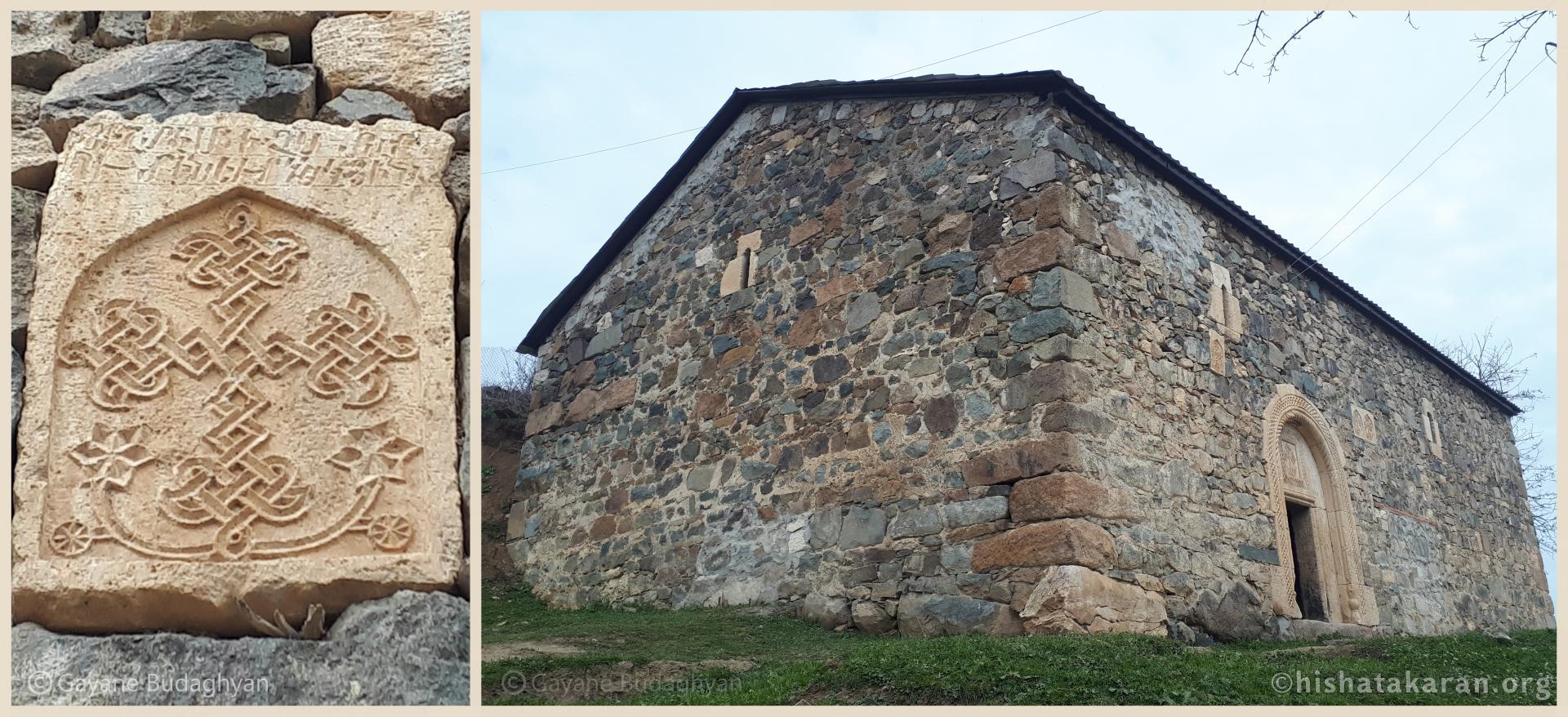
Kyuratagh [K‘yurat‘agh], Surb Astvatsatsin (Holy Mother of God) Church, khachkar № 2
Monument
Monument type
Khachkar Other names
The Khachkars of Makum [Mak‘um] initial, sequential and current
It was carved in 1683 and embedded in the church wall at the same time.
Original ownership and affiliation
Kyuratagh [K‘yurat‘agh] village, Surb Astvatsatsin (Holy Mother of God) Church
The name of conservation unit
Khachkar A topographic report
Region (province), community
It was part of the historical region of Artsakh in Greater Armenia, specifically the province of Myus Haband, and was later included in the Dizak province and the corresponding principality. Until 2020, it was located in Kyuratagh [K‘yurat‘agh] village, in the Hadrut region of the Republic of Artsakh.
Distance and location from community
It is located in the southwestern part of Kyuratagh [K‘yurat‘agh] village. The Khachkar is embedded in the southern facade of the Church of the Surb Astvatsatsin (Holy Mother of God), to the east of the entrance.
Site elevation above sea level
It is 717 m above sea level. Hydrography
It is located in the Ishkhanaget River basin, 4.16 km south of the river. Description
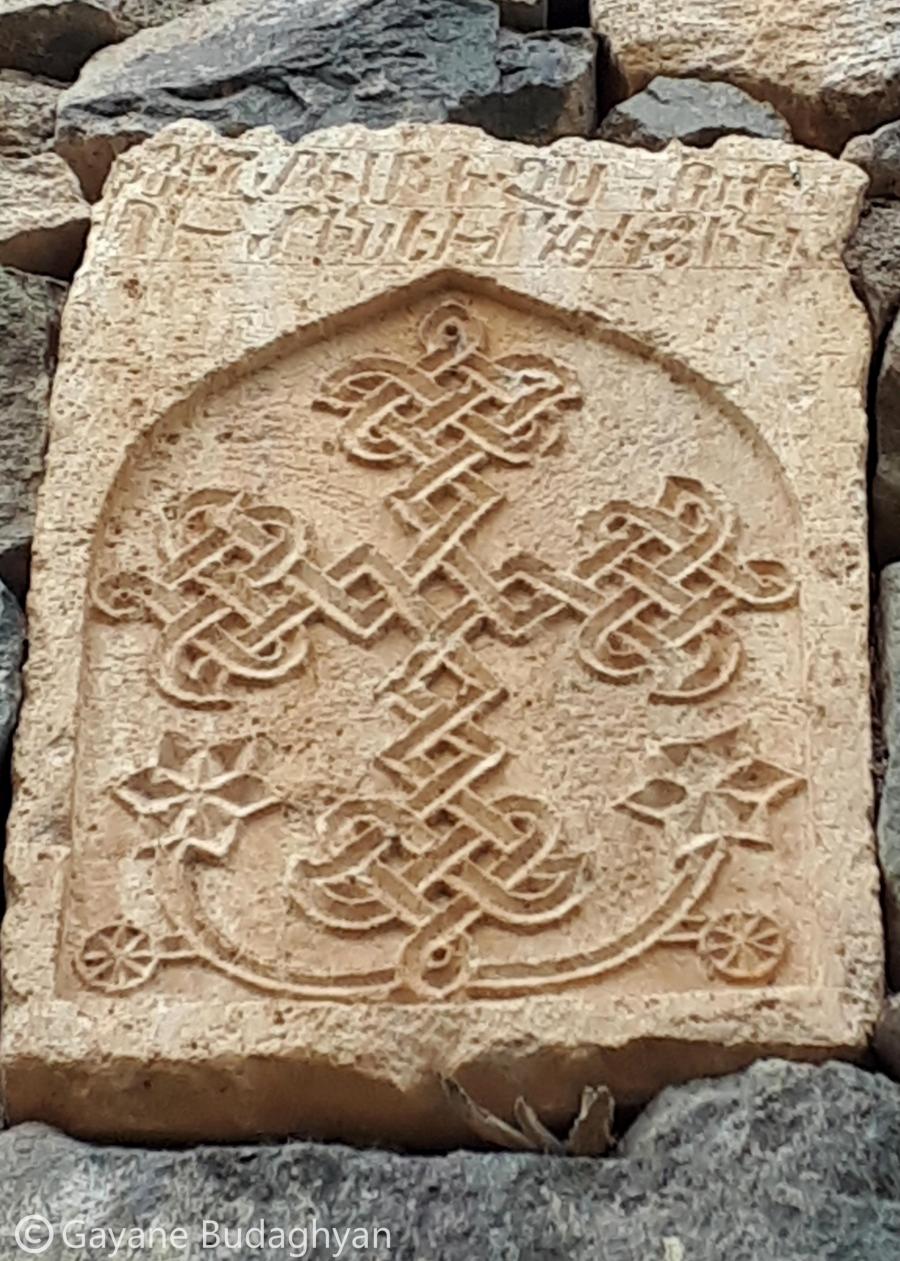
The khachkar is embedded in the southern facade of Surb Astvatsatsin (Holy Mother of God) Church, to the west of the entrance. This small khachkar stands out with its iconography. At the center of the composition, beneath an arrow-shaped niche, is a fully intertwined floral cross, common in 17th-century khachkar art, distinguished by the broad floral ends of the cross"s arms. From the base of the cross, two long stems extend to the right and left, each crowned with a six-petaled lily flower. Particularly noteworthy is the presence of wheels attached to the right and left stems, symbolizing the chariot on which Emmanuel ascended, victoriously capturing the captives1. The inscription is located at the top of the khachkar: "Յիշ(ա)տ(ակ) է ս(ուր)բ խ(ա)չս Մաք/ումին եւ (իւ)ր կ(ե)ն(ա)կցին" (This holy cross is in memory of Makum and his wife).
Historical record
Cultural characteristics, period, century (centuries)
Armenian Apostolic Church, 17th century
Documents for dating: according to the iconography
According to stylistic and artistic features Chronological table of monument
The khachkar was carved in the 17th century.
Descriptive-Characterization Report
Type
Commemorative khachkar The condition of the monument before the forced displacement of Armenians
Good ----------------------------
Dawit’ Anhaght’, Nerboġ astvatsěnkal Sowrb Xach’in. «․․․Ապաքէն զի յամենայն կոյս ուղիղ զհայեցուածսն կալցի. քանզի քառադէմ ապաքէն ասի և կառքդ. որպէս և քառառաջէ այս կառք խաչակառք, յորում Էմմանուէլն բարձրացեալ, կառավարելով ստուգապէս աւարումն գերելոցն արար»։
Photos
...
Main bibliography
.
G. B., A. L-Y.