
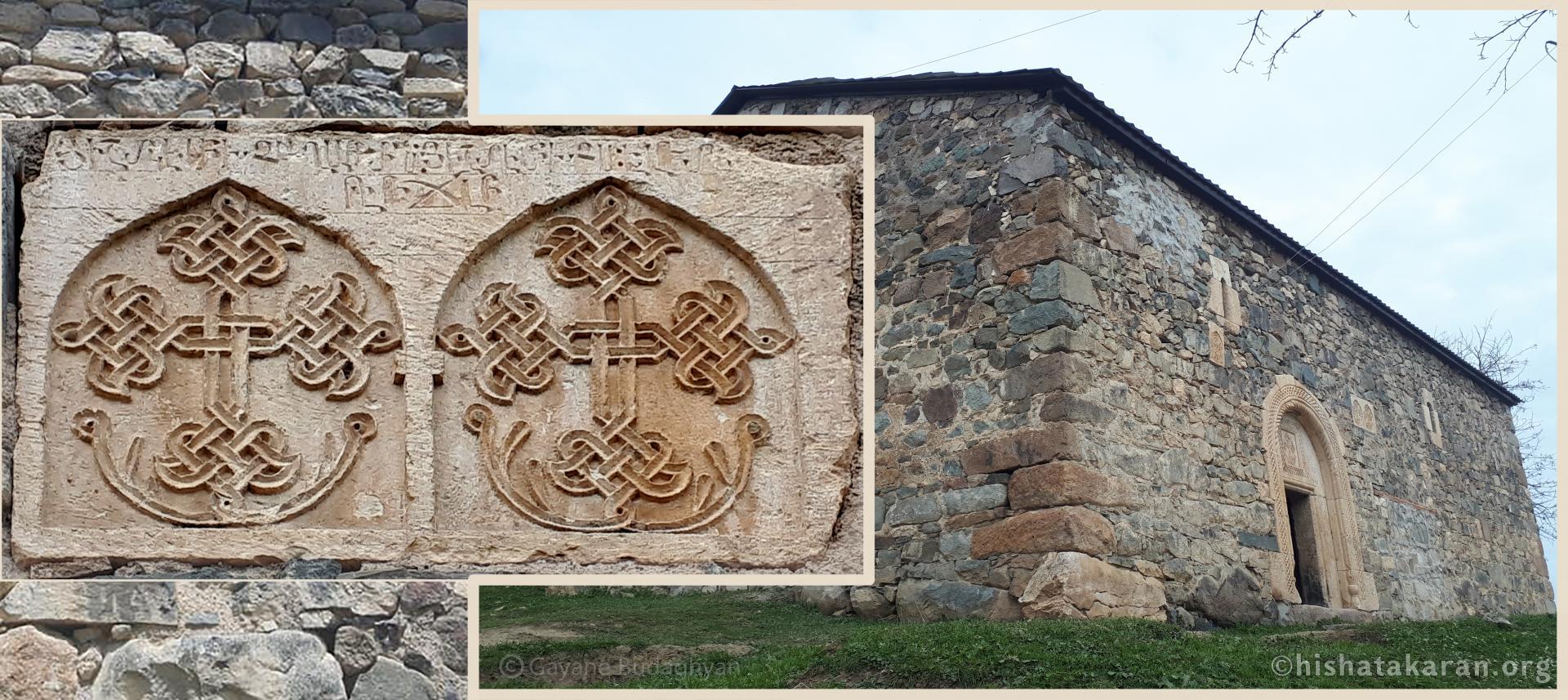
Kyuratagh [K‘yurat‘agh], Surb Astvatsatsin (Holy Mother of God) Church, khachkar № 1
Monument
Monument type
Khachkar Other names
The Khachkars of Ghasum and Lelum initial, sequential and current
It was carved in 1683 and embedded in the church wall at the same time.
Original ownership and affiliation
Kyuratagh [K‘yurat‘agh] village, Surb Astvatsatsin (Holy Mother of God) Church
The name of conservation unit
Khachkar A topographic report
Region (province), community
It was part of the historical region of Artsakh in Greater Armenia, specifically the province of Myus Haband, and was later included in the Dizak province and the corresponding principality. Until 2020, it was located in Kyuratagh [K‘yurat‘agh] village, in the Hadrut region of the Republic of Artsakh.
Distance and location from community
It is located in the southwestern part of Kyuratagh [K‘yurat‘agh] village. The Khachkar is embedded in the southern facade of the Church of the Surb Astvatsatsin (Holy Mother of God), to the east of the entrance.
Site elevation above sea level
It is 717 m above sea level. Hydrography
It is located in the Ishkhanaget River basin, 4.16 km south of the river. Description
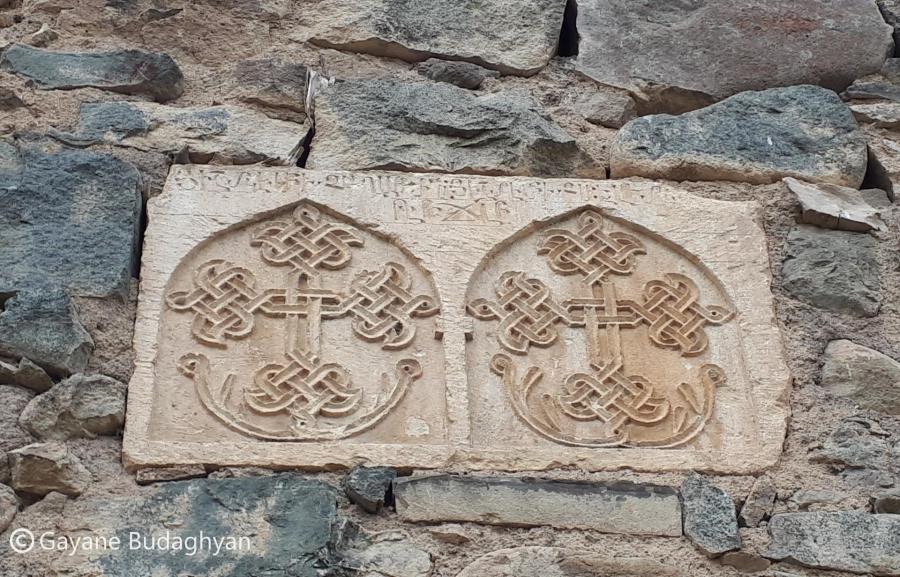
The khachkar is embedded in the southern facade of the Church of Surb Astvatsatsin (Holy Mother of God), to the east of the entrance. According to the inscription, it was carved in 1683: "Յիշ(ա)տ(ա)կ է ս(ուր)բ խաչս Ղա(ս)ումին։ Յիշ(ա)տ(ա)կ է ս(ուր)բ խ(ա)չս Լելումին, | թվի(ն) ՌՃԼԲ (1683)" (This holy cross is in memory of Ghasum. This holy cross is in memory of Lelum, in the year 1683). The name Ghasum, mentioned in the inscription, is also referenced in the church"s construction inscription as the headman of Kyuratagh [K‘yurat‘agh] village. The khachkar was created during the construction of the Church and was embedded in the wall at that time.
The khachkar, made from yellowish limestone and with a rectangular, elongated design, features two similar cross carvings side by side, each set within arrow-shaped cross niches. This floral cross motif, distinguished by its cross arms with broad floral embellishments, was known in Armenian miniatures from the 11th century and became particularly prevalent in 17th-century khachkar art. Both miniature and sculptural examples of this motif differ mainly in the texture of the cross arms.
It is noteworthy that in our example, each of the crosses with a pair of branches extending from its base represents a single, monofilament woven pattern.
Historical record
Cultural characteristics, period, century (centuries)
Armenian Apostolic Church, 1683 (17th century)
Documents for dating: Justification of the date based on epigraphy.
The inscription is located on the upper part of the khachkar.
Chronological table of monument
The khachkar was carved in 1683. Descriptive-Characterization Report
Building material (type, colour)
It is carved from yellowish limestone.
Type
Commemorative khachkar The condition of the monument before the forced displacement of Armenians
Average
----------------------------
1Abrahamyan Ē․, 2022, p. 61. Photos
...
Main bibliography
.
G. B., A. L-Y.