
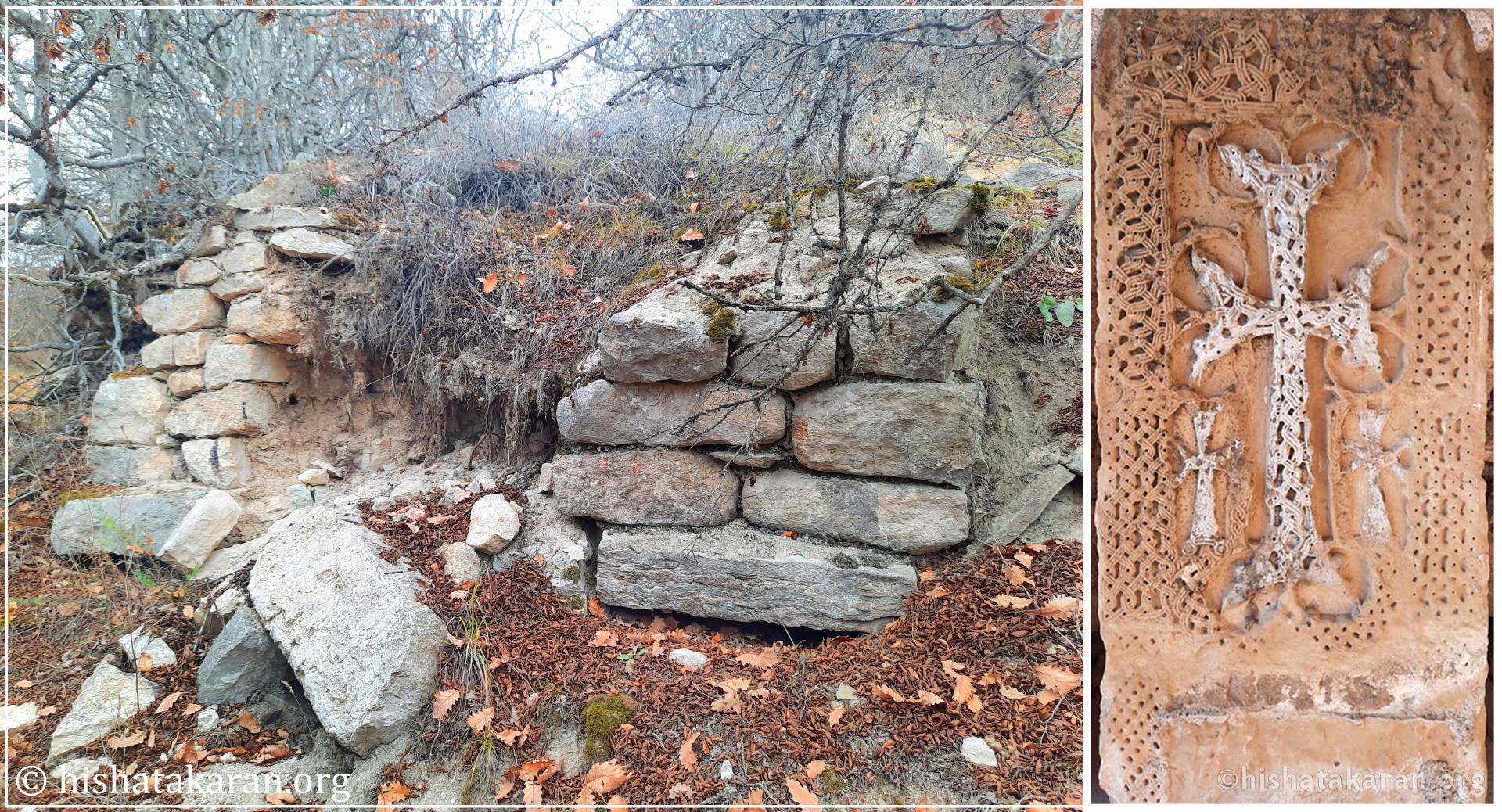
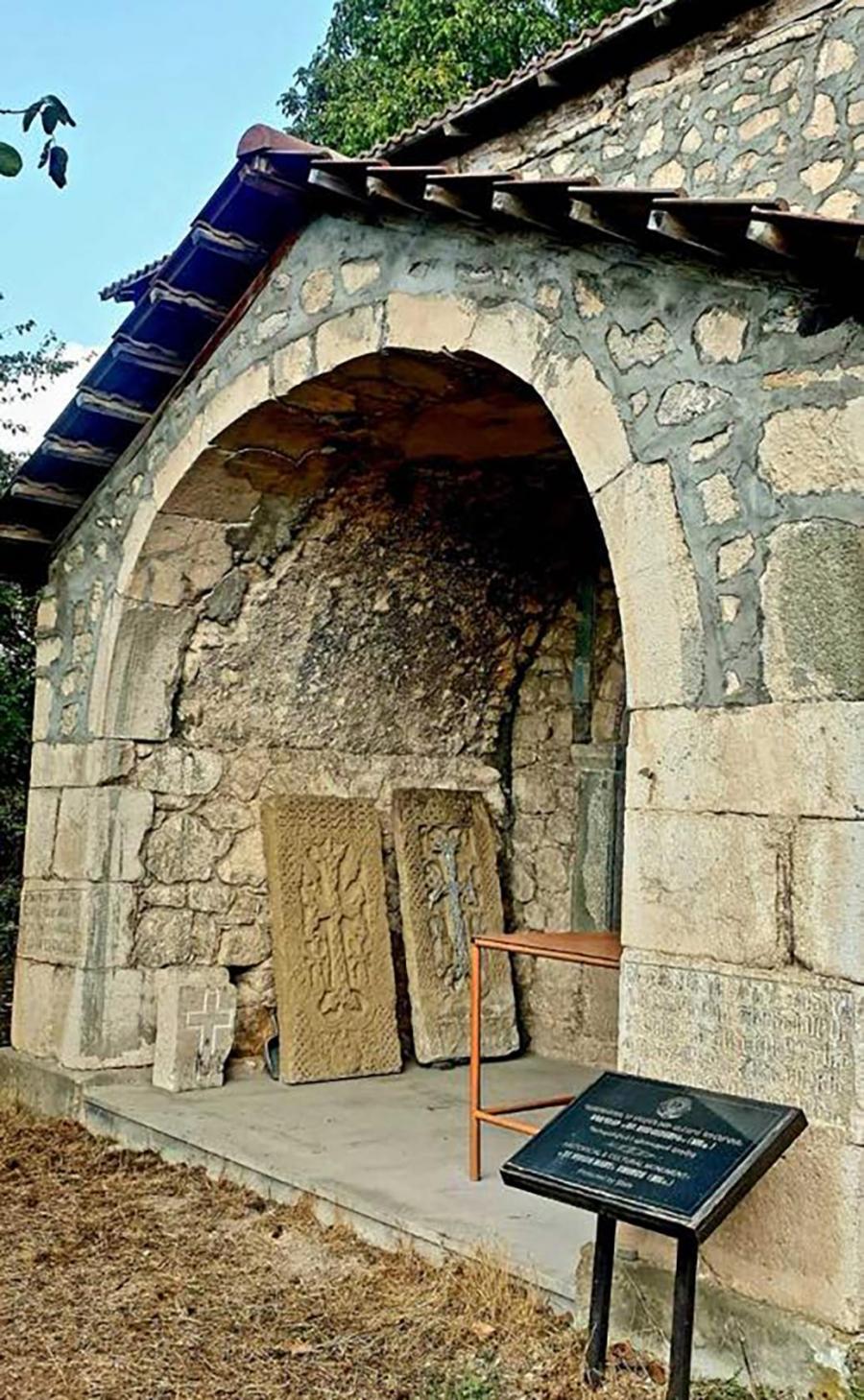
Karmir gyugh (Drnavarz [Dṛnavarz]), a walled Khachkar-chapel, stele № 1
Monument
Monument type
Khachkar Other names
Pemi (Bem) khachkar initial, sequential and current
Shrine
The name of conservation unit
Khachkar (cross-stone) A topographic report
Region (province), community
Mukhank Province (later Varanda) of the historical Greater Armenian Artsakh, until 2023: Republic of Artsakh, Askeran region, Karmir gyugh (village).
Distance and location from community
It is located 2.3 km northwest of Karmir gyugh, 300 km north of Eghen [Ěghen] Nahatak (Martyr) Church.
Site elevation above sea level
It is 1295 m above sea level. Hydrography
It is located 5.5 km north of the source of the Varanda River, under the cliff of the western branch of Bovurkhan Mountain. Description
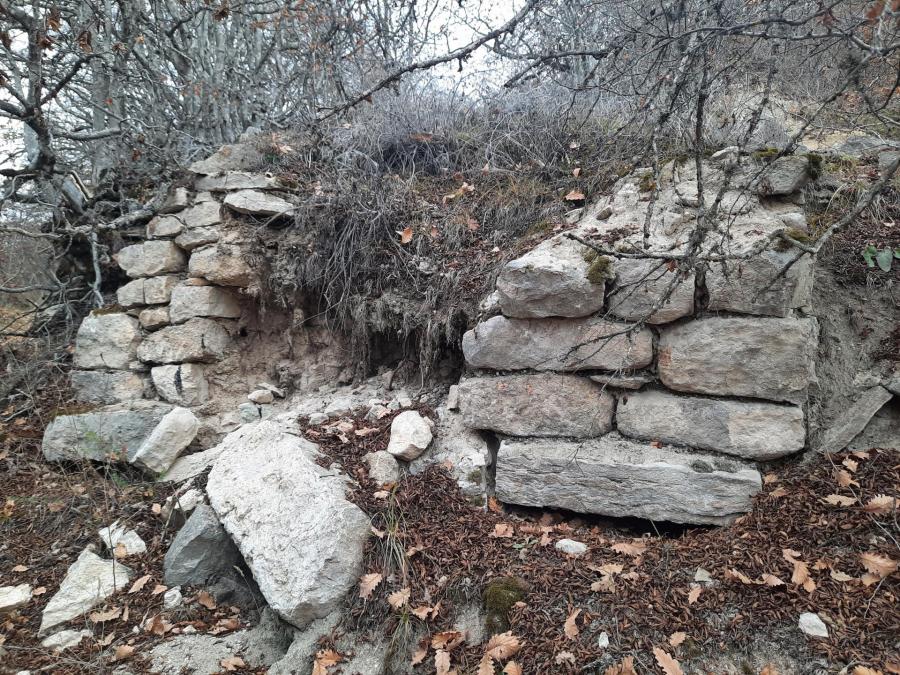
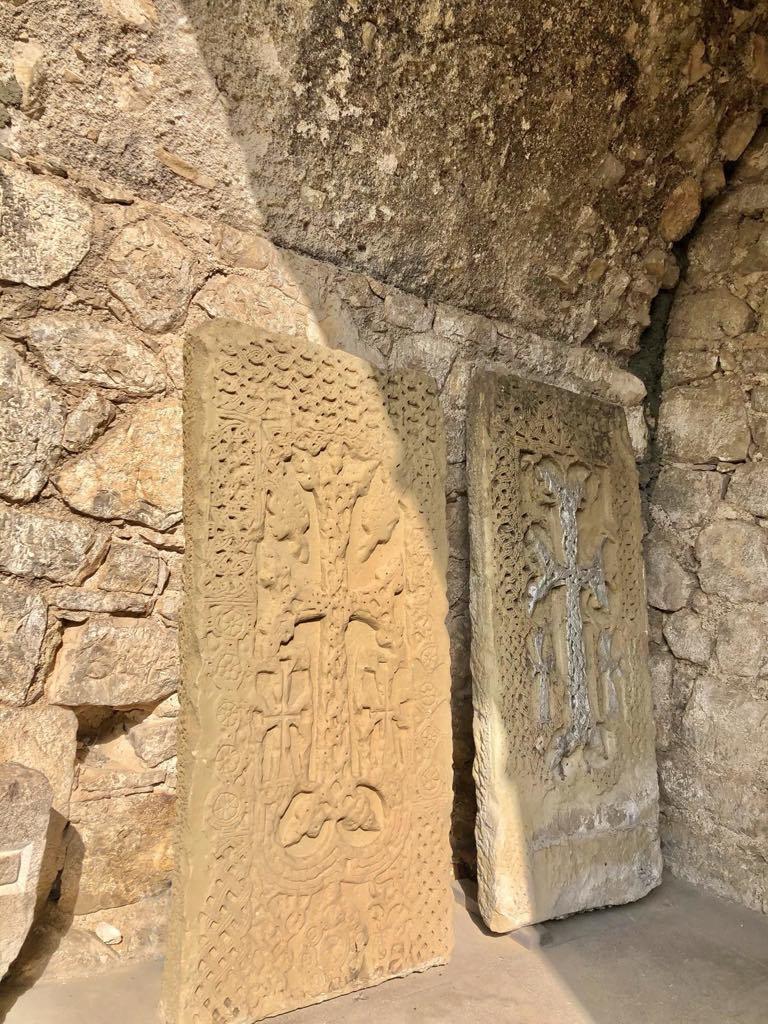
The khachkar was located in the area of the 11th-century walled khachkar called Pem (Bem), 300 meters north of Ěghen Nahatak Church or Khachin Tak [Khachʻin Tak] of Karmir Gyugh (Drnavarz [Dṛnavarz]). The monument is mentioned by the ethnographer and folklorist Bishop Makar Barkhudaryants, who described it as "...a stage built with sacred stone, which is three meters wide, two meters thick, and five meters high. On the western front of the altar, there are three beautiful and very elaborate khachkars, above which is written. "Թվ․ ՇԻ․ կամաւ ամենակալին Աստուծոյ ես․․․ Գրիգոր․․․ Աստուծոյ միաբան եղբարքս լա․․․ զխաչս իշխանութեան․․ և հայրապետութեան․․ Օհանէսի տէր Ներսէսի ո․․․ աղաւթեցէք"1։
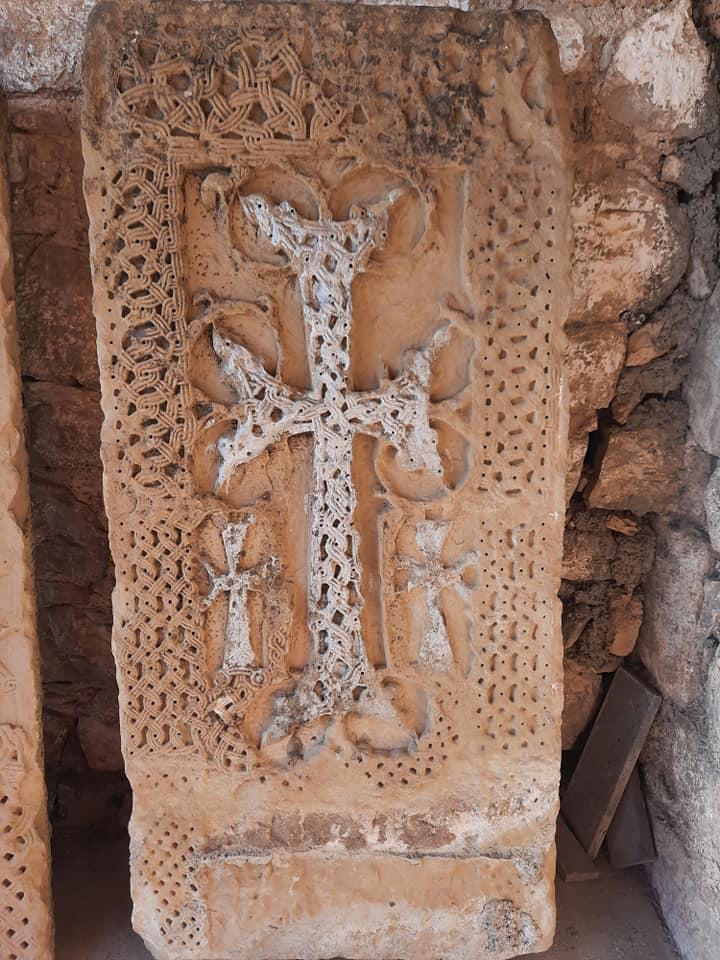
Unfortunately, the inscription and one of the khachkars have not been preserved. Local resident G. Jhangiryan moved the khachkar to Karmir Gyugh for safety reasons. Later, it found its final resting place in the hall of the Surb Astvatsatsin (Holy Mother of God) Church in the village.
In the center of the khachkar, surrounded by a wide ornamental frame, a large floral cross with elegant double wings and three buds stands out against the rectangular background of the stone. The cross is characterized by the elegance of its slender proportions and the intricate perforated woven pattern that covers the entire surface. From the base of the vertical crucifix, stylized braided palm branches extend upwards, crowned with a small cross within a square frame, whose transverse branches have protruding rounded ends. The wide three-banded ornament bordering the rectangular stone is remarkable, skillfully combining four different woven sections into a single ornamental band.
One of the most important and unique elements of the khachkar"s iconography is the winged wheels covering the eight buds of the central cross"s wings-Ofanims or Gangalims2. This class of celestial beings, who forever guard the throne of God (Ezekiel 1:15-11:22), also called Thrones, according to the definition of Pseudo-Dionysius the Areopagite, is ranked among the three highest angels closest to God, symbolizing divine justice and authority. The presence of winged wheels in the khachkar"s composition reveals that the scene of the miraculous appearance of the Holy Cross, the four-pointed cross-throne3, as a sign of salvation with a "blazing glow" in the sky of Jerusalem, is depicted here. It appeared in the firmament of Jerusalem on May 7, 351, at the third hour of the day, extending from Golgotha to the Mount of Olives, covering the sun with its light4.
Historical record
Cultural characteristics, period, century (centuries)
Armenian Apostolic Church, 11th century (1071)
Documents for dating: Justification of the date based on epigraphy.
According to the inscription (which is not preserved)
Documents for dating: according to bibliographic sources
The inscription regarding the construction was provided to us by the ethnographer and folklorist Makar Bishop Barkhudaryants.
Chronological table of monument
The monument incorporating the Khachkar was built in 1071. It served as a sanctuary. It was destroyed during the Soviet era. On September 20, 2023, the village was occupied by the Azerbaijani army. The current state of the monument is unknown.
Chronological table of research on the monument (period, author, works)
In the 19th century, Makar bishop Barkhudaryants visited the ancient site and gave information. In 1895, he published in his book "Artsakh".
In the 1980s, monumentologist Samvel Karapetyan conducted field studies, including them in the article "Walled khachkars of Artsakh" (1983).
Brief historical overview
There is no information about Khachkar.
Descriptive-Characterization Report
Type
Khachkar Dimensions: width
60 sm Dimensions: height
125 sm The condition of the monument before the forced displacement of Armenians
Average Value
It holds significant importance for the study of the Askeran region of Artsakh, as well as for preserving the historical, cultural, and spiritual heritage of Karmir gyugh and the art of cross-stones in Artsakh. ----------------------------
2Ophanim or Gagalim are also described as whirlwinds called burning fires in the Book of Daniel (Daniel 7:9).
3See, Matenagrowt’iwnk’ Naxneats’. Koriwn Vardapeti, Mambrēi Vertsanoghi ew, Dawt’i Anyaght’i Matenagrowt’iwnk’, Venetik, Sowrb Ghazar, 1833, p. 107։
Dawit’ Anhaght’, Nerboġ astvatsěnkal Sowrb Xach’in.
4Iconographic study by Anna Leyloyan-Yekmalyan
Photos
...
.
A․H․, A․L․-Y․