
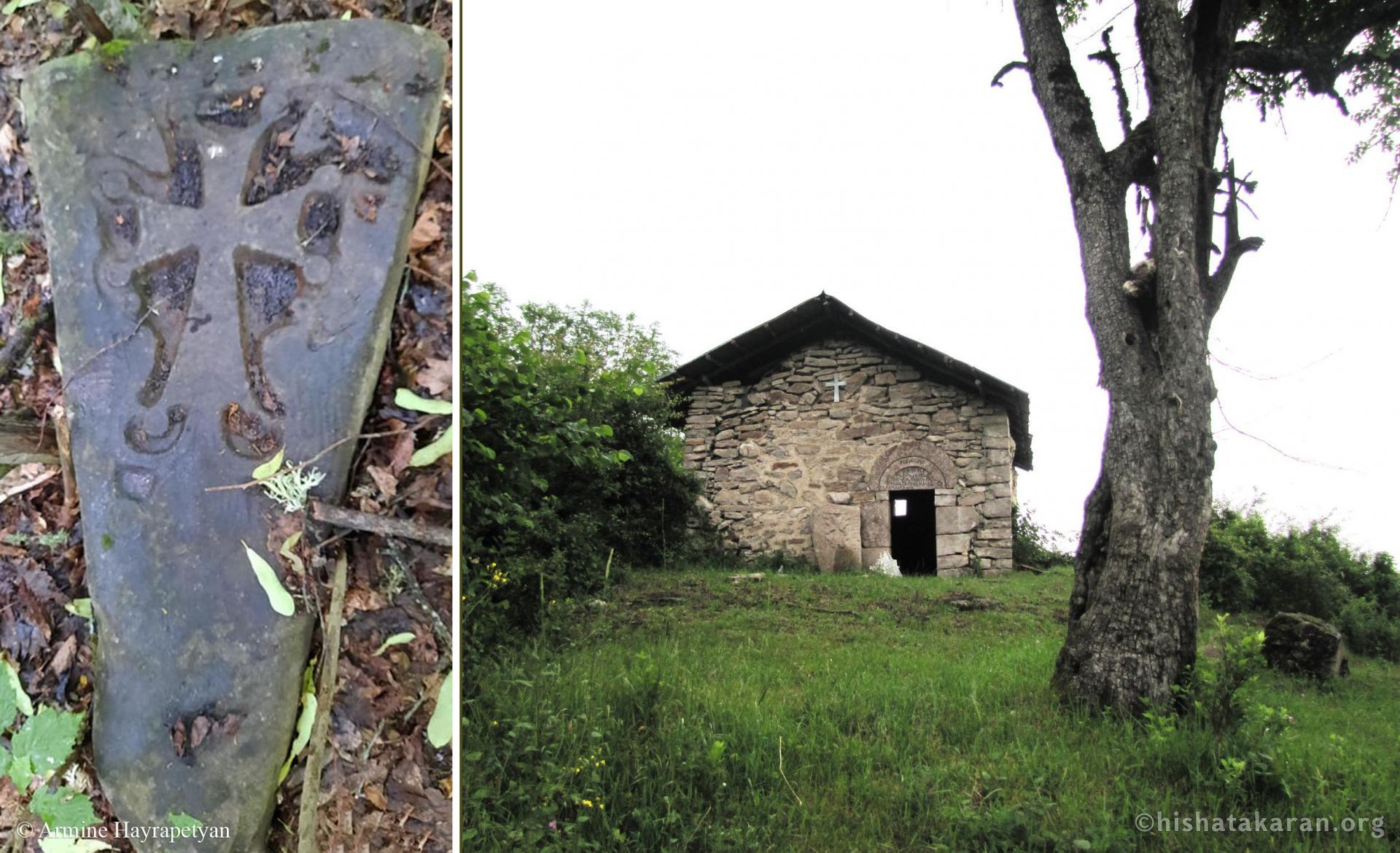
Dahrav, cemetery of the Surb Saṛa Nahatak (Saint Sara Martyr) Chapel-Sanctuary, Khachkar № 3
Monument
.
Monument passport
Monument type
Khachkar initial, sequential and current
The khachkar was carved in the 11th–12th centuries as a funerary monument. The monument was found collapsed, completely covered with soil.Since September 2023, the village of Dahrav has been occupied by Azerbaijan. The current condition of the monument is unknown.
Original ownership and affiliation
Principality of Khachen, Dahrav The name of conservation unit
Khachkar A topographic report
Region (province), community
Greater Armenia (Mets Hayk), Province of Artsakh, Harchlankʻ gavaṛ (later the Principality of Khachen), until 2023: Republic of Artsakh, Askeran district.Address
Republic of Artsakh, Askeran district, Dahrav Topography
Located 15.5 km southwest of the town of Askeran Distance and location from community
Located 3.2 km southwest of the village of Dahrav, on the summit of a forested mountain Site elevation above sea level
1645 m above sea level Hydrography
Situated on the watershed ridge of the Ptretsʻikʻ and Meghraget tributaries of the Karkaṛ River, near the source of the Tsʻrtaget tributary of the Meghraget Description
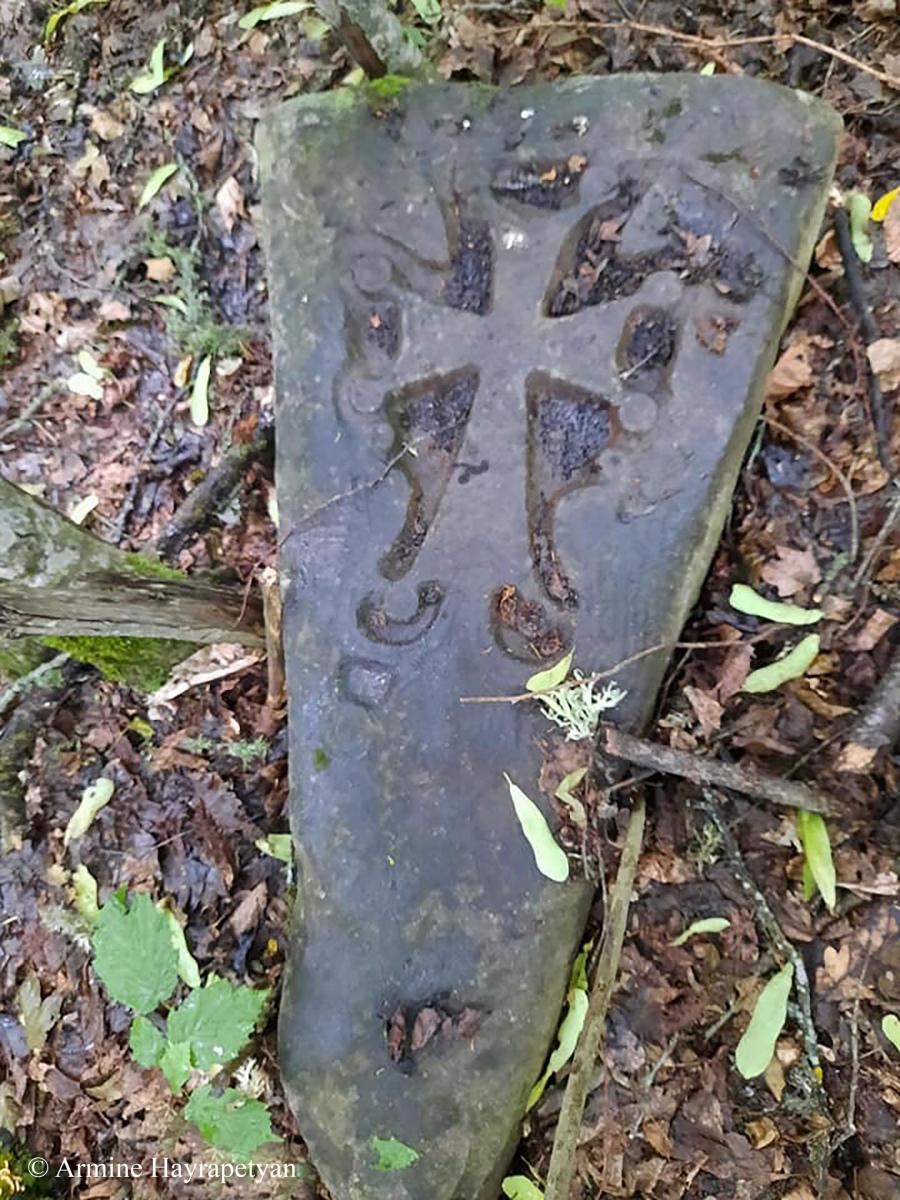
The khachkar is situated in the cemetery of the Chapel-Shrine of St. Sara Nahatak. The monument is notable for its elongated, upward-widening triangular shape. Its front face features a carved cross typical of the 11th–12th centuries, with a prominent central cross terminating in paired circular ends. From the lower central section of the vertical cross arm, the cross branches extend to the right and left, each adorned with a stylized bird motif in place of the traditional vine decorations. The cross carving is enclosed within a moderately narrow, woven-patterned rectangular frame beneath the cross field. From the upper two corners of this frame, single fruit-shaped floral motifs extend toward the center. Below the cross base, in the center, traces of a circular rosette are visible, and to the left, the outline of a standing human figure with a halo can be discerned. The khachkar is partially damaged and deformed, and its carvings and decorative motifs are difficult to interpret.The monument is not listed in the State List of Immovable Monuments of History and Culture of the Republic of Artsakh.
Historical record
Cultural characteristics, period, century (centuries)
Armenian Apostolic Church, Medieval, 11th–12th centuries Documents for dating: Justification of the date based on epigraphy.
Based on the khachkar’s iconography, stylistic, and artistic features Documents for dating: according to the iconography
Based on the khachkar’s iconography, stylistic, and artistic features Chronological table of research on the monument (period, author, works)
In 2021, during field studies conducted on site by staff of the State Service for the Preservation of Historical Environment under the Tourism and Historical Environment Protection Department of the Government of the Republic of Artsakh, the khachkar was documented and measured in situ. Descriptive-Characterization Report
Type
Funerary Monument The condition of the monument before the forced displacement of Armenians
Average Value
It holds important historical and cultural value for the study of the history of Dahrav village and the khachkar art of Artsakh. Photos
...
.
A.H.