
Sarushen, The Church of Pirumashen [Pʻirumashen]
Monument
Monument type
Church Given name
Pirumashen initial, sequential and current
The church was built in the 16th–17th centuries. It retained its religious function until the early 20th century. During the Soviet period, it was used as a warehouse. Between 2010 and 2014, the church was restored. Since September 2023, the site has been seized by Azerbaijan. The current condition of the monument is unknown. Original ownership and affiliation
Pirumashen The name of conservation unit
Church Individually referenced sections (parts) of conservation unit
Church, khachkars A topographic report
Region (province), community
Located in the historical province of Artsakh of Greater Armenia, in the district of Mets Haband, and later part of the Melikdom of Varanda. Until 2023: Republic of Artsakh, Askeran region, Sarushen village. Address
Republic of Artsakh, Askeran region, Sarushen Topography
Situated 23 km southeast of the town of Askeran, within the administrative territory of Sarushen village. Distance and location from community
Located 1.5 km northwest of Sarushen village, within the area of the Pirumashen settlement site. Site elevation above sea level
It is situated at an altitude of 1021 meters above sea level. Hydrography
Situated near the source area of a small stream called Tsanun Jur, a left tributary of the Varanda River. Description
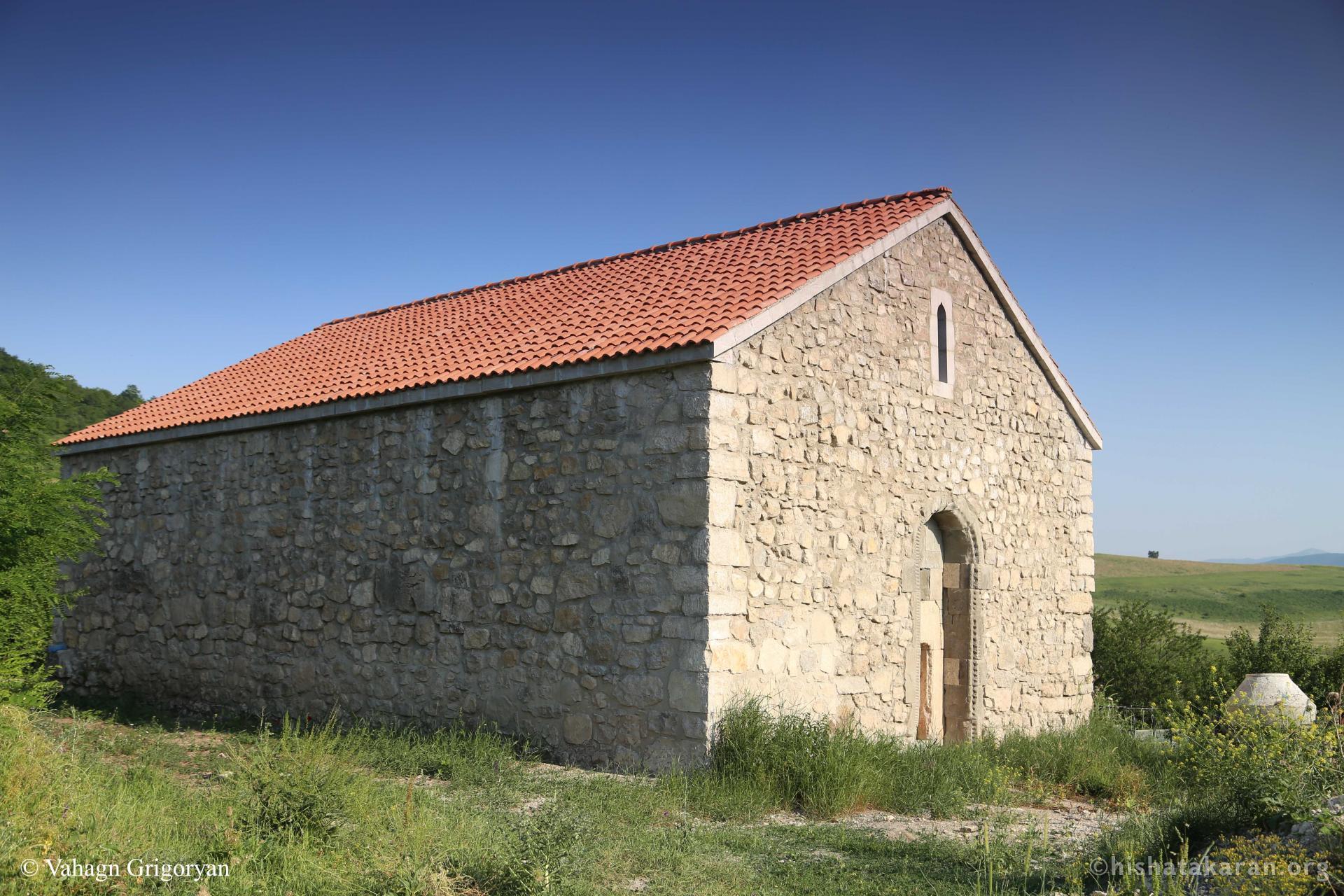
The church is located about 1.5 km northwest of the village of Sarushen, on the right side of the Stepanakert–Hadrut road, within the area of the former settlement of Pirumashen. Since the name of the church is not known, it has conventionally come to be called after the name of the settlement. According to Nikoghayos Ghahraman-Kʻevkhoyan (Artsakh-born), the church was built in the year 1554 AD (according to the Armenian calendar ՌԳ ), simultaneously with the Church of the Surb Amenaprkich [Amenapʻrkichʻ](the Holy All-Savior Church) of Sarushen1. However, no construction inscription confirming this date has survived on the present structure. Embedded in the church walls are numerous khachkars of similar design, nine of which bear inscriptions. Yet, only the khachkar placed in the northern niche of the altar is dated — to the year 1615 AD2.In the 17th century, the church was rebuilt on the site of the earlier one constructed in 1554. What is remarkable is that many khachkars and tombstones from much earlier periods, mostly dating to the 14th–16th centuries, are embedded in the walls of the current church. The khachkars belonging to an earlier period were most likely inserted into the walls during the reconstruction of the 17th century.
According to preserved information about the Pirumashen settlement and church: “In the 16th century, when the Turkish invaders entered Karabakh, they gathered the inhabitants of Pirumashen, locked them in the church, and burned it.”3 Another source confirming this historical account is provided by architect Samvel Ayvazyan: “Another confirmation of this was conveyed to us in 2014 by the mayor of Sarushen. During 1970–73, while building a farm adjacent to the church (on its western side), bulldozing uncovered a pile of mixed human bones, which he personally witnessed.”4
Restoration architect Samvel Ayvazyan has provided a detailed architectural description of the church:
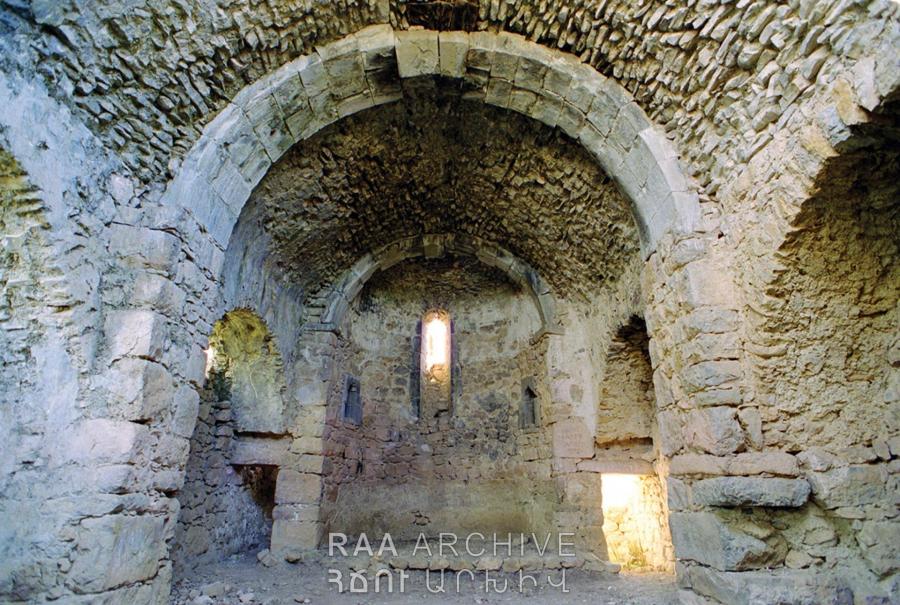
“The Pirumashen Church belongs to the group of basilicas and is classified among the single-nave type. More specifically, it falls under the subtype with a single pair of wall piers. Within this subtype, Pirumashen is distinguished as belonging to the group that has two vestries and massive, deeply embedded wall piers measuring 120–130 cm. Thanks to these, four deep (100 cm) wall arches were formed along the longitudinal walls, extending eastward and westward (two adjoining the southern wall and two adjoining the northern wall). The cylindrical vault of the church’s prayer hall, which rests on the arch connecting the wall piers, is seated at its base on the aforementioned wall arches. Structural features of this kind are also found in the Berkni Church5 and the Kʻarhan Monastery of Mirzik6.
Comparative analysis of Pirumashen’s portal shows that it is characteristic of the 16th–17th centuries. The frontal design of the entrance is also typical of a later period: the frame rises with rather slender proportions, leaving the doorway opening below. Similar solutions—regardless of the architectural composition of the building—are found in the churches of Hin Taghaser village site in the Hadrut district (1635), St. Minas in the village of Hak (Kashatagh district), Surb Astvatsatsin in Merik, Surb Astvatsatsin in the village of Chardakhlu (Northern Artsakh), and Surb Hakob in Voskanapat.
On-site research and comparative analyses confirm that the Pirumashen Church was indeed built in the 15th–16th centuries.”7
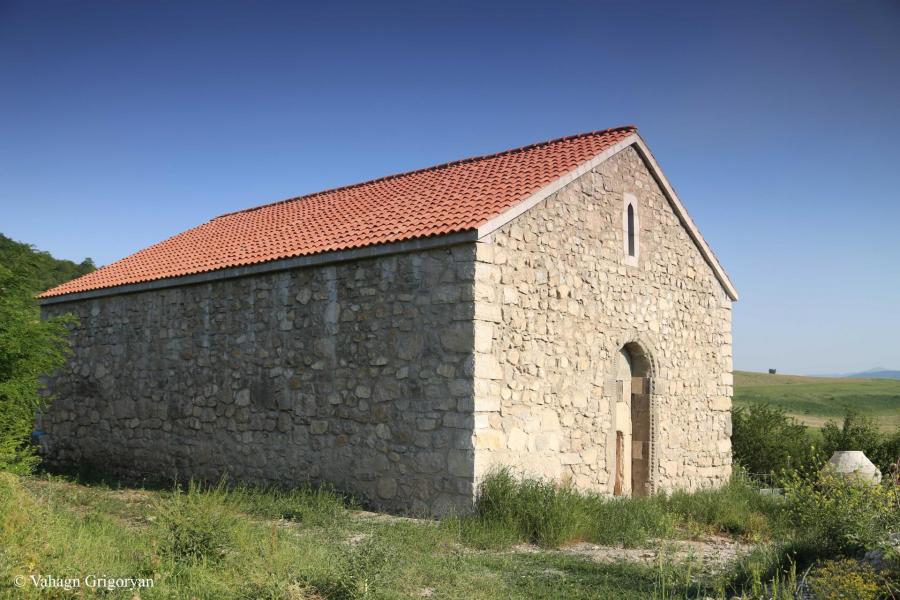
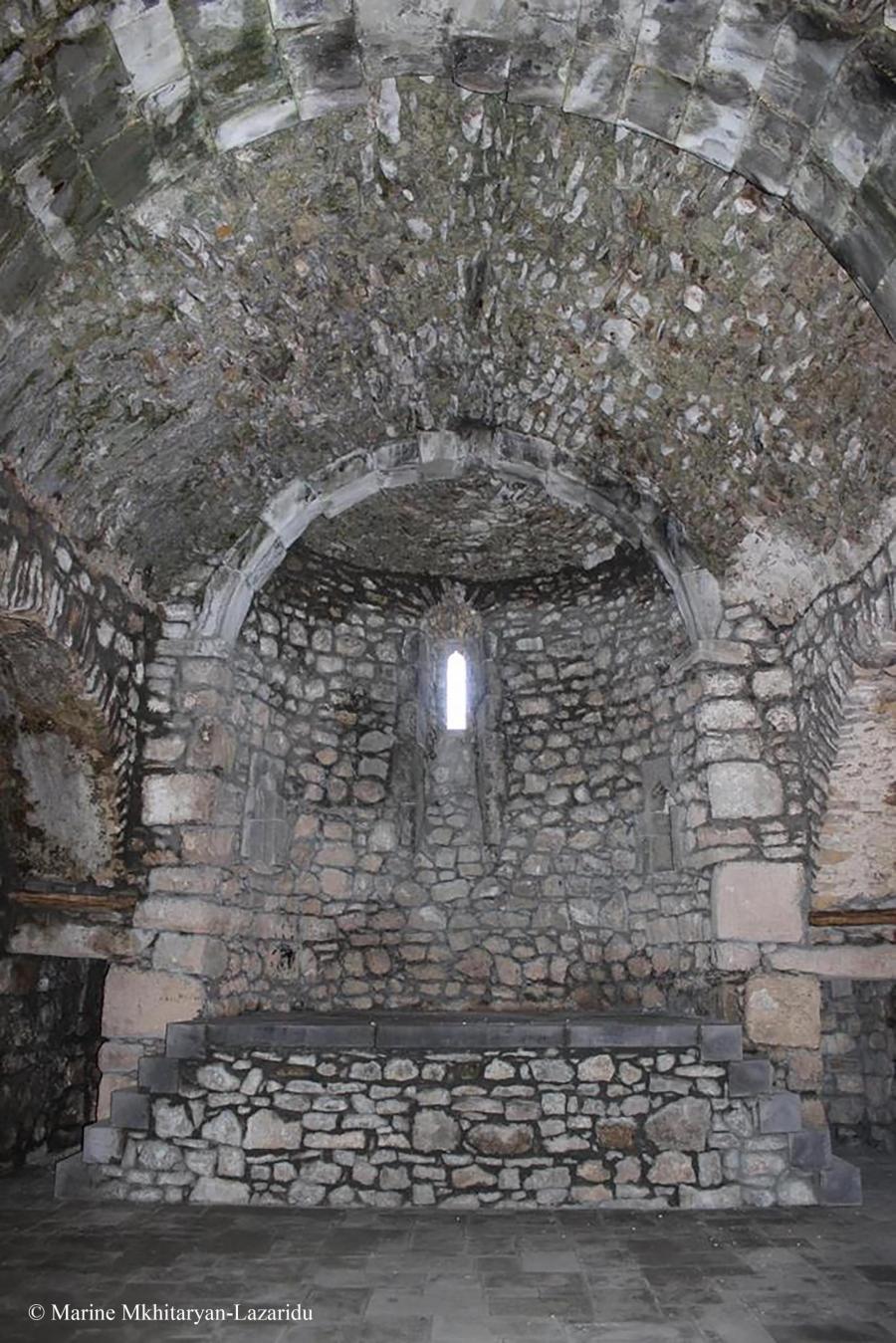
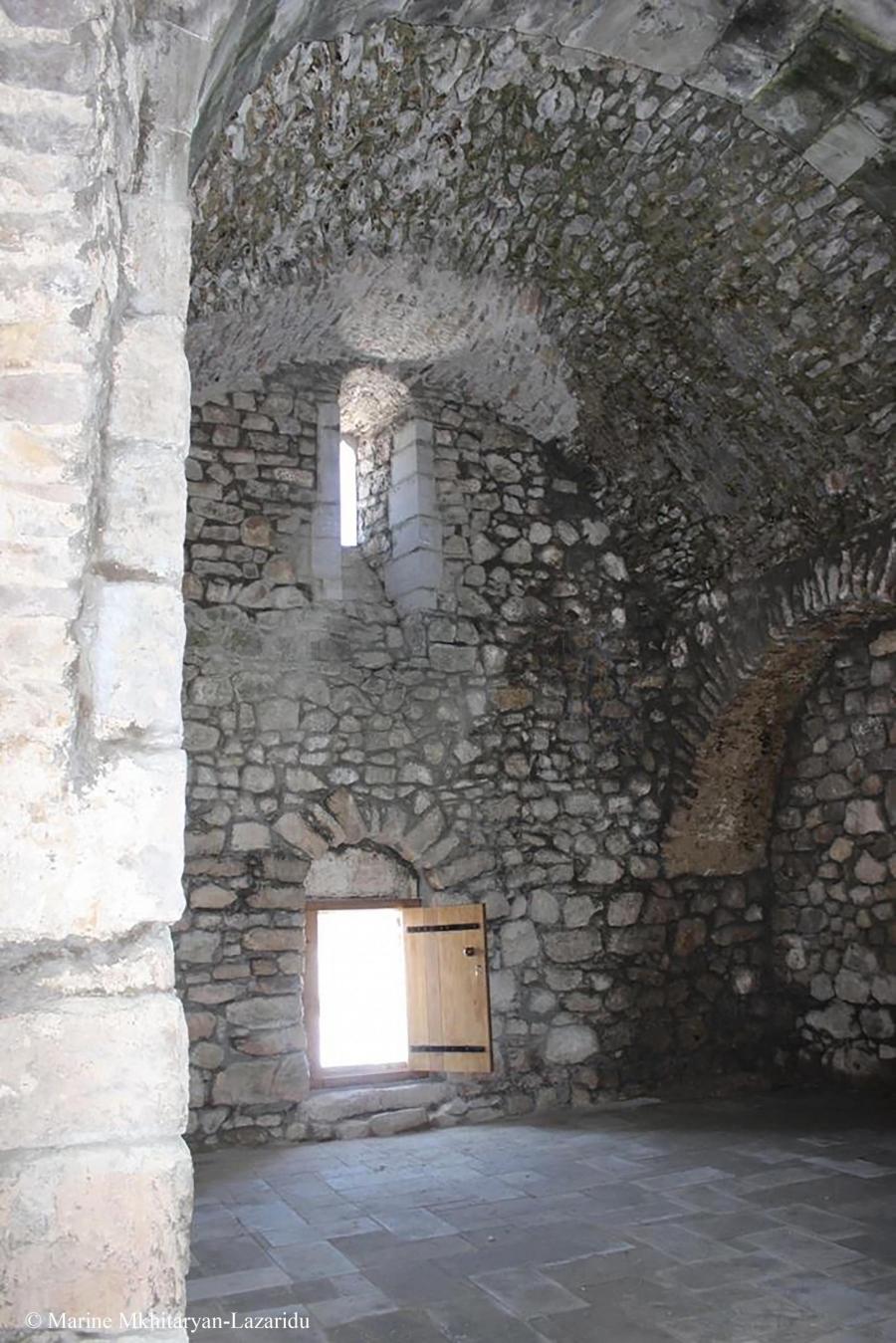
The main structure is built of roughly hewn and unworked local stones. The cornerstones, arches, and window/door frames are laid with finely dressed yellowish and gray limestone. The altar is elevated, with two five-step staircases leading up to the sanctuary from either side.
The sanctuary is semicircular, topped with a vaulted semi-dome. On the northern and southern walls there is one niche each, framed with dressed stone arches. In the southern niche, two inscribed khachkars are embedded, bearing the following inscriptions: «Խաչս | Էըային(՞)» and «Խաչս | Հումին»8.
In addition to these inscribed khachkars, four more are placed in the niche of the northern wall of the sanctuary, with hardly discernible inscriptions: «Խ|ան|ումին», «Խա|չս | ․․․ու․․․ա․․․ին» և «․․․ին», «.․․քին»9.
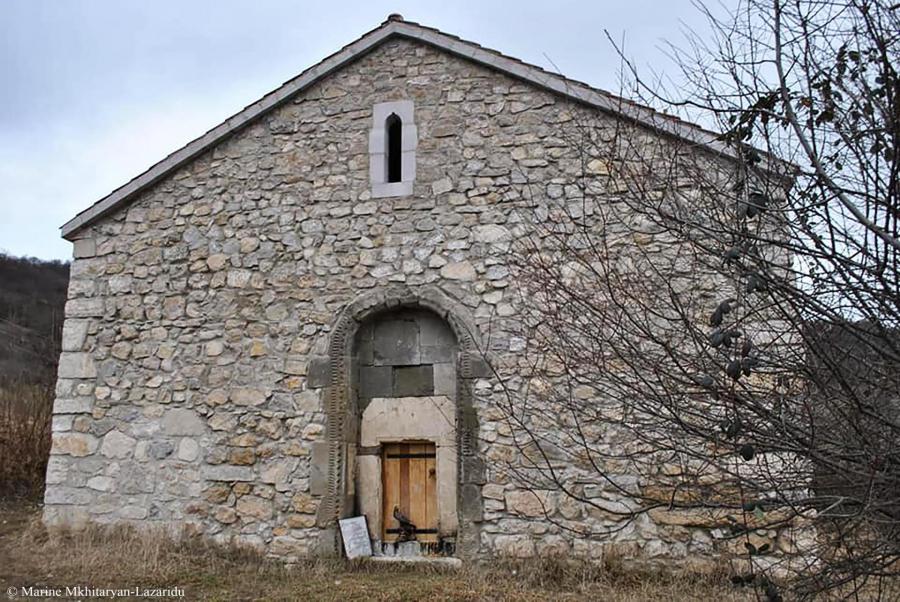
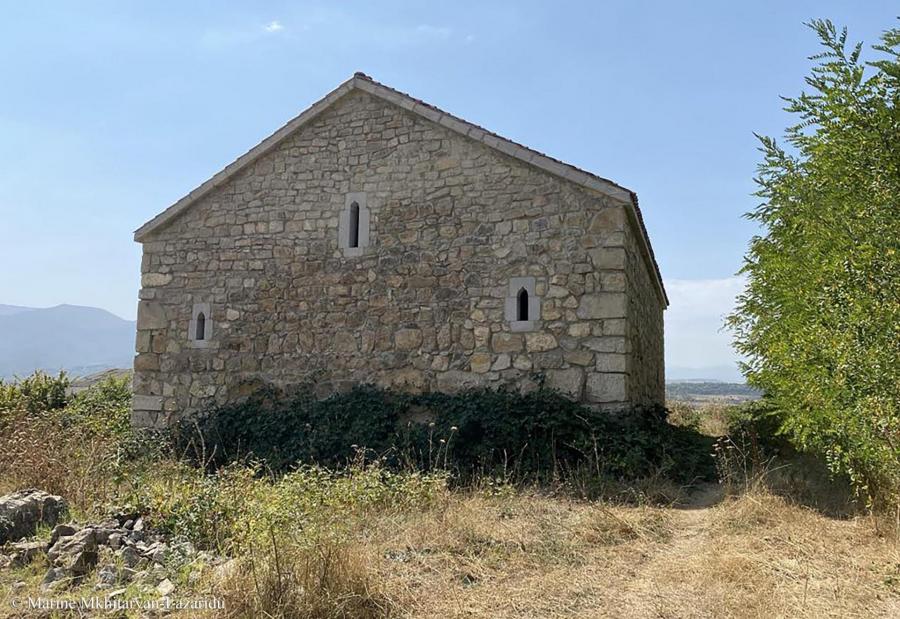
The church is illuminated by four windows that widen inward: three opening on the eastern façade and one on the western façade. The only entrance is located in the central part of the western wall. The portal is distinguished by its ornamentation and slender proportions of the frame. The doorway is set in the lower part of the overall frame. The frame is bordered with a band of toothed stonework and a geometric decorative motif. On both the northern and southern sides, inscribed khachkars are embedded.
The northern khachkar bears the inscription: «Ս[ուր]բ խաչ|ս (բ)արէ|(խ)աւս | Խաչ|․․․ կ|ին» while on the southern khachkar a fragment of the inscription has survived: «Խա|չս | ․․․|ին»10.
The main decorative elements of the church are the ornamental frame of the entrance and the small khachkars of different periods and functions embedded in the walls.
Historical record
Cultural characteristics, period, century (centuries)
Armenian Apostolic Church, 16th–17th centuries Documents for dating: according to a reliable document
Based on architectural and structural characteristics Documents for dating: Justification of the date based on epigraphy.
Chronological table of monument
It was built in the 16th–17th centuries. During the Soviet period, the church was used as a warehouse. In 2010–2014, it was restored under the initiative of the Department of Tourism and Protection of Historical Environment of the Government of the Republic of Artsakh. Chronological table of research on the monument (period, author, works)
In the 1980s, the church was measured for the first time by monumentologist Samvel Karapetyan. Historian Shahen Mkrtchyan referred to the Pirumashen Church in his book Historical and Architectural Monuments of Nagorno-Karabakh.Between 2010 and 2014, the church was restored based on the study and project of restoration architect Samvel Ayvazyan.
Descriptive-Characterization Report
Architectural overview: architectural composition
It is a vaulted structure with a rectangular floor plan and a semicircular sanctuary. Building material (type, colour)
Sandstone, limestone, lime mortar, plaster. Building openings: entrances (number, orientation)
One entrance, located on the western side. Building openings: windows (number, orientation)
Four windows: three on the eastern side and one on the western side. Structures (load-bearing, roofing)
Arched, vaulted Roof (material, type)
Double-pitched, tiled Finishing and decoration
Modest Type
Village church Dimensions: length
12.70 m Dimensions: width
9 m The condition of the monument before the forced displacement of Armenians
Good (fully restored) Value
The church is one of the remarkable examples of late medieval architecture in Artsakh. It holds significant importance for the former settlement of Pirumashen and its historical heritage. ----------------------------
1. Cf. Artsakhtsi, 1893, pp. 45–46.2. Ayvazyan, S., 2020, p. 11.
3. Mkrtchyan, Sh., 1985, p. 184.
4. Ayvazyan, S., 2020, p. 10.
5. Republic of Artsakh, Kashatagh Region, Kovsakan.
6. Northern Artsakh, Khanlar Region, Mirzik Village. Currently in the Goygol District of the Republic of Azerbaijan.
7. Ayvazyan, S., 2020, pp. 12–14.
8. Ibid, p. 10.
9. Ibid, p. 11.
10. Ibid, p. 10.
11. Mkrtchyan, Sh., 1985, p. 185.
Measurements
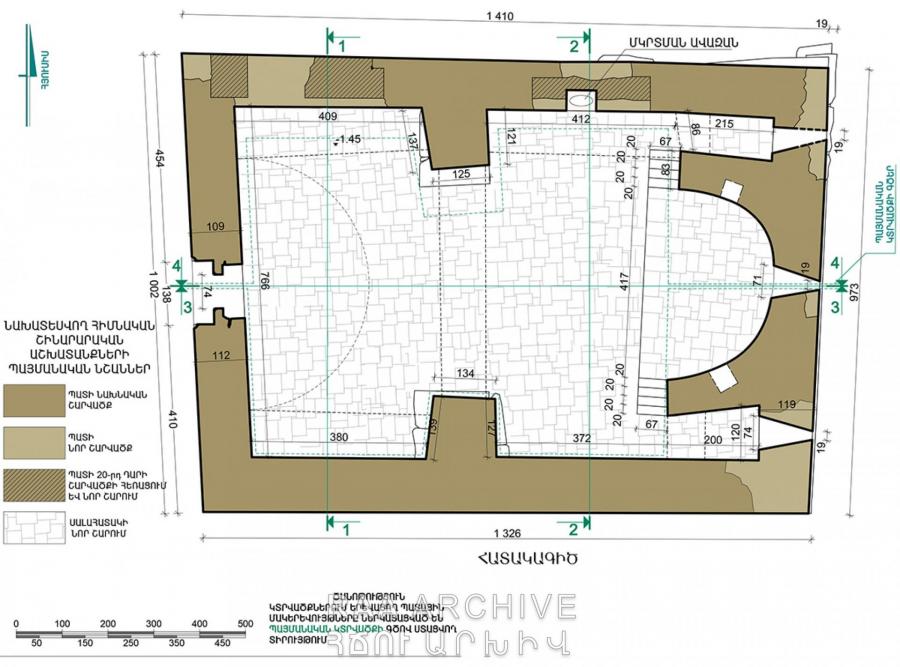
Plan of the Pirumashen Church
Measurement: Samvel Ayvazyan
Photos
...
Main bibliography
Այվազյան Ս․, 2020 - Այվազյան Սամվել, «Փիրումաշենի եկեղեցին և նրա ճարտարապետաշինարարական վերլուծությունը», «Վարձք», № 14, Երևան, 2020, էջ 10-17։
Արցախեցի, 1983 - Արցախեցի (Նիկողայոս Ղահրաման-Քևխոյան), «Սարուշէն գիւղը», «Արաքս» հանդես, գիրք Ա, Ս․ Պետերբուրգ, 1893, էջ 44-48։