
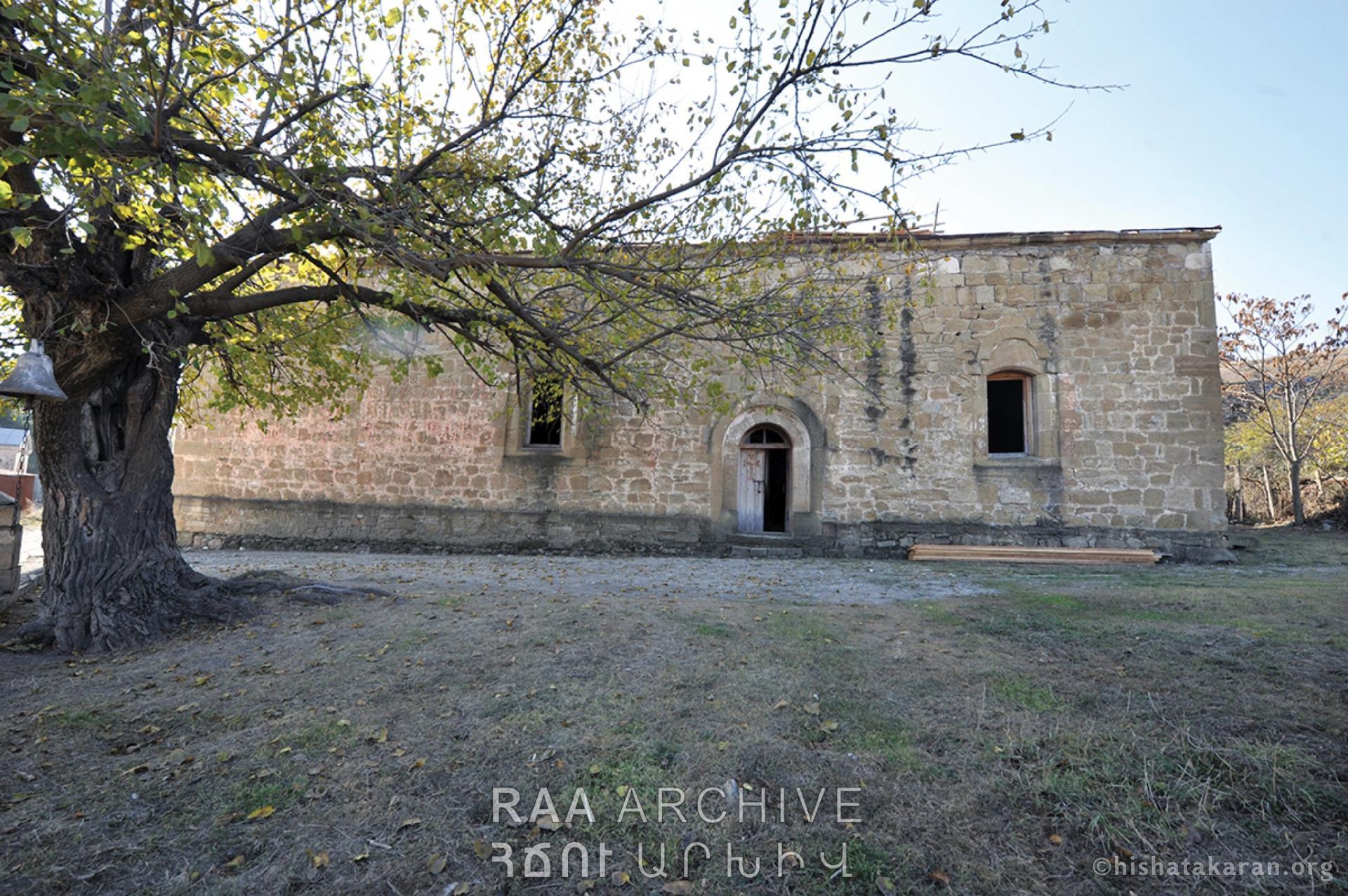
Talish, Surb Amenaprkich [Amenapʻrkichʻ] (Holy All-Saviour) Church
Monument
Monument type
Church Given name
Amenaprkich [Amenapʻrkichʻ] Other names
initial, sequential and current
Built in 1894 and functioning until the beginning of the 20th century. During the Soviet period, it was used for economic purposes. During the years of Artsakh’s independence, the church was cleaned and renovated. Since October 2020, the village of Talish has been occupied by Azerbaijan. The current condition of the monument is unknown. Original ownership and affiliation
Talish The name of conservation unit
Church A topographic report
Region (province), community
At various historical periods, Talish was part of the Great Kuenk district of the province of Artsakh, Greater Armenia (later Gyulistan), and until 2023, of the Republic of Artsakh, Martakert region. Address
Republic of Artsakh, Martakert region, Talish Topography
Situated 19 km northwest of the town of Martakert. Distance and location from community
Located in the central part of Talish village. Site elevation above sea level
652 meters above sea level. Hydrography
Located 4 km south of the Inja River. Description
In the central part of the village of Talish, in the Martakert district, between the neighborhoods of Khlapants and Yeri, is located the Holy All-Saviour Church. Historical information about the church is very scarce. Notably, the ethnographer and folklorist Bishop Makar Barkhudaryants mentions this structure:
“… the church is newly built, constructed at the expense of the community, resting on four massive columns, measuring 21.85 meters in length and 13 meters in width, with two doors on the southern and northern sides, and one priest.”1
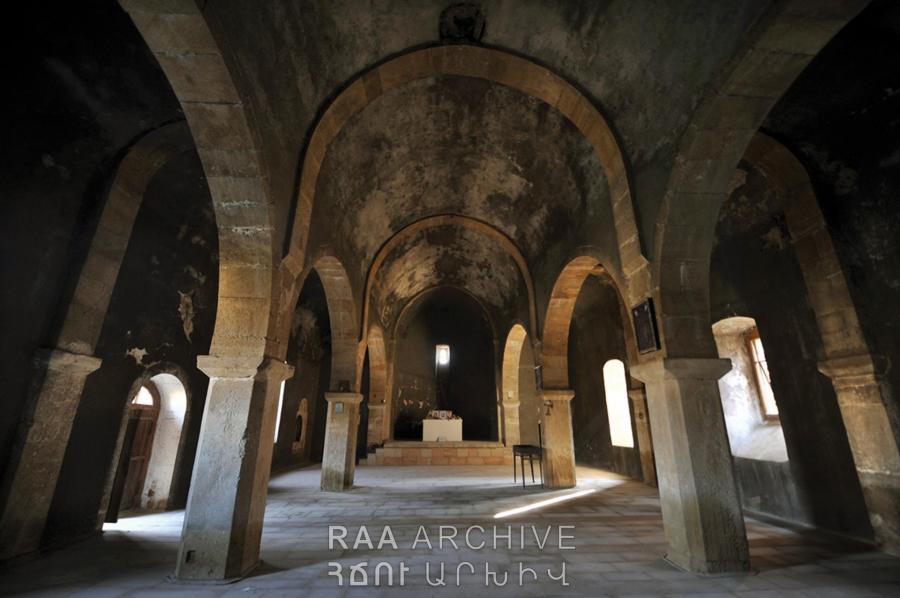
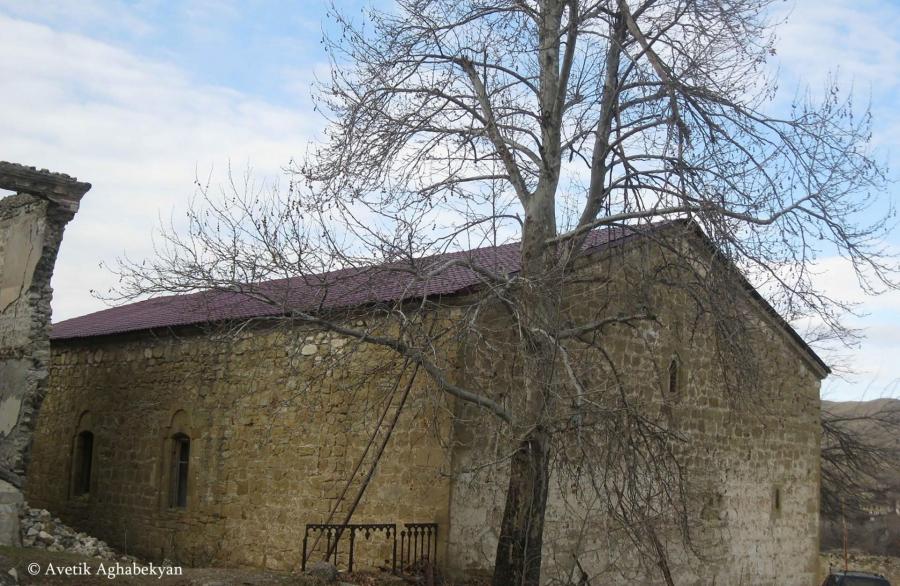
The building has a rectangular plan, a three-nave vaulted hall, whose massive and strictly symmetrical structure emphasizes the serene grandeur of the interior space. The vaults of the relatively narrow side naves are anchored to the wall piers of the northern and southern walls and to the arches rising from four central pillars. Between them soars the central nave, wider and higher, whose vault rests on the same pillars and on the arches springing from the two wall piers of the sanctuary. This symmetrical and harmonious system not only provides the structural stability of the hall but also creates a bright, spatially open, and impressive environment.
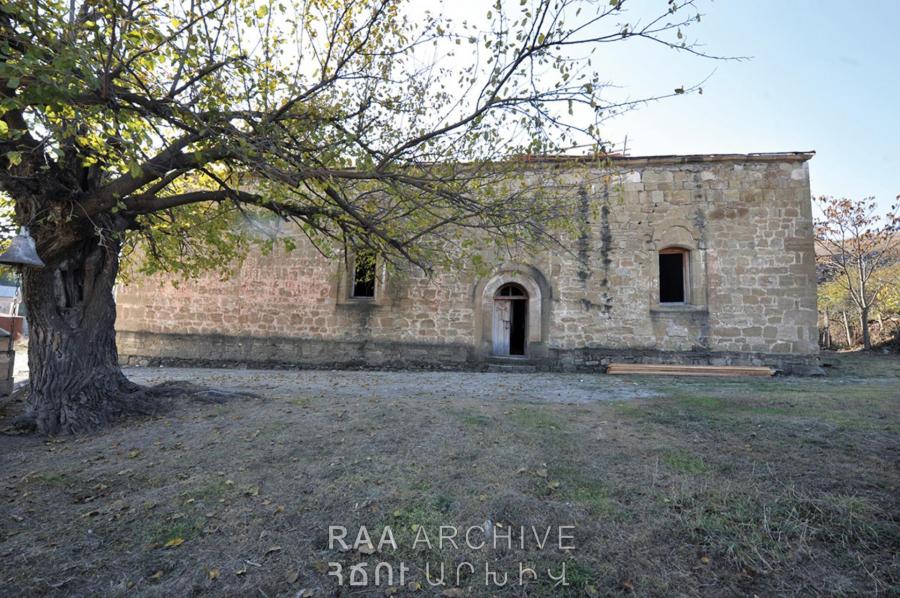
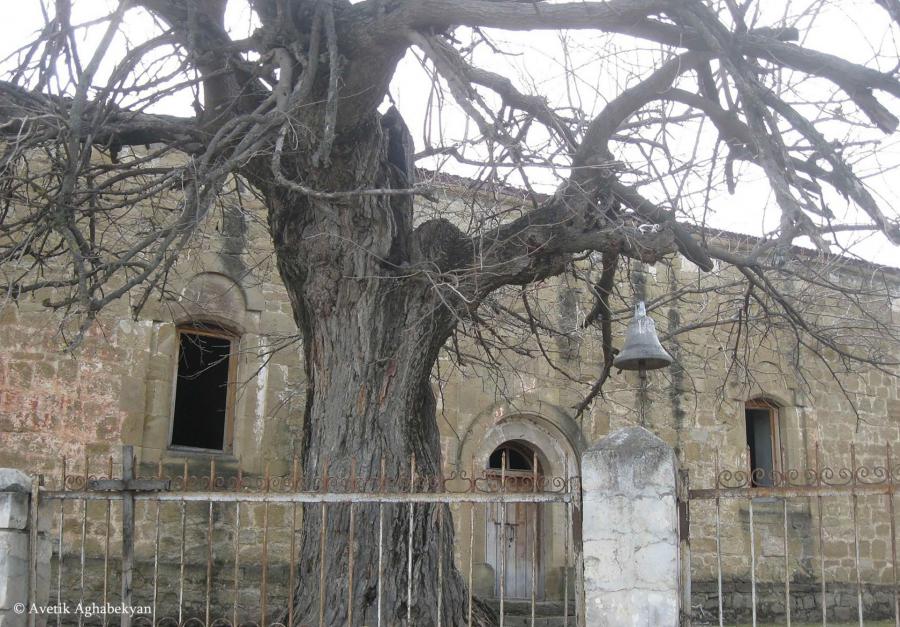
On the eastern side lies the semicircular apse with adjoining sacristies. The altar is elevated, and on both sides, four steps lead up to the sanctuary. Small niches are opened in the side walls of the apse. On the northern wall of the church, near the entrance to the sacristy, is the baptismal font, placed inside a vaulted recess. Originally, the church had two entrances - on the south and north sides; later, the southern entrance was sealed. The northern entrance has an arched opening framed by a double arch on the exterior.
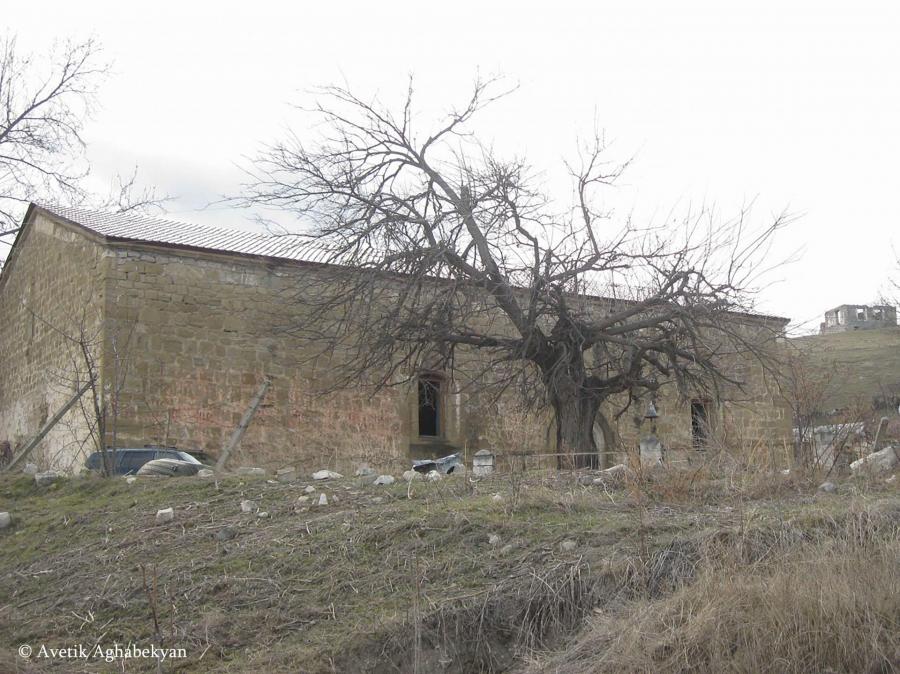
The church is illuminated by nine windows. On the northern wall, two large windows with semicircular tops are opened, and on the southern wall—three. These are complemented by smaller windows on the eastern and western sides, inwardly splayed, ensuring even lighting of the interior. Of the three eastern windows, the two lateral ones illuminate the sacristies, while the central one lights the apse. Another window is opened in the central part of the western façade, completing the overall system and balancing the interior lighting of the church. The roof is gable-shaped and covered with tin.
Historical record
Cultural characteristics, period, century (centuries)
Armenian Apostolic Church, 19th century. Documents for dating: Justification of the date based on epigraphy.
Information about the foundation of the church was recorded by ethnographer and folklorist Bishop Makar Barkhudaryants.In the Dictionary of Toponyms of Armenia and Adjacent Regions, the construction date of the Talish church is mistakenly given as 18992.
Descriptive-Characterization Report
Architectural overview: architectural composition
Rectangular in plan, three-nave vaulted hall. Building material (type, colour)
Yellowish-white limestone, sandstone, lime mortar. Building openings: entrances (number, orientation)
Two entrances, north and south, of which the southern one is sealed. Building openings: windows (number, orientation)
Nine windows: three on the east, three on the north, two on the south, one on the west. Structures (load-bearing, roofing)
Arched, vaulted. Roof (material, type)
Gable roof, covered with tin. Methods of construction (processing of construction material, masonry, size, type, cladding)
Built of medium-sized stones and lime mortar. The walls are mostly laid with semi-dressed stones; the frames of all openings, the pillars, and the arches are made of finely hewn limestone. Finishing and decoration
Modest Imagery (photos)
Type
Village church Dimensions: length
Length: 22 m Dimensions: width
12 m The condition of the monument before the forced displacement of Armenians
Good. Value
The monument is of great importance for the study of the history and spiritual life of Talish village. ----------------------------
1 Barkhudaryants, M., 1895, p. 226.2 Hakobyan, T., Melik-Bakhshyan, S., Barseghyan, H., 1986, p. 396.
Measurements
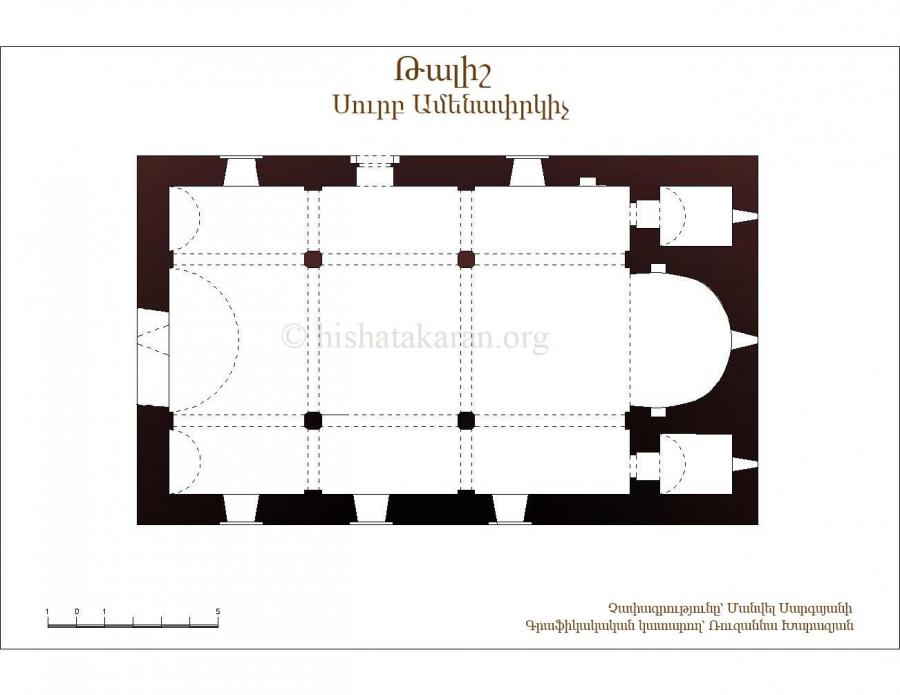
Talish, Surb Amenaprkich [Amenapʻrkichʻ] (Holy All-Saviour) Church
Measurement: Manvel Sargsyan
Photos
...
Main bibliography
Hakobyan T., Melik-Bakhshyan S., Barseghyan H., 1986 - Hakobyan T., Melik-Bakhshyan S., Barseghyan H., Հայաստանի եւ հարակից շրջանների տեղանունների բառարան [Hayastani ew harakicʿshrjanneri toponimneri baṛaran (Dictionary of Toponyms of Armenia and Adjacent Territories)], Yerevan University Press, Yerevan, 1986.
.
S.D., A. L-Y.