
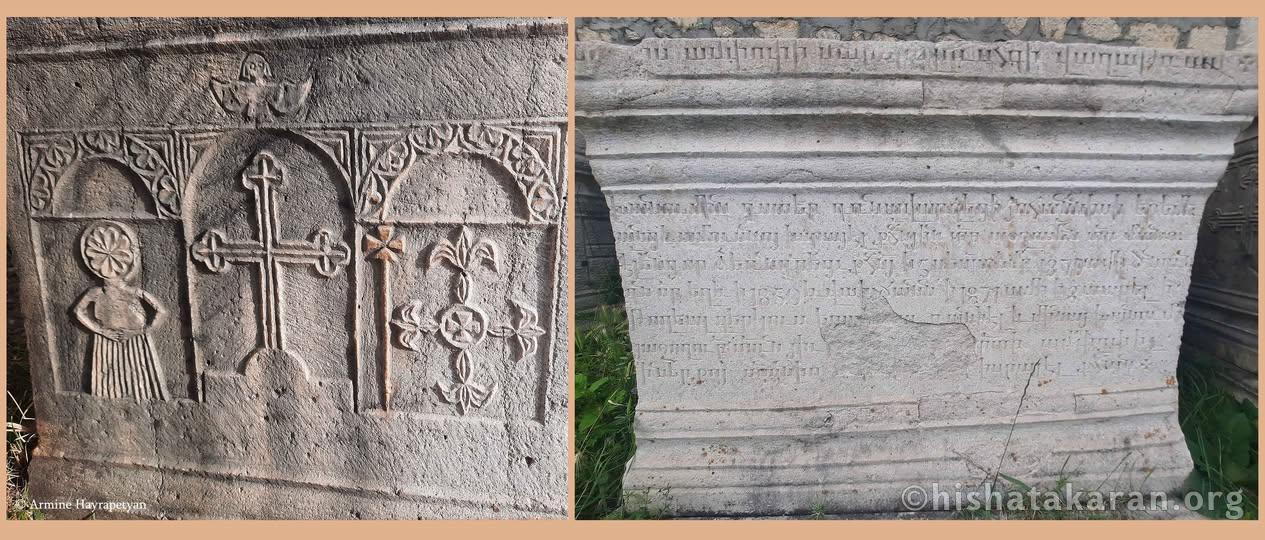
Karmir gyugh (Drnvarz [Dṛnavarz]), cemetery of Surb Astvatsatsin (Holy Mother of God) Church, Tombstone № 4
Monument
Monument type
Tombstone Given name
Tombstone of Khanum Other names
initial, sequential and current
The tombstone was erected in the cemetery in 1871. The village of Karmir was occupied by Azerbaijan on September 20, 2023. The current condition of the monument is unknown. Original ownership and affiliation
Drnavarz (later: Karmir village) The name of conservation unit
Tombstone A topographic report
Region (province), community
Greater Armenia, Province of Artsakh, District of Moukhankʻ (later: Varanda), until 2023 Republic of Artsakh, Askeran region, Karmir village. Address
Republic of Artsakh, Askeran region, Karmir village. Topography
Situated 18 km southeast of Askeran. Distance and location from community
Located in the old quarter of Karmir village, in the cemetery of the Holy Mother of God Church. Site elevation above sea level
1200 meters above sea level. Hydrography
Located 4 km north of the source of the Varanda River. Description
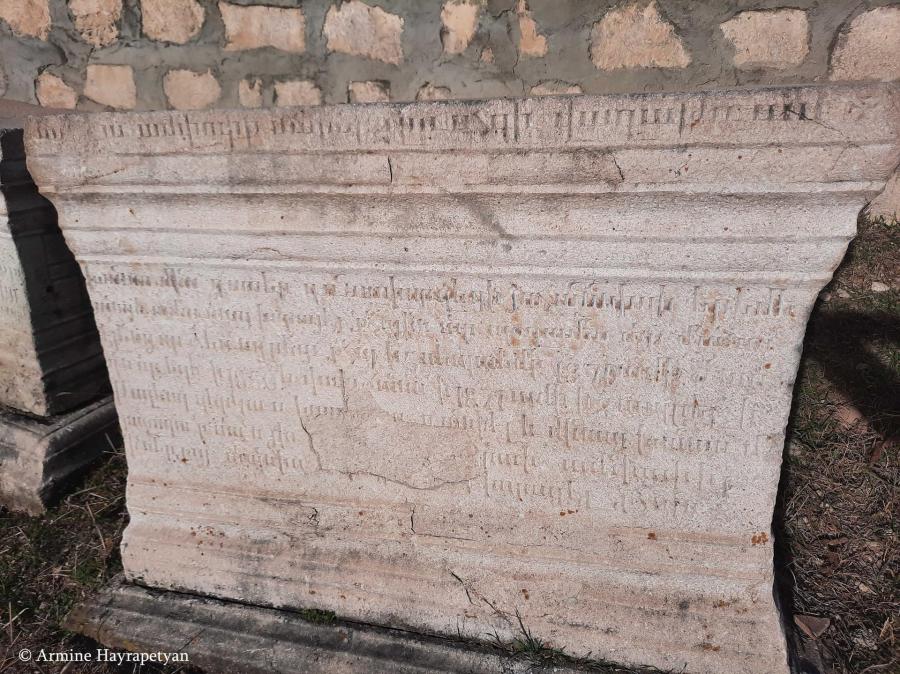
In the cemetery of Surb Astvatsatsin (Holy Mother of God) Church in Karmir Gyugh (Drnavarz), beneath the southeastern wall, a large table-shaped tombstone carved from a single block of stone has been preserved. It features a prominent cornice and rests on a low, wider pedestal that echoes the cornice’s molding. An eight-line inscription is engraved on the southern face of the tombstone. Remarkably, the inscription begins on the upper band of the cornice and continues onto the southern side of the stone, filling the entire surface:«Տ(ապան)իս ամփոփի մարմին լուս[ա]հ[ո]գի վաղ[ա]թ[ա]ռամ | Խանումին դստեր դռնավարզեցի Յոhաննիսի Երեմե|անց եւ ամուսնոյ Իսրայէլ ք[ա]հ[ա]ն[ա]յին Տ[է]ր Պողոսե[ա]ն Տ[է]ր Մանու|էլե[ա]նց որ ձեռնադր[ու]եց[ա]ւ ք[ա]հ[ա]ն[ա]յ ի 5 սեպտեմբ[եր] 1870 ամի ծնուն|դն ս[ո]ր[ա] եղեւ ի 1850 եւ վախճանն ի 1871 ամի ի 8 ապրել ի | թողեալ զ երկուս երա(խ...)ա Դանիէլ եւ Մինայ խանում | յաջողու[թեամ]բ Տ[եա]ռն յիւ․․․․ ․․․ր[․․․]տի ամփոփիչ | ի ներքոյ տ[ա]պ[ա]նիս ․․․ Իսրայէլ ք[ա]հ[ա][ն[ա]]յ[ի]ն»։
(Within this tomb are interred the remains of Khanum, of blessed memory, prematurely departed, daughter of Yohannis Eremeantsʻ of Dṛnavarz, and of her husband, Priest Israyēl (Israyēl kʻahanay), Tēr Poghos of the Tēr Manuēleantsʻ, who was ordained priest on September 5, 1870. He was born in 1850 and passed away on April 8, 1871, leaving two children, Daniēl and Mina Khanum. By the grace of God, ... Priest Israēl is likewise laid to rest beneath this tomb.)
The inscription is partially damaged on the upper left corner of the cornice and in the central area of the southern face. The two narrow lateral faces of the tombstone are decorated with carvings, while the northern face has not been preserved.
Of particular interest is the composition carved on the eastern face beneath three arched niches. In the central niche, on a pedestal symbolizing Golgotha, stands a large flowering cross with trefoil-ended arms. Within the square medallions of the two adjacent, ornamented arched niches are, on the left, a carved female figure, and on the right, an entirely unusual cruciform composition accompanied by a processional cross-staff. The figure on the right is depicted standing upright, full-length, hands clasped before the abdomen, clothed in a long, pleated garment. Especially striking and extraordinary is the female figure’s haloed head, in which the face is replaced by a nine-petaled, rose-like flower.
Above the central arched niche of the tripartite composition, outside the circular frame, is a depiction of an angel—or a bird-like spirit figure—with wings outspread. According to the aforementioned inscription carved on the tombstone, the grave contains the remains of, prematurely departed, daughter of Yohannis Eremeants of Dṛnavarz, and her husband, Priest Tēr Poghosean Israēl (Israēl kʻahanay) of Tēr Manuēleantsʻ : «դռնավարզեցի Երեմեանց Յոhաննիսի դստեր և իր ամուսնու Տ[է]ր Մանու|էլե[ա]նց Տ[է]ր Պողոսե[ա]ն Իսրայէլ ք[ա]հ[ա]ն[ա]յի աճյունները»։
On the eastern side, a pair of drooping bifurcated flowers are carved within a vase, arranged in an almost symmetrical, mirror-like composition.
Historical record
Cultural characteristics, period, century (centuries)
Armenian Apostolic Church, 19th century Documents for dating: according to a reliable document
Based on the tomb inscription Chronological table of research on the monument (period, author, works)
The monument has never been studied. The inscription is published here for the first time. Descriptive-Characterization Report
Type
Coffer-shaped tombstone The condition of the monument before the forced displacement of Armenians
Average Value
The monument is significant for the study of the history of Dṛnavarz (Karmir village) in Artsakh, as well as for understanding its spiritual life. Photos
...
.
A.H, S. D. , A. L-Y.