
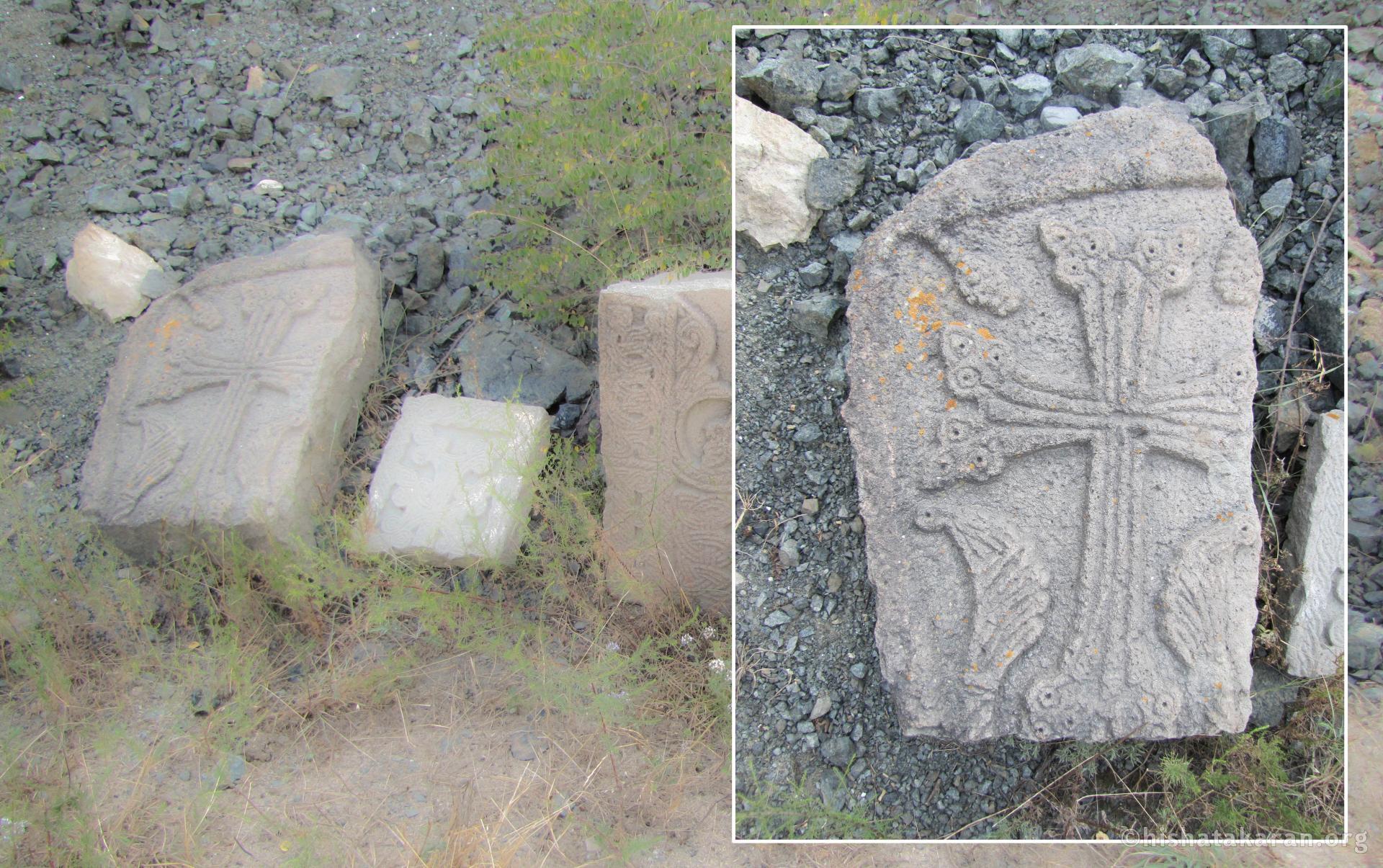
Nor Brajur, khachkar № 3
Monument
Monument type
Khachkar initial, sequential and current
The khachkar was carved in the 11th–12th centuries as a funerary monument.
In the 18th–19th centuries, the nomadic Turkic pastoralists who had settled here destroyed the cemetery during the Soviet era.
In 1993, after the liberation of Karvachar, the residents of Nor Brajur village discovered the khachkar together with four other khachkars and re-erected them, resulting in the formation of a new sacred site.
In 2020, the Karvachar district was once again occupied by Azerbaijan. There is no information about the current condition of the monument.
Original ownership and affiliation
Principality of Upper Khachen The name of conservation unit
Khachkar A topographic report
Region (province), community
Greater Armenia, Artsakh province, Vaikunīk canton (later Upper Khachen or Tsar), until 2023: Republic of Artsakh, Nor Shahumyan (Karvachar) district. Address
Republic of Artsakh, Nor Shahumyan (Karvachar) district, Nor Brajur Topography
8 km northeast of Karvachar. Distance and location from community
Located in Nor Brajur village. Site elevation above sea level
1260 m. Hydrography
Located in the valley of the Trtu (Tartar) River, 130 m from the river, in the left-bank district of the village. Description
Nor Brajur village is situated in the northwestern part of the Republic of Artsakh, within the Nor Shahumyan (Karvachar) district. From at least the Middle Ages until the mid-18th century, an Armenian settlement existed here, though its original historical name has not been preserved.
From the mid-17th century onward, the Armenian population gradually left the area due to predatory raids by Turkic tribes and Lezgins. Later, the nomadic Turkic pastoralists who settled in the village destroyed much of the Armenian historical and cultural heritage, demolishing the church and the cemetery, with major destruction occurring particularly during the Soviet era.
In 1993, following the liberation of the Karvachar district, the village was repopulated. Residents of Nor Brajur and the surrounding areas discovered reused fragments of khachkars in the walls of various secular buildings and during earthworks, as well as dozens of intact khachkars, which were re-erected in different parts of the village. These subsequently became sacred sites for the local population.
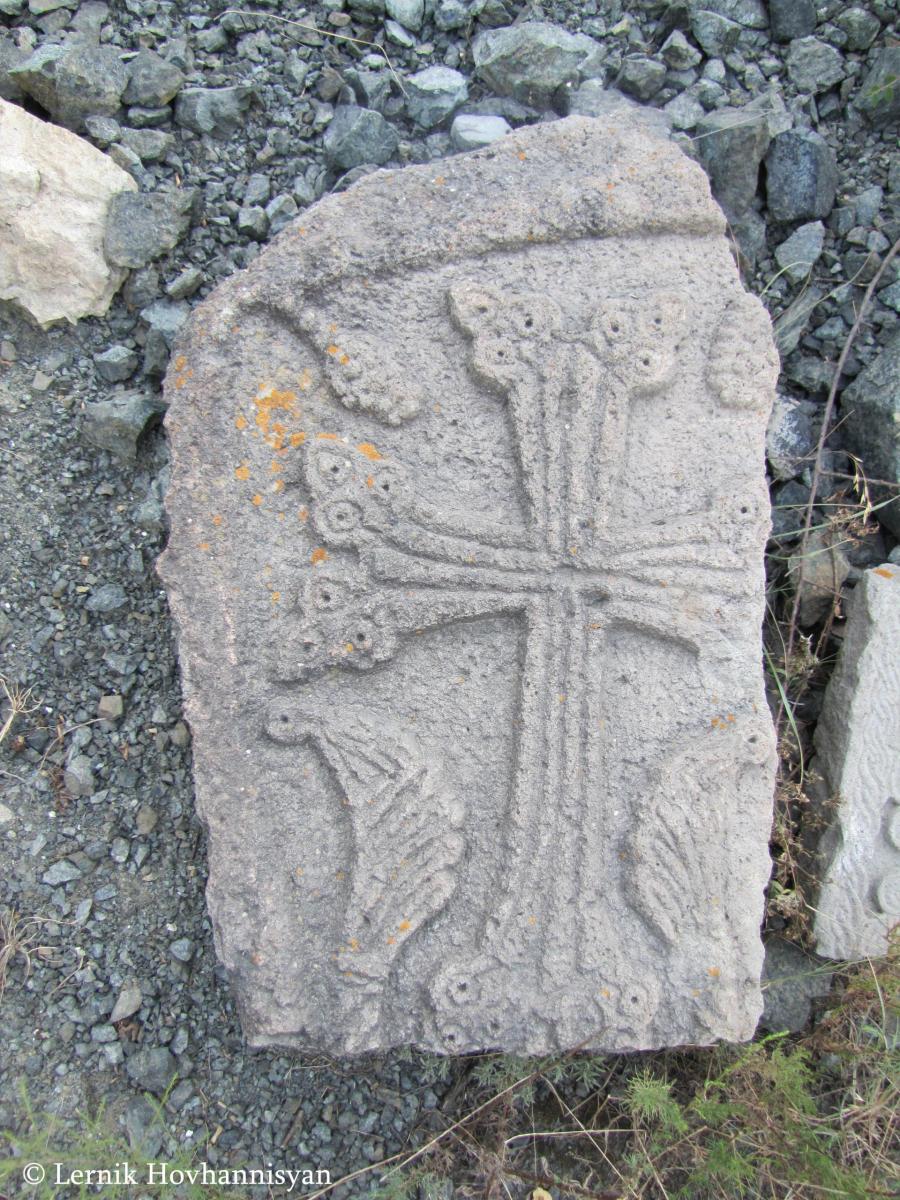
The current khachkar is located by the roadside in Nor Brajur village, leaning against several broken khachkars. The lower portion and edges of the khachkar, which had been repurposed as building material by the pastoral nomads, are damaged. The monument is small, with an arched top, and carved from gray limestone.
At the center of the design is a large flowering cross with paired triple-lobed ends. From the upper right and left sides of the cross, grape clusters descend toward the center, while traditionally and elegantly stylized palm branches rise from the lower portion toward the horizontal arms of the cross.
Historical record
Cultural characteristics, period, century (centuries)
Armenian Apostolic Church, 11th–12th centuries Documents for dating: according to a reliable document
Based on stylistic and iconographic features and comparative analysis. Chronological table of monument
Chronological table of research on the monument (period, author, works)
In 2010, at the initiative of the Tourism and Historical Environment Protection Department under the Government of the Republic of Artsakh, Lernik Hovhannisyan visited the monument site and, based on fieldwork, prepared a certificate-document for the monument.The khachkar is also mentioned by Samvel Karapetyan in the Mravakank volume of the History of Armenia series, published in 20192.
Descriptive-Characterization Report
Building material (type, colour)
gray limestone Dimensions: width
43 cm Dimensions: height
67 cm Dimensions: depth, thickness
21 cm The condition of the monument before the forced displacement of Armenians
Bad Value
It holds significant importance for the study of medieval khachkar art in Artsakh. ----------------------------
1 The historical name of the settlement is unknown. It was called “Gylchly” by the pastoral nomads who settled here.2 Karapetyan S., 2019, p. 375.
Photos
...
.
A.H., A. L-Y.