
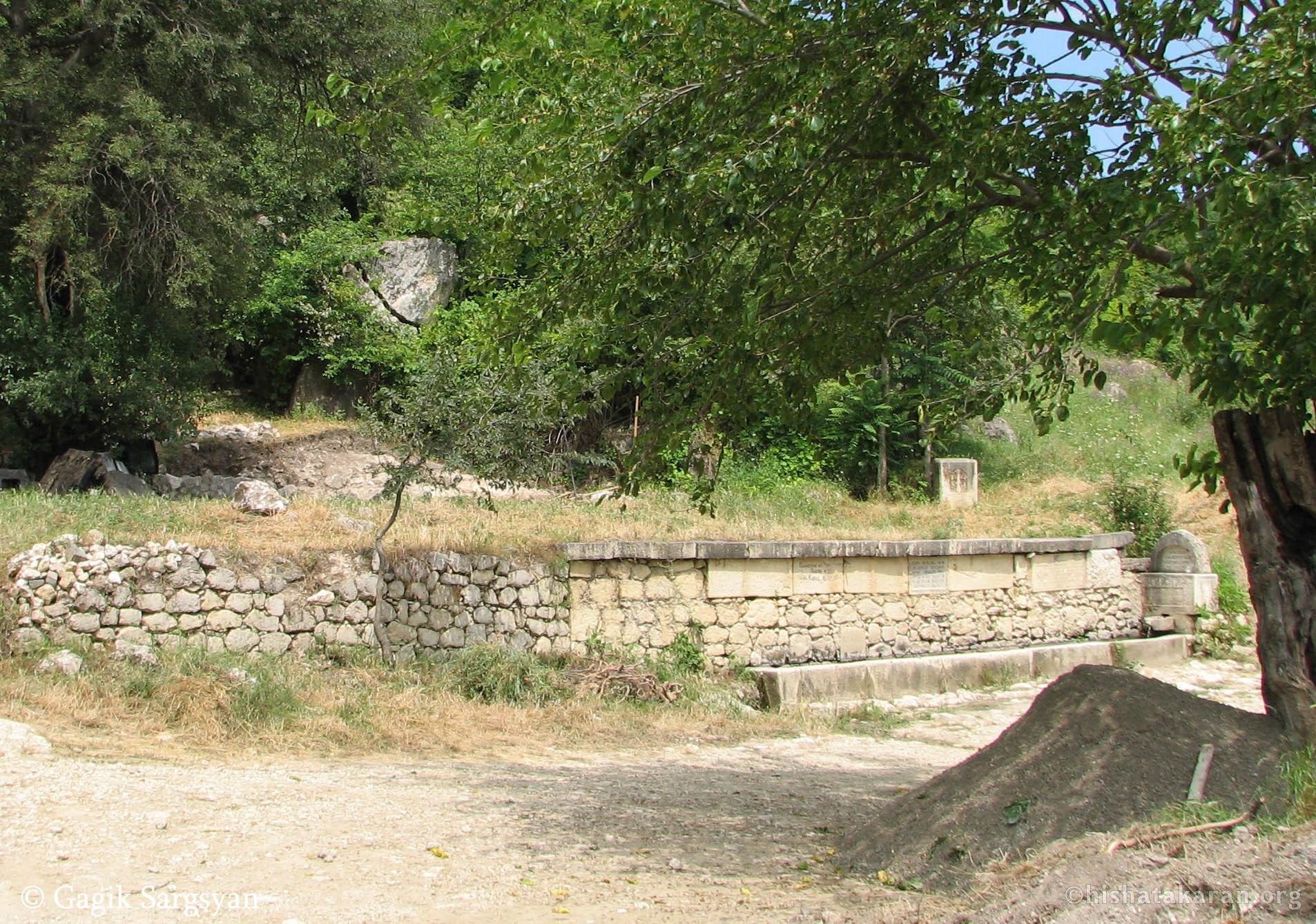
Dashushen, Surb Saribek fountain
Monument
Monument type
Fountain Given name
Source of Saint Saribek Other names
Saribek’s Spring, Srabek initial, sequential and current
The fountain was built in 1861 at the Saint Saribek shrine, from which the monument’s name originates. It has been renovated many times and has functioned continuously.
In September 2023, Artsakh was occupied and depopulated by the Azerbaijani army. There is no information on the current condition of the monument.
Original ownership and affiliation
Village of Kʻarashen (Dashushen)The name of conservation unit
Fountain, Source
Individually referenced sections (parts) of conservation unit
Fountain, tombstones A topographic report
Region (province), community
Greater Armenia, Province of Artsakh, District of Mukhankʻ (later Varanda), until 2023 — Republic of Artsakh, Askeran region, Kʻarashen (Dashushen) Address
Republic of Artsakh, Askeran region, Kʻarashen Topography
15 km southwest of the town of Askeran Distance and location from community
On the northwestern edge of Dashushen village Site elevation above sea level
891 meters above sea level Hydrography
Located in the valley of the Kʻarkar River, 820 m to the right of the riverbank, on a mountain slope Description
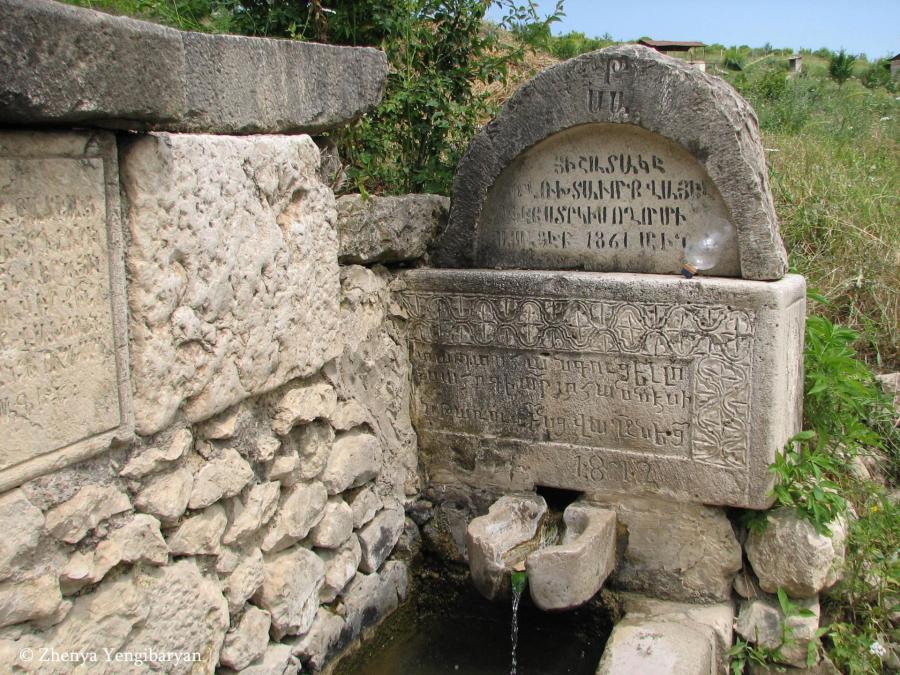
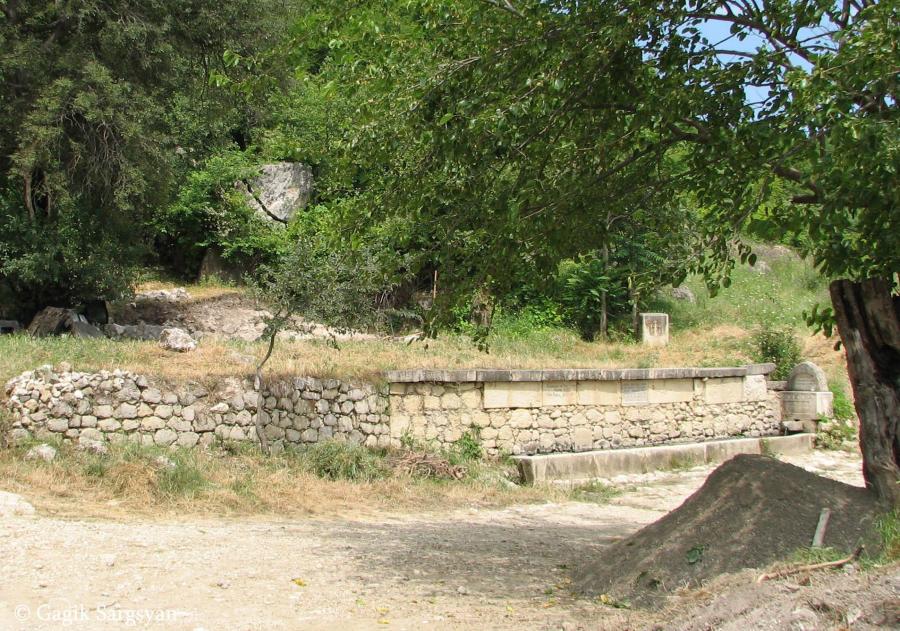
The Fountain of Saint Saribek is one of the five fountains of Kʻarashen (Dashushen) village and, in all likelihood, the most famous. It is located to the south of the shrine bearing the same name. The fountain was built with local roughly-hewn and finely-cut limestone. It consists of a longitudinal rear wall about seven meters long, and a single stone basin in front.On the lower part of the rear wall, on a finely-cut stone, there is a preserved inscription naming the builder and the date of construction:
«Այս յիշատ[ա]կ է Թառումենց, 1861» (This is a memorial of Tʻaṛumentsʻ, 1861).
To the right of the front basin’s curb stone is a hand-shaped water spout, above which is mounted a rectangular, decorated and inscribed tombstone with the following text:
«Տապան հանգուցել լու|սահոգի ՏՐ Յոհաննէսի|ն Թառումենց | վաղնջեց | 1872» (Tomb of the late soul of Ter Yohannēs of Tʻaṛumentsʻ, reposed, 1872).
This tombstone, likely placed in 1872, indicates that the grave of the fountain’s founder, Yohannēs Tʻaṛumentsʻ is located next to the fountain he built. The tombstone also served as a foundation stone for the structure, carrying on its upper part an arched pediment with a construction inscription:
«Յիշատակ է․ ով ուխտաւորք վայելեցեք՝ ստրկիս ողորմի ասացէք, 1861 ամին» (In memory: pilgrims who have enjoyed [this], pray for the servant; 1861).
In the center of the finely-cut part of the monument there is a second inscription related to the fountain’s renovation. It states that the fountain was renovated on July 23, 1867, by Sapar Malunts, a citizen of Shushi:
«Այս է յիշատակ Շուշի | քաղաքացի Աւետիսի | որդի Սափարի Մալ|ունց եւ իւր կնօջ Մ|անուշակին 1867 ամի | յուլիսի 23-ին» (This is in memory of Sapar Maluntsʻ, son of Avetis, citizen of Shushi, and his wife Manushak, July 23, 1867).
On three sides of the tombstone’s border, a later inscription was added indicating a 1915 renovation:
«Նորոքից իւր որդի Համբարցում | Մալինցով | 1915 թվս» (Renovated by his son Hambartsʻum Malintsʻov, 1915).
It is noteworthy that the surname “Maluntsʻ ” here is rendered as “Malintsʻov,” likely reflecting Russian influence.
In subsequent renovations, another flat, cross-decorated and inscribed tombstone was attached to the right side of the fountain’s rear wall.
Historical record
Cultural characteristics, period, century (centuries)
19th century Documents for dating: according to a reliable document
Based on the construction inscription Chronological table of monument
Built in 1861
Renovated in 1867 by Sapar Maluntsʻ
Renovated in 1915 by Hambartsʻum Malintsʻov (Maluntsʻ)
Chronological table of research on the monument (period, author, works)
The renovation inscription was read by monument specialist Samvel Karapetyan and published in his album Armenian fountains.In 2011–2012, the State Service for the Protection of Historical Environment, under the Government of the Republic of Artsakh’s Department of Tourism and Protection of Historical Environment, carried out registration and documentation of monuments in the Dashushen area, including this spring.
Descriptive-Characterization Report
Building material (type, colour)
Finely-cut and unworked limestone, lime mortar Dimensions: length
7 m Dimensions: width
84 cm The condition of the monument before the forced displacement of Armenians
Average Value
The spring is vital for the village’s inhabitants, pilgrims, and tourists. It also provides valuable source-based and historical information about the settlement and its inhabitants’ past. Photos
...
Main bibliography
Karapetyan, S., 2023 — Karapetyan, S., Armenian Fountains, Yerevan, 2023. .
A.H., S.D., A.L-Y