
Tumi, Goroz fortress
Monument
Monument type
Fortress Other names
Goroz, Gorozu Fortress, Ghlan Khar, Berdakar, Dizapayt Fortress initial, sequential and current
The founding period of the fortress is unknown. The first historical references date back to the 9th century. The fortress retained its significance until the early 14th century. Original ownership and affiliation
Village of Tumi The name of conservation unit
Fortress A topographic report
Region (province), community
Region, Community, Settlement
Greater Armenia, Province of Artsakh, District of Myus Haband. Later became part of the Melikdom of Dizak. Until 2020: Republic of Artsakh, Hadrut region, Tumi village.
Address
Republic of Artsakh, Hadrut region, Tumi village Topography
Located 15 km northwest of the town of Hadrut. Distance and location from community
Located 3.6 km southwest of the village of Tumi, on the southern slope of a mountain known as Ghlan Khar. Site elevation above sea level
2000 meters above sea level Description
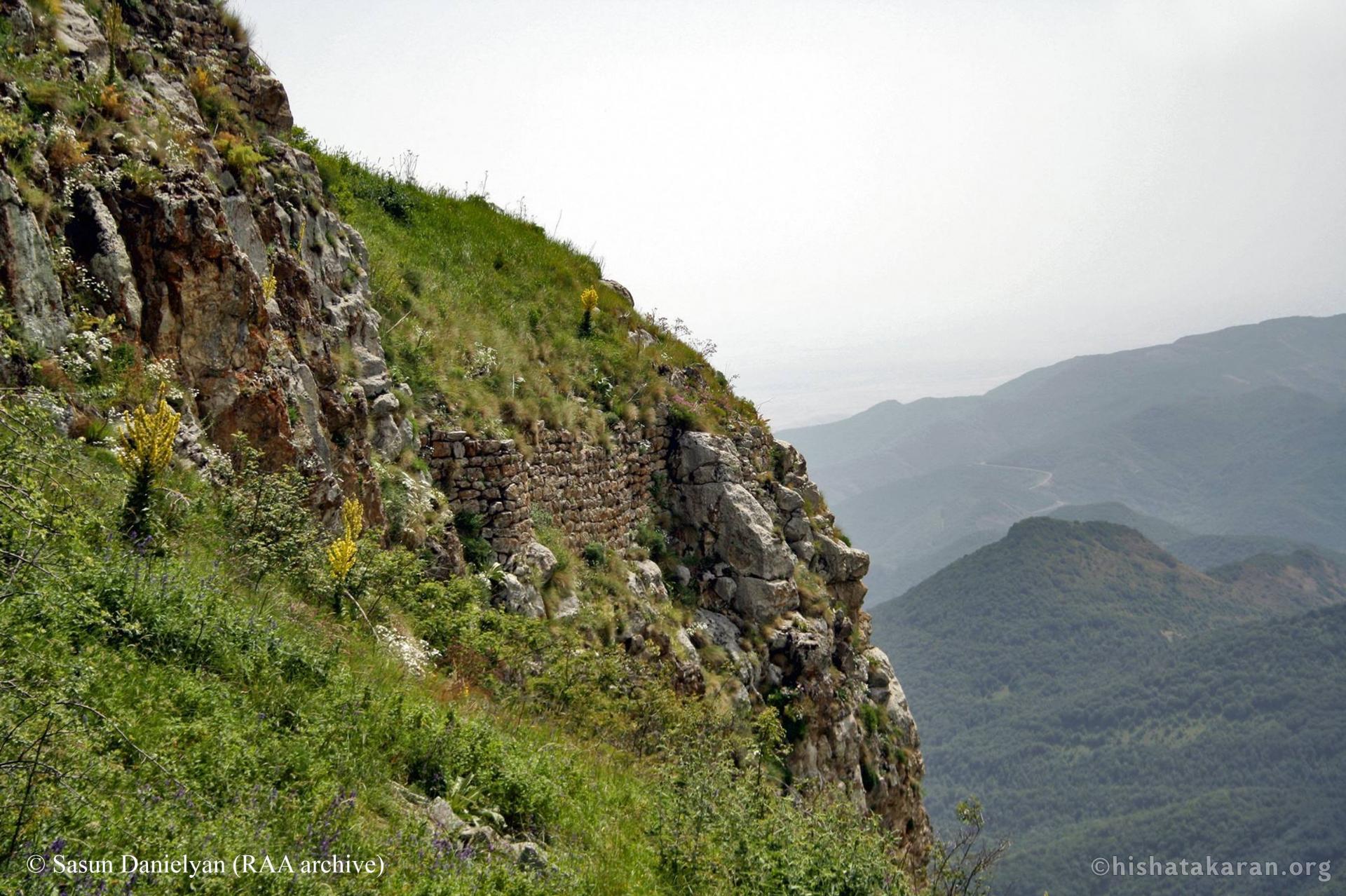
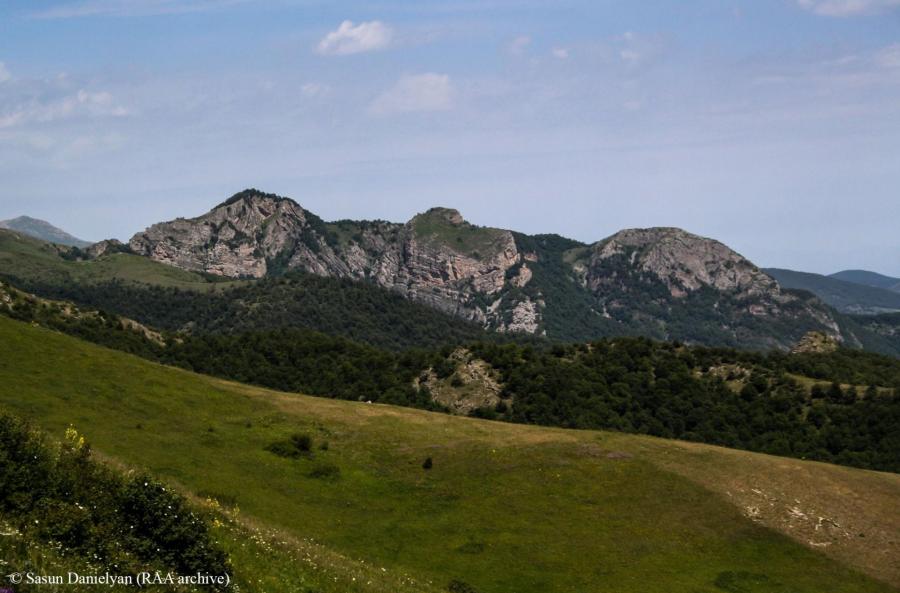
Located 3.5 km southwest of Tumi village in Hadrut region, on the southern sloped plateau of a mountain isolated from its surroundings by steep cliffs, the ruins of an ancient fortress are preserved.
According to historical accounts and topographical descriptions, this corresponds to Goroz Fortress, where in the 9th century, Prince Esayi Abu-Muse1 of Southern Artsakh and Utik resisted and fortified against Babak’s army.
The fortress is also mentioned in 853 AD, when Mukat"l2 from the Vanand region was martyred here for his Christian faith and canonized.
Locals also refer to the mountain as Ghlan Khar3.
There are differing opinions about the exact location of Goroz Fortress. According to historian and cartographer Suren Yeremyan, it was situated west of Ktish Fortress, while archaeologist, historian, and epigrapher Sedrak Barkhudaryan suggests it should be sought near the monastery of Chokht P’rvatsar.
Ethnographer and folklorist Bishop Makar Barkhudaryants also described the fortress:
«Բերդասարս իբրեւ լեռնաբազուկ Դիզափայտի արեւմտեան կողմից կախուած է Տումի գիւղի վերայ եւ առանձնացած ամեն կողմերից։ Պարսպուած է սարիս հարաւային եւ արեւելեան կողմերն եւ կասկածաւոր նեղուցներն ու կիրճերն, ուր եղած են։ Մուտքն արեւմտեան կողմիցն է եւ պարիսպն չունի բուրգեր։ Պարսպիս ներսում կան բնակութեանց բակեր, թէ եւ հարթ չէ բերդիս անտառապատ մակերեւոյթն։ Ջուր չկայ եւ այս ամրոցում, վասն որոյ շինուած են յատկապէս հարաւային կողմում հորեր եւ ամաններով ջուր բերած բերդիս սրեւմտեան ստորոտում եղած Թաղալ անուն պատուական աղբիւրիցն։ Հարկ է յայտնել որ բերդս չունի Դողայ բերդի բոլորովին ապահով ամրութիւնը։ Ամրոցիցս շատ հեռի չէ Դիզափայտի հին վանքի տեղն, ուր շինած են այժմ մի մատուռ։ Ամրոցիս հիւսիսային կողմում քերծի գլխին՝ ծառերի տակ կայ մի աւերակ մատուռ Օխտը-դռնէ-խութ ա-նուն, որ տարբեր է եւ այլ նախորդ յիշուածից»4
(Like an arm of Mount Dizapayt, the fortress-hill hangs over Tumi village from the west and is isolated from all sides. The southern and eastern parts of the mountain are fortified, along with narrow and suspicious passes and gorges. The entrance is on the western side and the fortress lacks towers. Inside the walls are residential courtyards, though the forested surface of the fortress is uneven. There is no water, which is why wells were specifically built on the southern side, and water was brought in vessels from the noble spring called Taghal at the southwestern foot of the fortress. It should be noted that this fortress does not have the complete security of Doghay Fortress. Not far from the fortress is the site of the ancient monastery of Dizapayt, where now a chapel has been built. On the northern side of the fortress, atop a cliff under the trees, there is a ruined chapel called Okht D"rné Khut, which is distinct from the previously mentioned one).
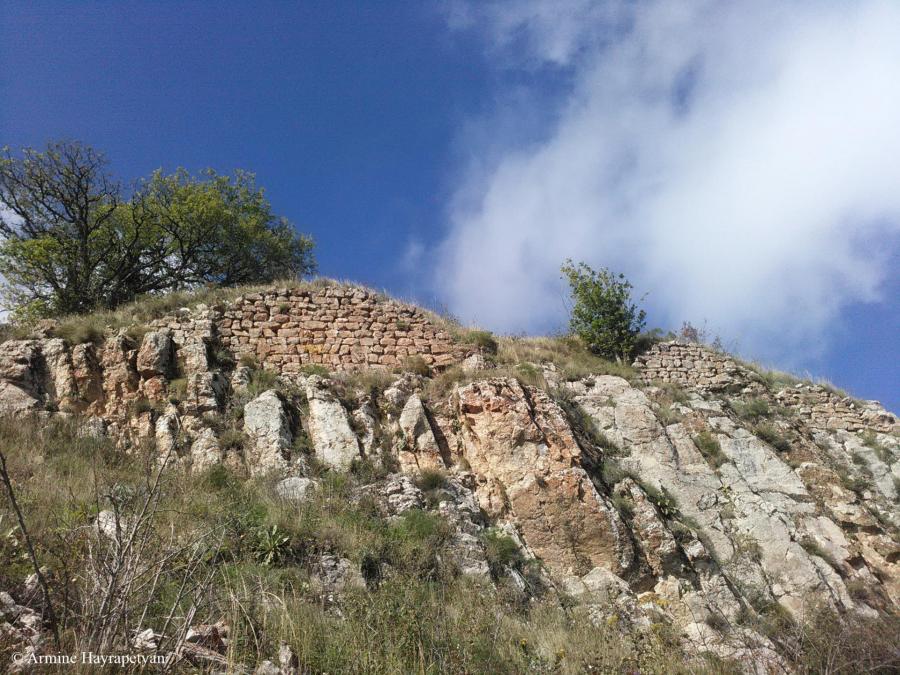
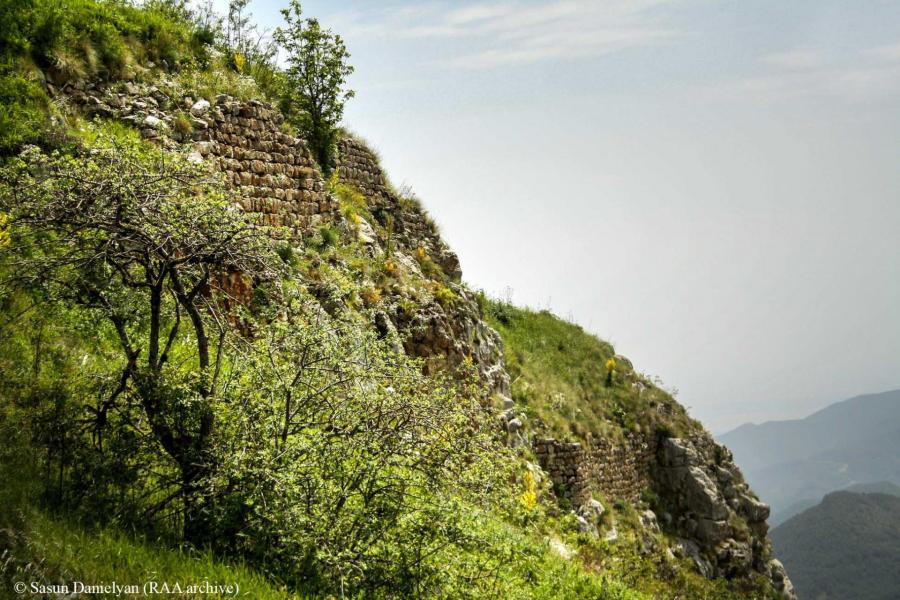
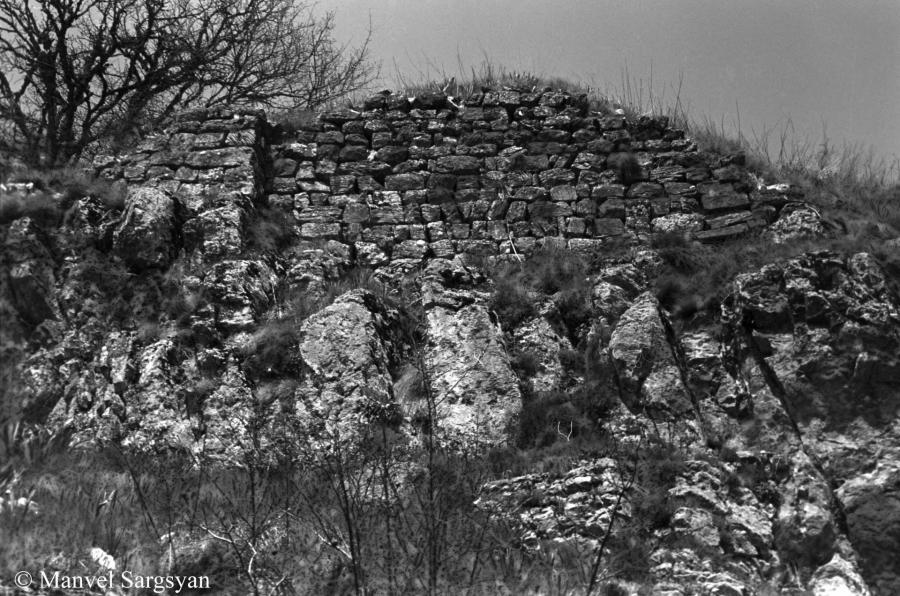
The fortress was built with locally quarried gray sandstone and lime mortar. It occupies approximately 1.1 hectares. On the northern edge, at the mountain’s summit, is the citadel, primarily fortified on its southern side. Further south and east, remains of the outer walls are preserved, some sections reinforced with tower-like buttresses. Several small room ruins and a reservoir have been preserved in the area.
On the southern edge of the fortress, within the rock, there is a natural cave. Its entrance lies right at the edge of a vertical cliff. It has an irregular cylindrical vertical shape and extends over 50 meters in length. According to local legends, the lower entrance of the cave was at the base of the rocks, now sealed. Partial speleological studies were conducted here during the Soviet era and after independence.
Historical record
Cultural characteristics, period, century (centuries)
9th–13th centuries Chronological table of research on the monument (period, author, works)
Barkhudaryants M., 1895 – Makar Barkhudaryants, Artsakh, Baku, "AROR", 1895, p. 85
Abrahamyan E., 2021 – Emma Abrahamyan, The Endangered Historical and Cultural Heritage of Tumi Village, “Vardzk,” 2021, No. 16, p. 68
Descriptive-Characterization Report
Building material (type, colour)
Sandstone, lime mortar Methods of construction (processing of construction material, masonry, size, type, cladding)
Built with medium-sized stones Dimensions: length
45 meters Dimensions: width
10 meters Dimensions: Dimensions: area of the space
1.1 hectares The condition of the monument before the forced displacement of Armenians
Ruins Value
Of significant importance for studying the history of Artsakh, medieval noble dynasties, and the development of fortress architecture. ----------------------------
1 Kaghankatvatsi, 1969, p. 256.2 Tovma Artsruni and Anonymous, 1978, p. 199.
3 Ghllen Stone – Fortress Stone
4 Barkhutaryants M., 1895, p. 85.
Measurements

Tumi, Goroz fortress
Measurement: Ashot Hakobyan (RAA)
Photos
...
Main bibliography
Kaghankatvatsi M., 1969 – Movses Kaghankatvatsi, History of the Land of Aghvank, Yerevan, 1969.Tovma Artsruni and Anonymous, 1978 – History of the House of Artsruni, Yerevan, 1978.
Barkhutareants M., 1895 – Makar Barkhutareants, Artsakh, Baku, “AROR” Printing House, 1895, p. 85.
Abrahamyan E., 2021 – Emma Abrahamyan, The Endangered Historical-Cultural Heritage of the Village of Tumi, “Vardzk”, 2021, No. 16, p. 68.
.
S.D.