
Photo by Lernik Hovhannisyan
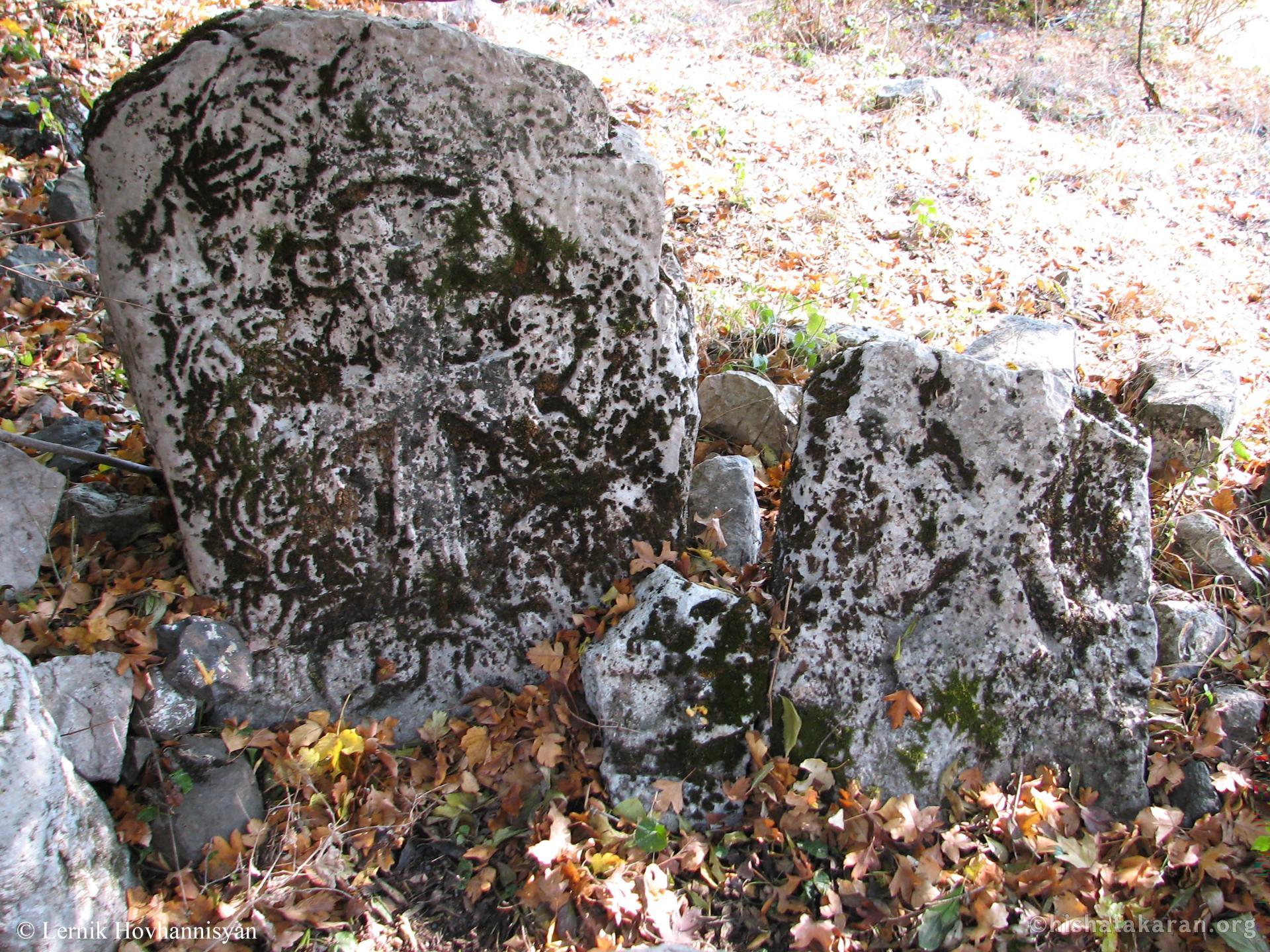
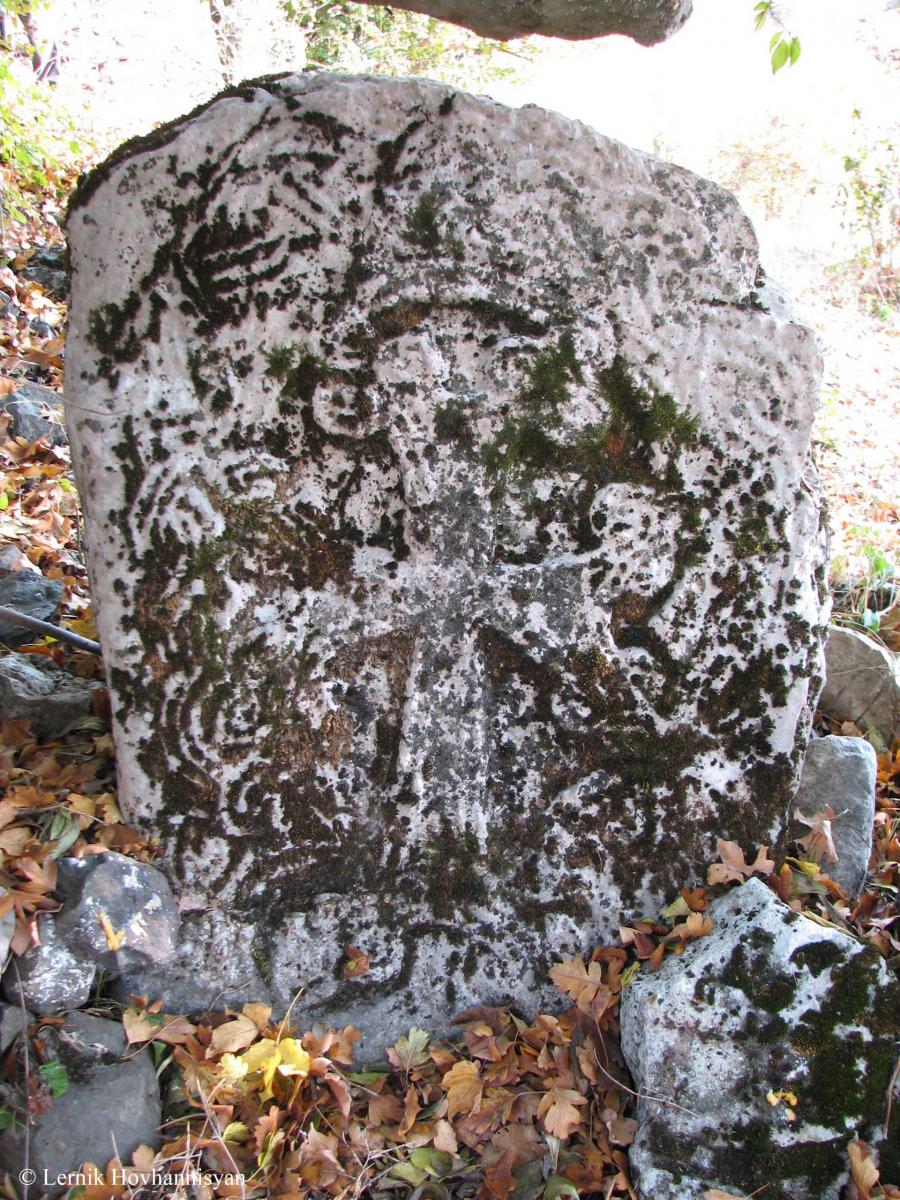
Karkazhan, Cemetery of the Karmir kerts hamlet, khachkar № 3
Monument
Monument type
Khachkar initial, sequential and current
The khachkar was carved in the 12th–13th centuries as a funerary monument. Later, most likely in the 19th century, it was relocated from the cemetery and erected on the southern side of the Karmir Avetaran Church, alongside four other medieval khachkars. On September 20, 2023, the area was occupied by the Azerbaijani military. The current condition of the monument remains unknown. Original ownership and affiliation
The monument originally belonged to the medieval cemetery known as "Khach" (Karmir Avetaran) near the settlement of Karmir Kerts1 in the Karakhan area of historical Artsakh. The name of conservation unit
Khachkar A topographic report
Region (province), community
Located in the historical Varanda (formerly Harchlank) district of the province of Artsakh, Greater Armenia — specifically in the area of the village of Karkajan (Krikzhan), which, following liberation, was incorporated into the city of Stepanakert. Address
Stepanakert, Karkajan, Karmir Kerts settlement Topography
Southwest of Stepanakert, situated on a plateau beneath the rocky massif locally known as Karmir Kerts (lit. "Red Cliff"). Distance and location from community
Located 1.6 km southwest of Stepanakert’s Karkajan district. Site elevation above sea level
1130 meters Hydrography
1.8 km east of the Vararakn River Description
The khachkar is located approximately 30 meters south of the Karmir Avetaran Church, within a sacred site composed of five medieval khachkars. This small monument is carved from white-gray limestone. Its lower section is embedded in the ground, and the cross relief is weathered and covered with moss. The upper part of the monument is arched, with the right side partially damaged.At the center of the composition, beneath the cross-altar, is a large, blossoming cross with double trilobed ends on each arm. From the base of the cross relief, palm branches rise toward the horizontal arms. The cross is framed by a rope-like decorative border.
Together with the four other medieval khachkars, the monument forms a distinctive sacred ensemble.
Historical record
Cultural characteristics, period, century (centuries)
Armenian Apostolic Church, Medieval Period, 12th–13th centuries Documents for dating: according to the iconography
The khachkar’s stylistic and artistic features place it in the 12th–13th centuries. Chronological table of monument
Carved in the 12th–13th centuries as a funerary monument; likely relocated to the southern side of the Karmir Avetaran Church in the 19th century. Chronological table of research on the monument (period, author, works)
In 2012–2013, field studies were conducted under the directive of the Ministry of Education, Science, Culture and Sports of the Republic of Artsakh by Gagik Sargsyan and Lernik Hovhannisyan3.
Brief historical overview
No direct references to this monument are found in historical written sources.
Descriptive-Characterization Report
Building material (type, colour)
White-gray limestone Type
Funerary monument Dimensions: width
65 cm Dimensions: height
92 cm Dimensions: depth, thickness
31 cm The condition of the monument before the forced displacement of Armenians
Average Value
This khachkar, along with the other funerary monuments at the site, holds significant historical and cultural value for the study and documentation of the historical landscape of the Stepanakert region, Armenian medieval architecture, and the intangible cultural heritage of Artsakh. ----------------------------
1 Kertz, in the dialect of Artsakh, refers to a cliff or rock formation.2 Karapetyan, S., Toponyms of Artsakh, Yerevan, 2022, p. 243.
3 Preservation zone of the immovable historical and cultural monument, Ministry of Education, Science, Culture and Sports of the Republic of Artsakh.
Photos
...
.
A․H․, A․ L-Y․