Berkni church
Monument
Monument type
Church Individually referenced sections (parts) of conservation unit
Church, khachkars (cross-stones) A topographic report
Region (province), community
Greater Armenia, Syunik, Province of Kovsakan.
From 1991 to 2020: Republic of Artsakh, Kashatagh Region, Ditsmayri, site of the village of Berkni.
Address
Kashatagh Region, Ditsmayri Topography
Distance and location from community
Located 110 km south of the town of Berdzor Site elevation above sea level
910 meters above sea level. Hydrography
Located 3.3 km north of the Tsav River, near the source of a seasonal stream. Description
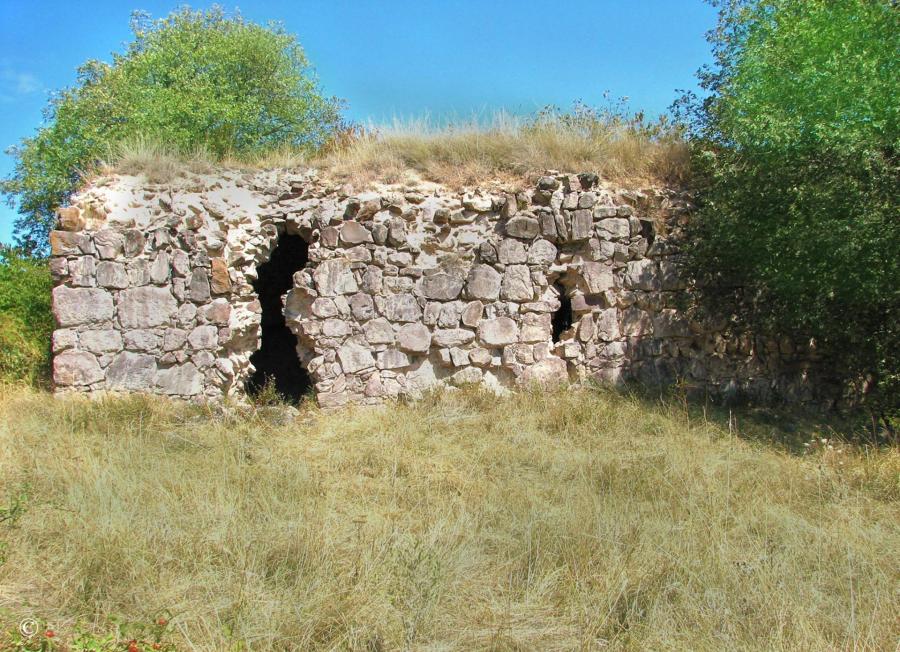
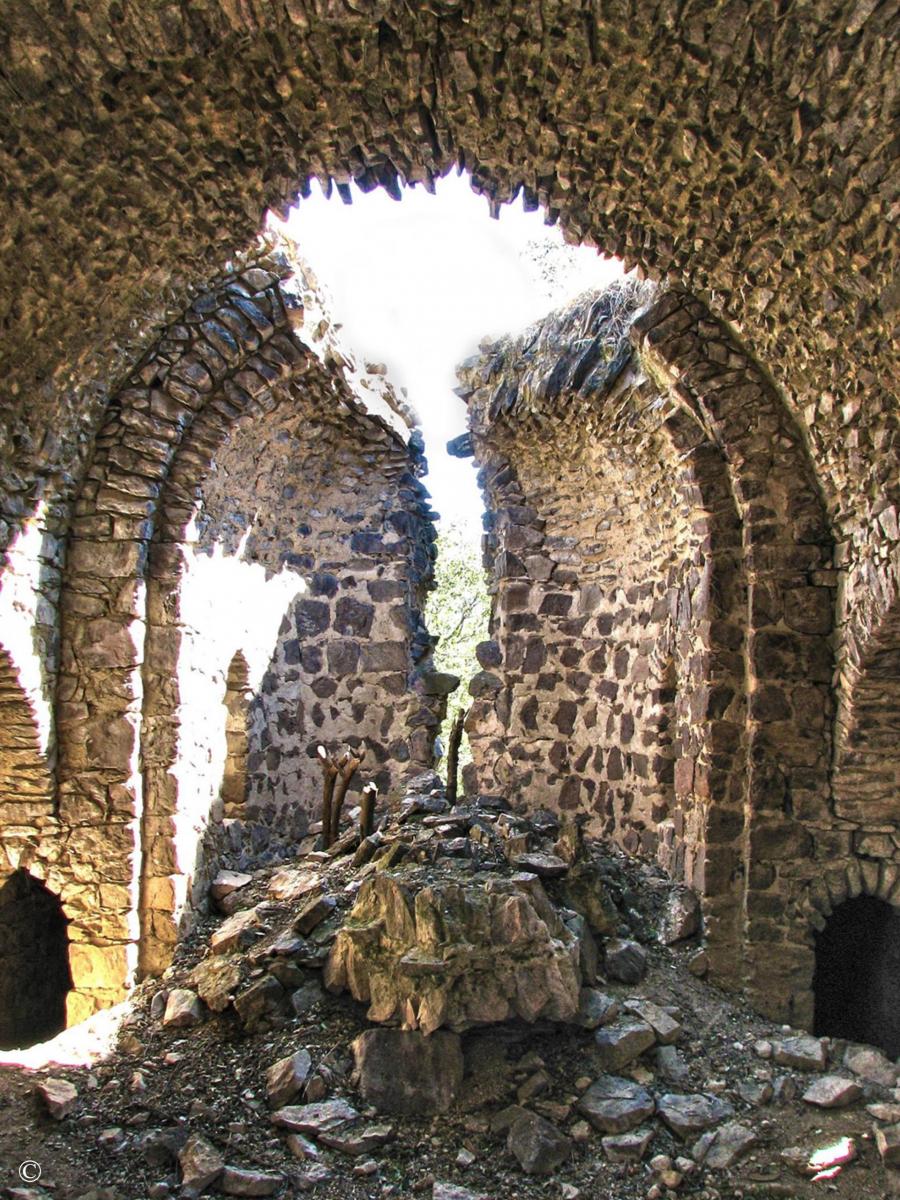
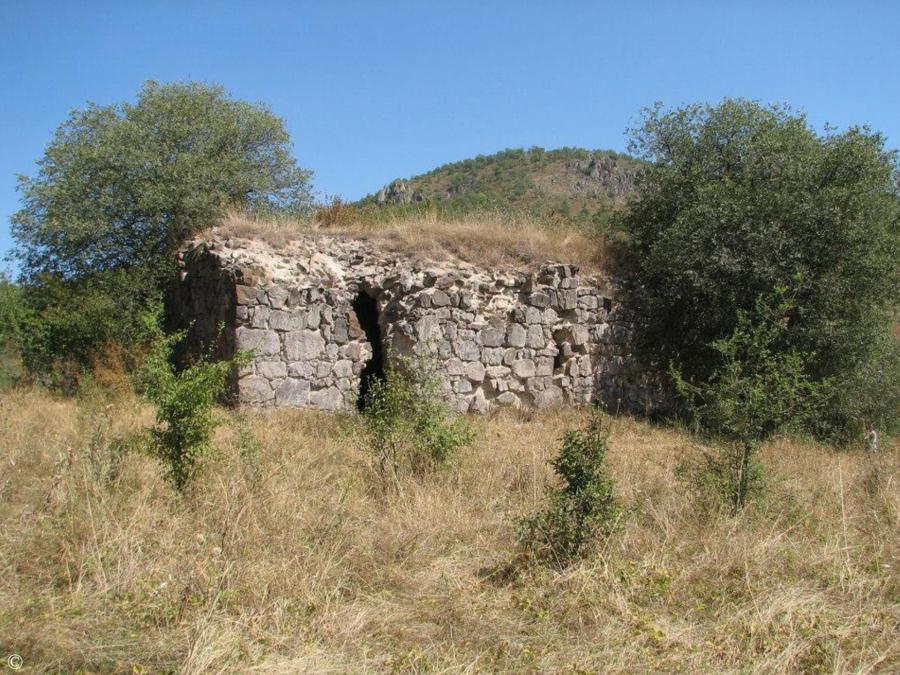
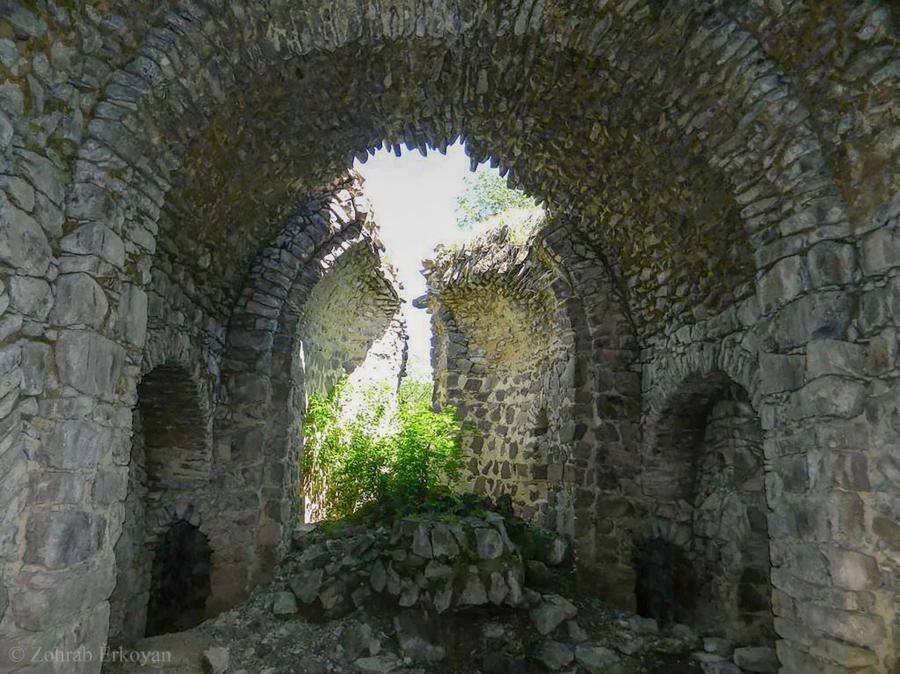
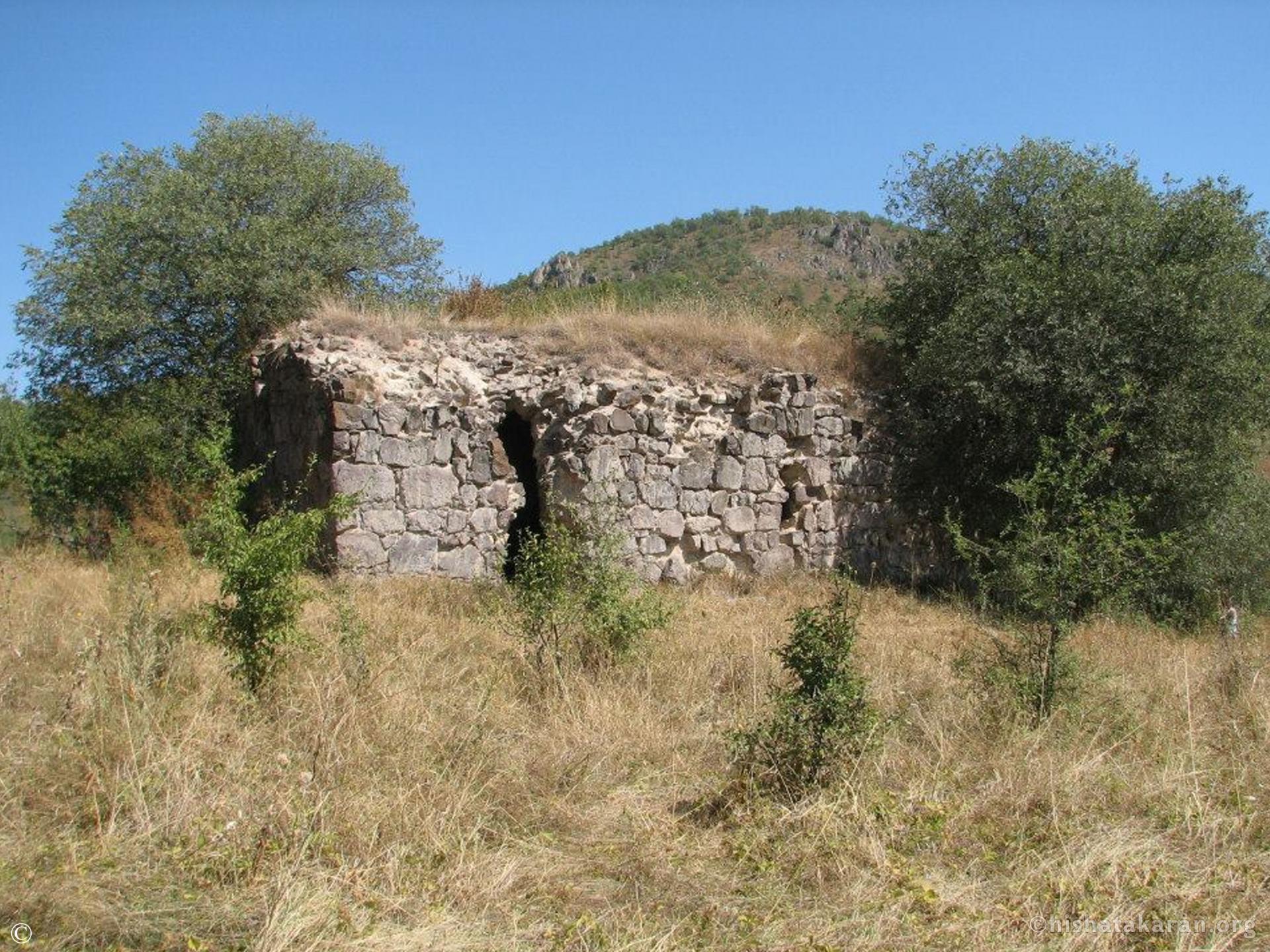
Based on its architectural and constructional features, the church is dated to the 16th–17th centuries. However, the khachkars (cross-stones) preserved on the walls and in the surrounding area, with their stylistic and artistic characteristics, belong to the 10th–13th centuries. It is likely that the current church was built on the site of an older sanctuary. It is constructed entirely of roughly hewn, unrefined stones and lime mortar. The interior was plastered. The vaulted ceiling rests on wall arches attached to the northern and southern walls, as well as on an arch rising from wall piers in the central section.
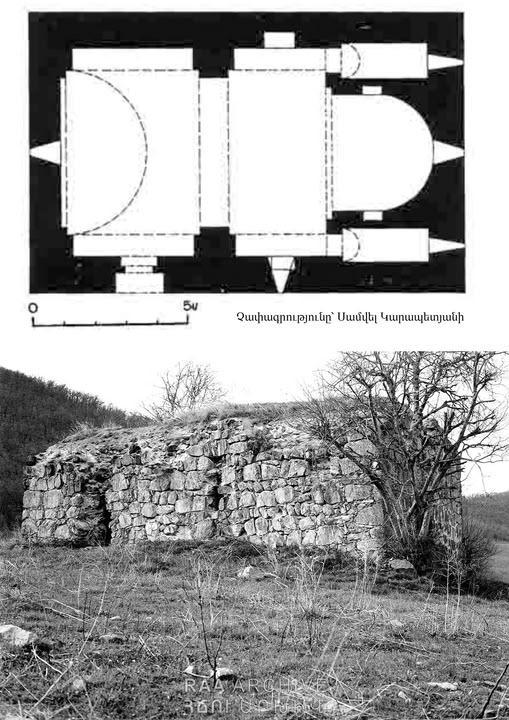
To the east is a semicircular apse, flanked by small rectangular sacristies with arched entrances. A baptismal basin is set in a niche on the northern wall.
The church is lit by five small windows that widen inward—three opening to the east, one to the south, and one to the west. The only entrance is on the southern side.
The church’s decoration is modest. Some stones in the walls are adorned with simple cross carvings typical of the late medieval period.
Historical record
Cultural characteristics, period, century (centuries)
Armenian Apostolic Church, 16th–17th centuries Documents for dating: Justification of the date based on epigraphy.
Based on architectural and constructional features. Documents for dating: according to bibliographic sources
The studies of the village site of Berkni and its church were conducted by monument specialist Samvel Karapetyan, and published in his book Monuments of Armenian Culture in the Regions Annexed to Soviet Azerbaijan1.
Descriptive-Characterization Report
Archeological overview: stratigraphy, findings (artefacts)
Architectural overview: architectural composition
A single-nave vaulted hall with a rectangular floor plan and two side sacristies. Building material (type, colour)
Sandstone, lime mortar Building openings: entrances (number, orientation)
One entrance, located on the southern side. Building openings: windows (number, orientation)
Five windows: three on the eastern side, one on the southern, and one on the western. Structures (load-bearing, roofing)
Arched, vaulted construction Roof (material, type)
Gabled roof (roof tiles are no longer preserved) Methods of construction (processing of construction material, masonry, size, type, cladding)
The walls are built of medium- and small-sized roughly hewn stones, combined with lime mortar. Finishing and decoration
Modest Type
Rural church Dimensions: length
14.50 m9.10 m Dimensions: width
9.10 m The condition of the monument before the forced displacement of Armenians
Emergency Value
The monument is important for the study of the spiritual and architectural heritage left by the Armenian population in the territory of Kovsakan Province. ----------------------------
1 Karapetian S., 2001, p. 195-196. Photos