Shahmasur, khachkar № 1
Monument
Monument type
Khachkar Given name
Apun Khachkar 5(literally “Father’s Khachkar” in the Artsakh dialect) initial, sequential and current
The khachkar was carved in the 12th–13th centuries. During the Soviet period, it was toppled. It was re-erected and transformed into a pilgrimage site in the 1990s. On September 19, 2023, the village of Shahmasur was seized by the Azerbaijani army. The current condition of the monument is unknown. Original ownership and affiliation
Shahmasur village The name of conservation unit
Khachkar A topographic report
Region (province), community
Region: Greater Hayk, Artsakh region, Greater Irank (later Khachen) province
< Between 1991-2023, located in the Republic of Artsakh, Martakert district, Shahmasur Address
Republic of Artsakh, Martakert district, Shahmasur
Topography
Located 26 km southwest of Martakert city
Distance and location from community
Situated 730 meters northwest of Shahmasur village, in an area called JghprataghSite elevation above sea level
• Elevation: 1270 meters above sea level Hydrography
Located in the Khachenaget valley, 2.5 km north of a river Description
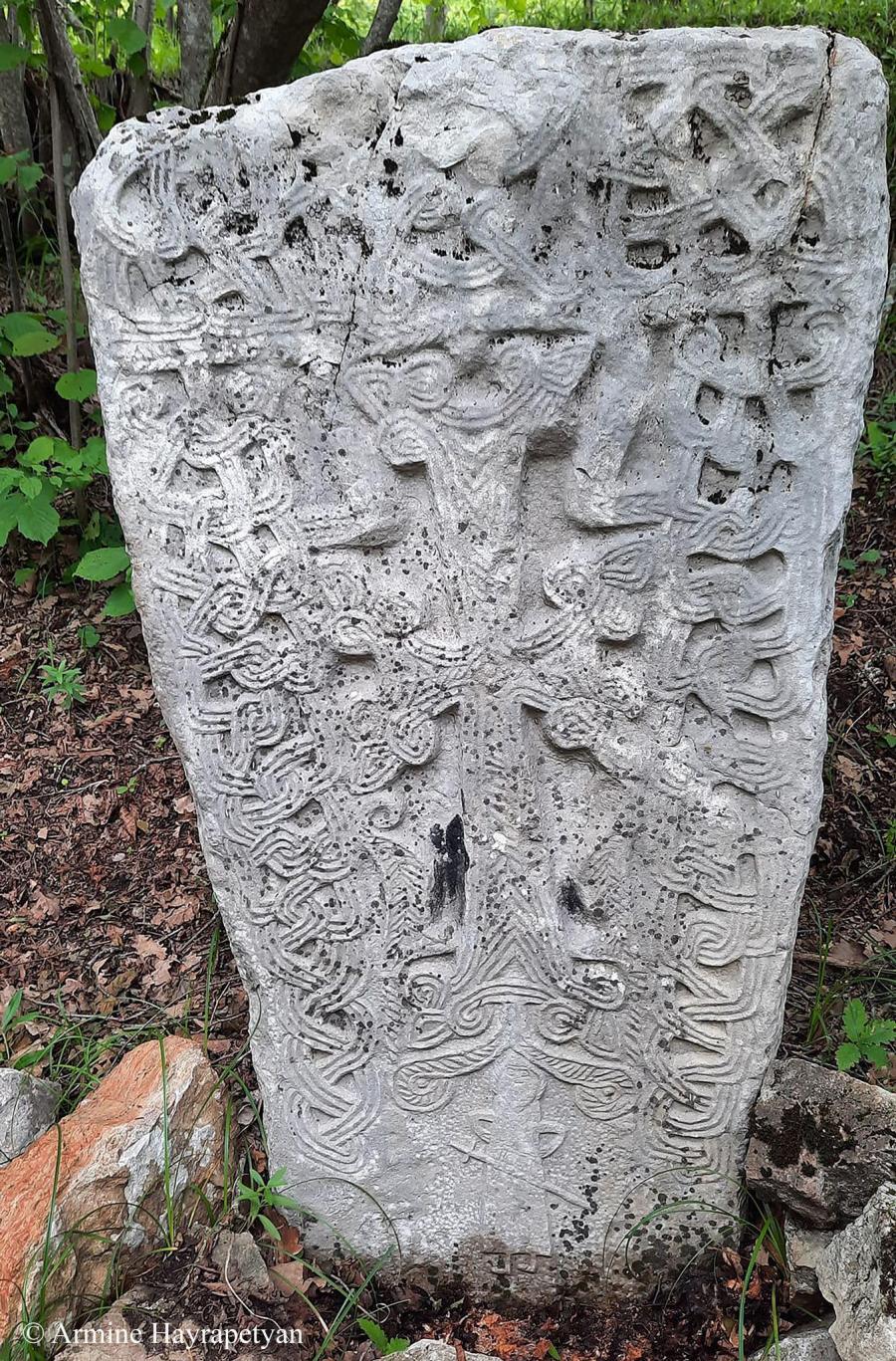
The khachkar is located 730 meters northwest of the village of Shahmasur in the Martakert region, in an area known as Chghpratagh. The original location of the khachkar, as well as the purpose and significance of its erection, remain unknown.According to local resident Mirza Emiryans, who spoke with staff from the State Service for the Protection of the Historical Environment of the Ministry of Education, Science, Culture and Sports of the Republic of Artsakh, the khachkar had long lain face-down on the ground. Mirza’s father, Imirants Seryozha, who was in poor health at the time, reportedly saw a dream in which an invisible voice urged him to raise the fallen khachkar located in the Chghpratagh area. With the help of his two sons, Seryozha re-erected the khachkar—and subsequently recovered from his illness.
From that day on, the "miracle-working" khachkar became a place of pilgrimage not only for Seryozha’s family and clan but also for other residents of Shahmasur. The site came to be known as the "Apun Khachkar".
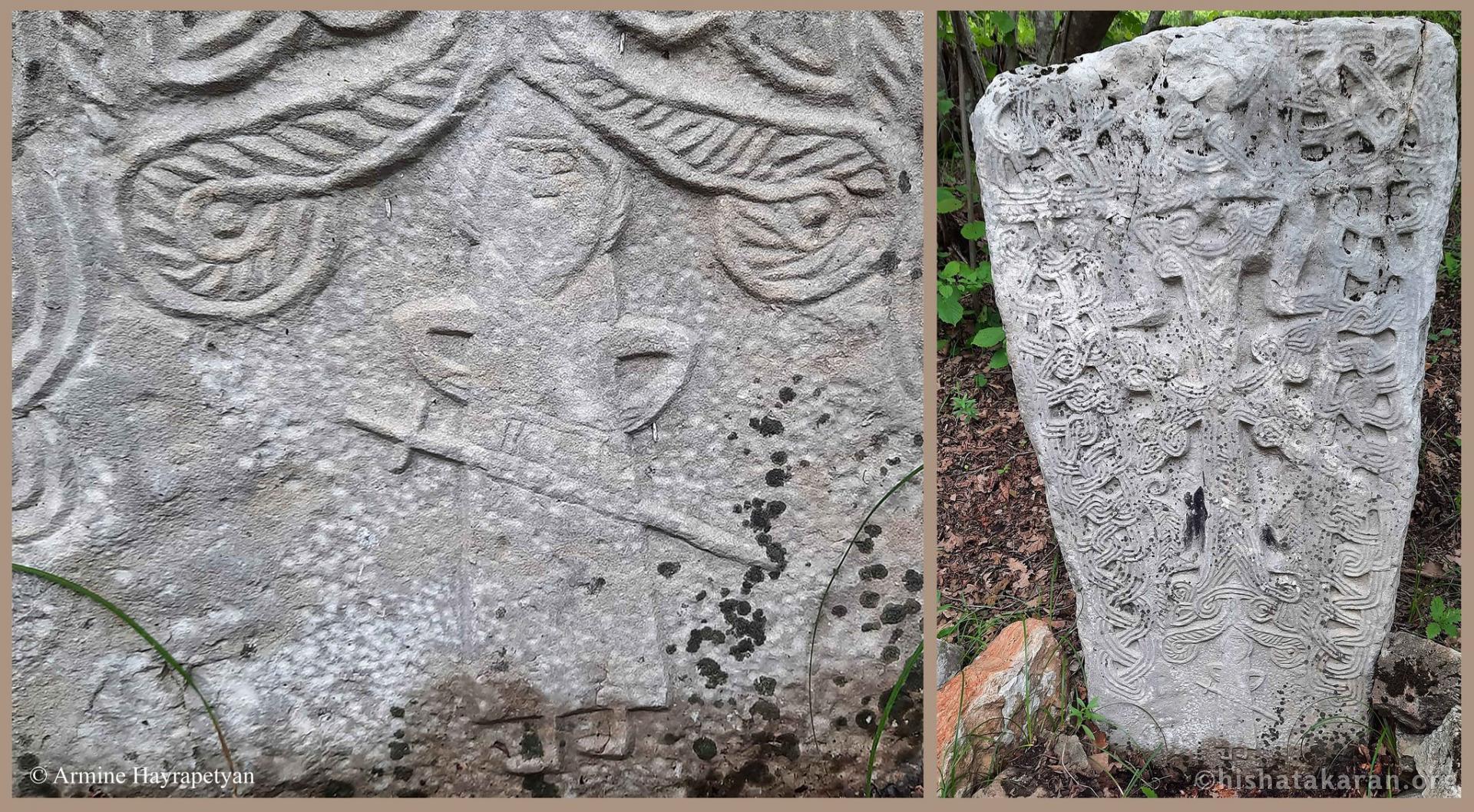
The khachkar is medium in size and consists of a rectangular shaft that widens slightly toward the top. The central floral cross is framed on three sides (left, right, and top) by a broad and irregular interlaced decorative band. From the base of the cross—adorned with trefoil buds and surrounded by interwoven designs—emerge two spiraling cross-roots, one on each side, which curve upward and terminate in classical palm branches.
Particularly striking is the carved figure of a warrior below the cross-root, in the lower section of the stone. The figure stands with hands placed on the hips and a sword hanging from the belt. He has a long, pointed beard and appears to wear a conical (possibly pointed) helmet. From beneath his long tunic, his feet are visible, turned toward the left.
Historical record
Cultural characteristics, period, century (centuries)
Khachen principality, Armenian Apostolic Church, 12th–13th centuries Chronological table of research on the monument (period, author, works)
Field studies were conducted in 2022 by the Artsakh Republic Ministry of Culture’s Historical Environment Protection Service. Descriptive-Characterization Report
Building material (type, colour)
White ash-grey tuff stone Dimensions: width
68 cm Dimensions: height
128 cm Dimensions: depth, thickness
15 cm The condition of the monument before the forced displacement of Armenians
Good ----------------------------
Important for studying medieval Artsakh khachkar art.
Valuable for understanding the folk traditions and intangible cultural heritage of Shahmasur village.
Photos