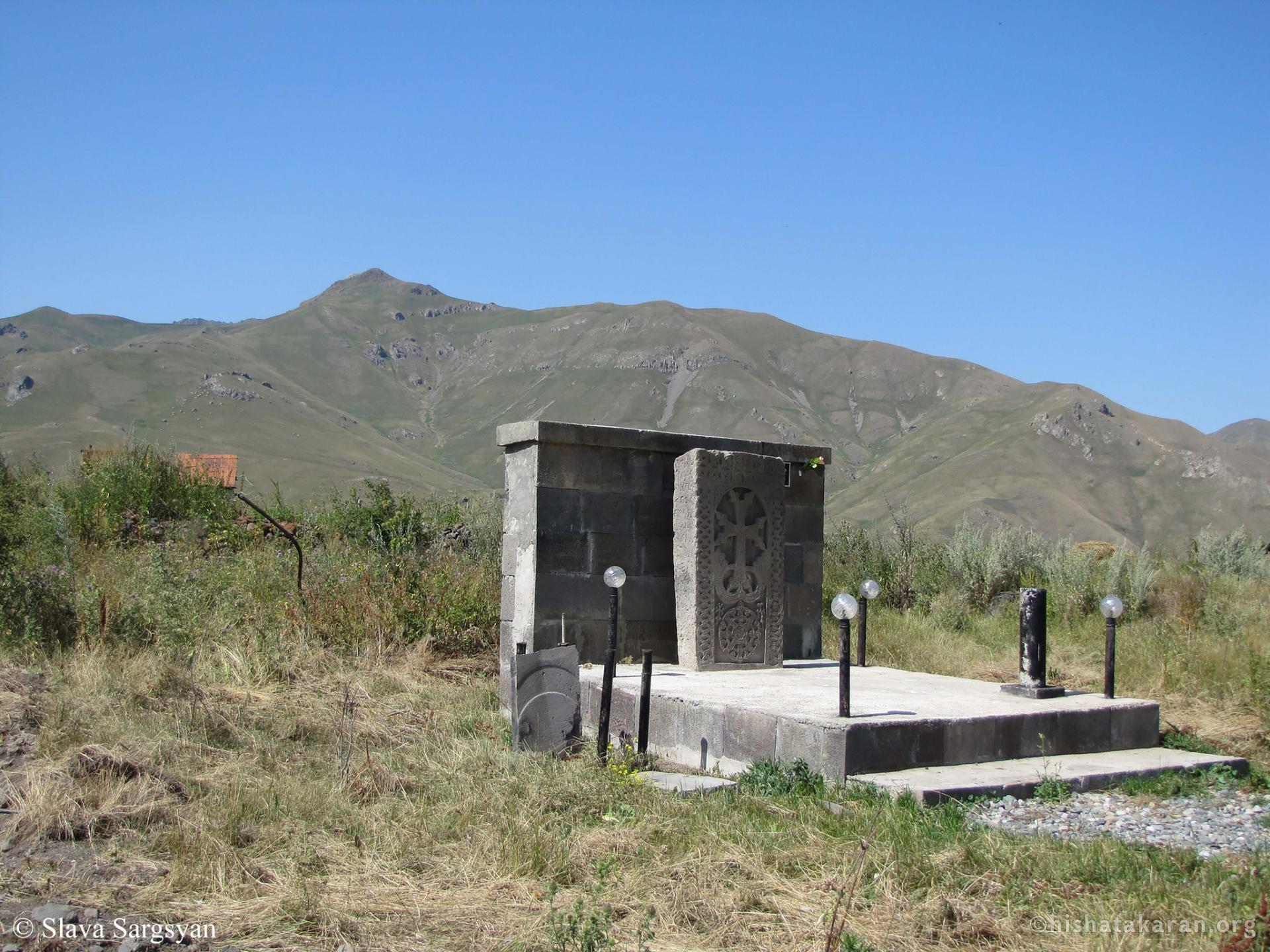
Tsar, Khachkar № 1
Monument
initial, sequential and current
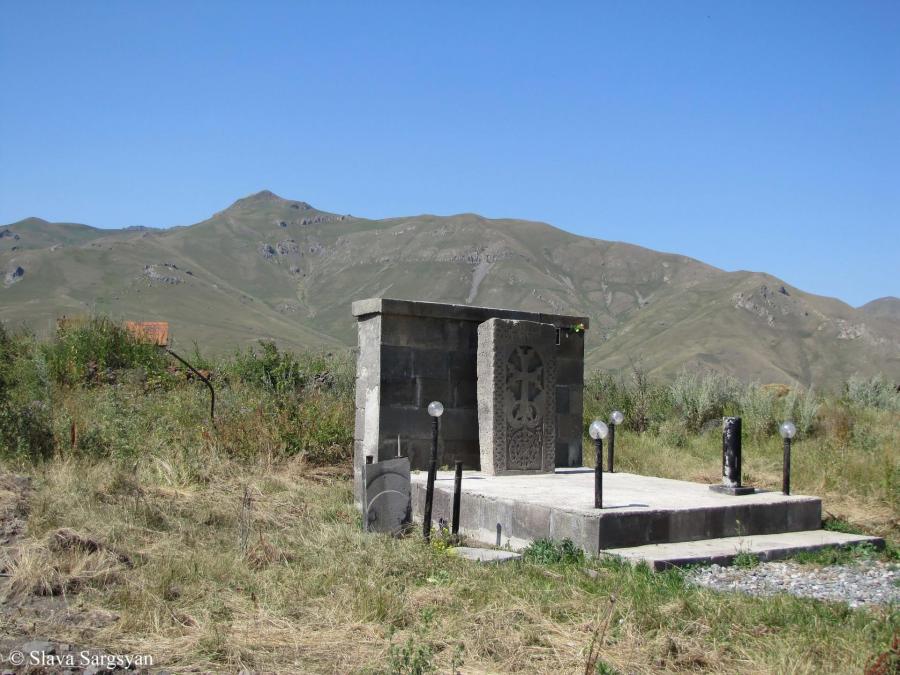
The khachkar was carved and erected in 1225. During the late Middle Ages, it was placed above the entrance of the main church as a tympanum. In the 18th century, nomadic herders who had settled in the area used the khachkar in the construction of a barn. After the liberation of Karvachar, it was discovered by residents of Tsar village and re-erected in the village center in memory of the fighters who died in the Artsakh War.In 2024, photographs circulated by Azerbaijani social media users indicated that the khachkar was no longer in its place. It is presumed that this historical-cultural monument has been destroyed.
A topographic report
Description
The village of Tsar was one of the large and flourishing settlements of medieval Artsakh. Of the medieval churches of the village, only two small ones have survived. The ruined main church of Tsar was still partially standing in the early 20th century. It was founded in 1236 (Կարապետյան Ս․, 2019, էջ 397). The church was renovated in the late Middle Ages, during which time a khachkar (cross-stone), originally erected in the churchyard in 1225 by a man named Młkʿ, was placed above the entrance as a tympanum.From the second half of the 18th century, Muslim tribes settled in the area. Later, during the Soviet period, the church was demolished by the newcomers and a barn was built in its place, with the khachkar used as construction material. After the liberation of Karvachar and the resettlement of Tsar, the khachkar was discovered among the ruins. It was subsequently re-erected by the village head and local residents in front of a memorial wall dedicated to those who fell in the Artsakh War.
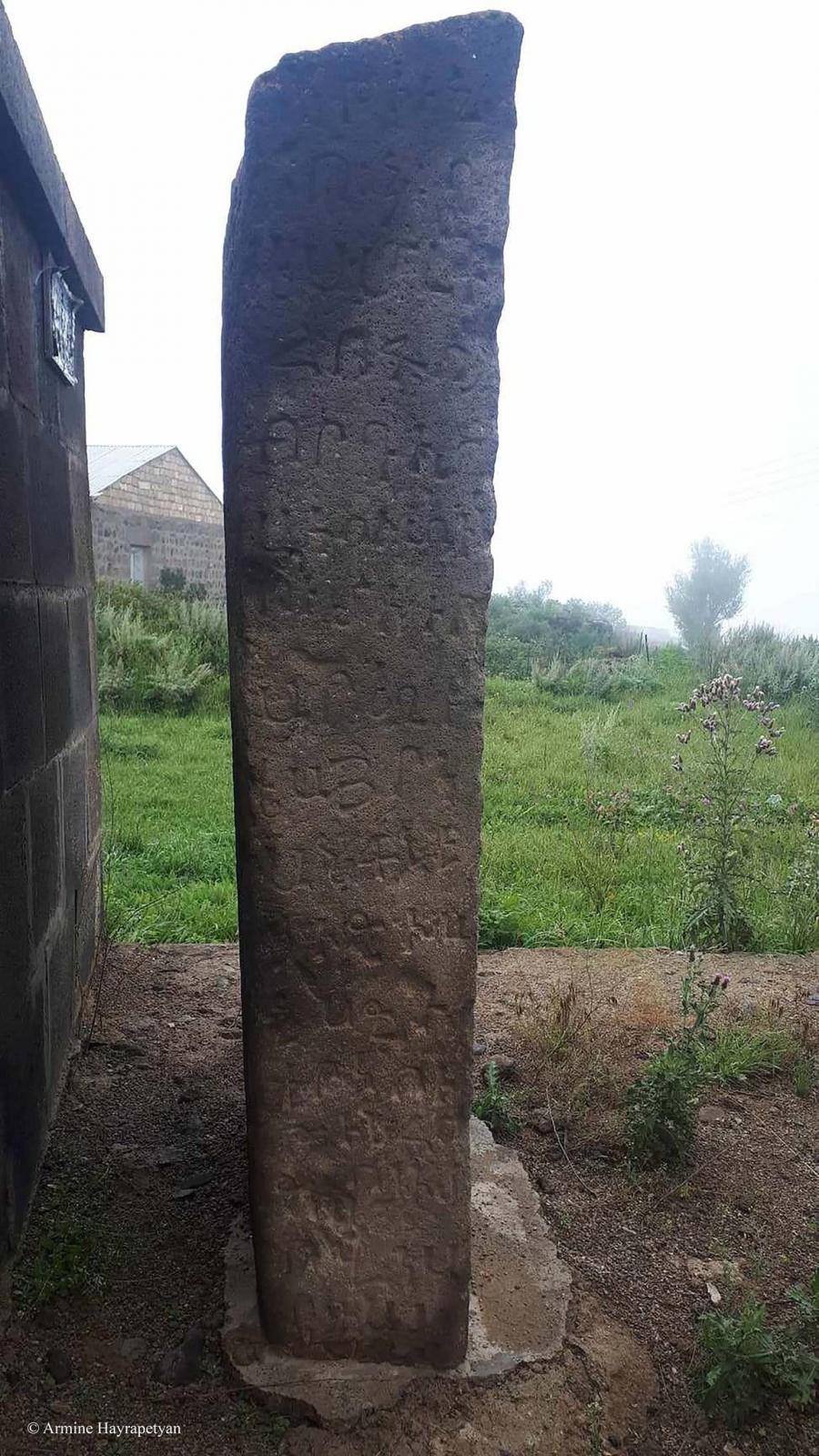
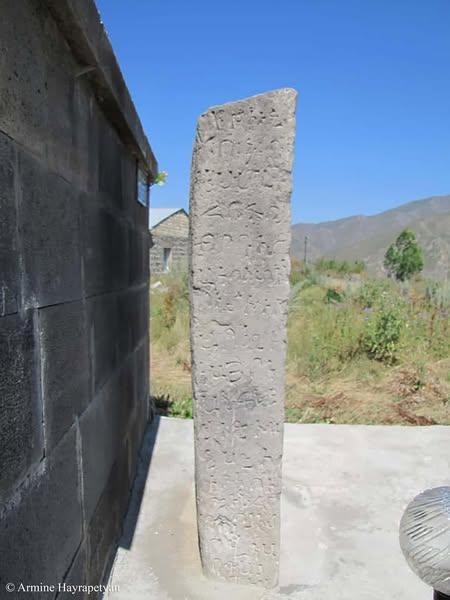
At the end of the 19th century, Bishop Makar Barkhudaryants visited Tsar, where he saw the semi-ruined church and the aforementioned khachkar (Բարխուդարյան Մ․, 1895, p. 406-407). He partially read its inscription, albeit with some errors. Following the liberation of the region, the khachkar was also studied by an expedition of the Foundation for the Study of Armenian Architecture. Samvel Karapetyan fully and accurately deciphered the eight-line memorial inscription on the left side of the monument, which reads:
«Ի թուին | ՈՀԴ (1225) ես՝ Մլըք | հոգոյ | որդի իմ | Ակուտին | ու Մխիթ|ար եղբ|եայր կ|անգնե|ցի զխա|չս զի փրկու|թ(ի)ւն հո|գոյ իմ|ոյ, ով կա|րդայ | իշեց|(էք)․․․» (Կարապետյան Ս․, 2019, էջ 397)
"In the year 1225, I, Młkʿ, erected this khachkar for the salvation of my soul — for my spiritual son Akutin and my brother Mkhitar. Whoever reads this, remember..."
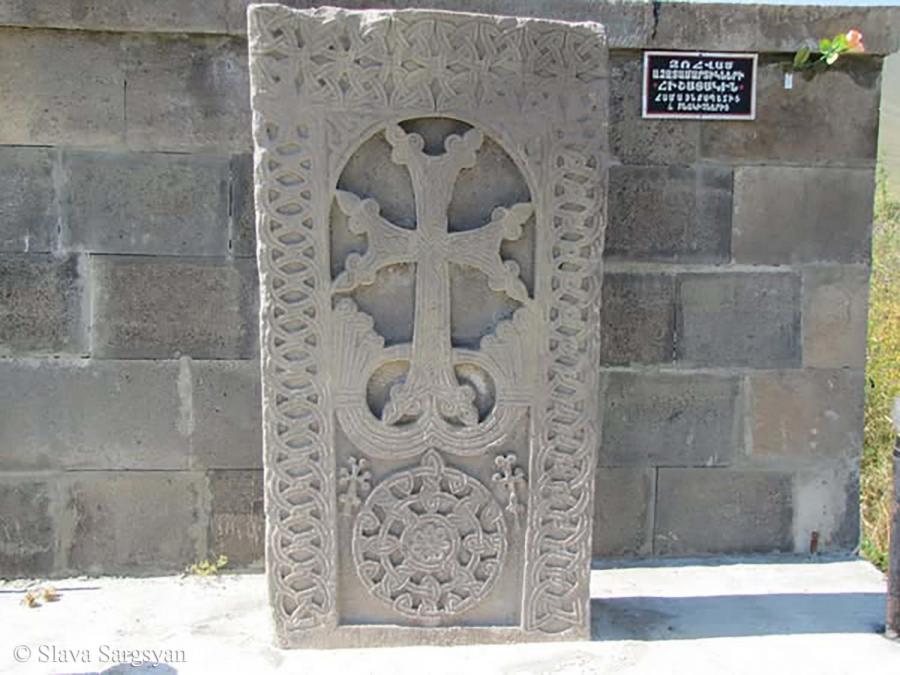
In the central section of the western face of the large rectangular monument, beneath an arched niche, is a carved cross with floriated arms ending in triple buds. From the base of the cross emerge two gracefully stylized palm branches, curving outward and then rising upward on both sides. The lower part of the cross relief is occupied by a large, circular rosette — richly ornamented and woven in design — placed at the center. Small crosses are carved in the upper left and right corners of the rosette. The central cross-arm is framed by a broad circular band with an interlaced, chain-like motif.
Descriptive-Characterization Report
Photos