

Photo by Armine Hayrapetyan
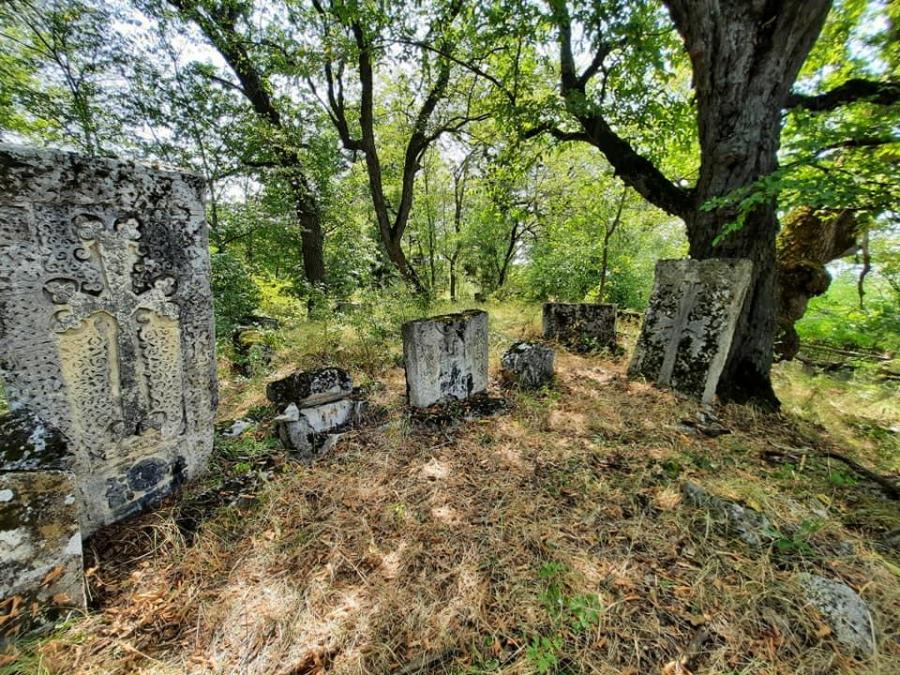
Karaglukh [Kʻaraglukh] hamlet, Khachin Khut [Khachʻin khutʻ] cemetery
Monument
Monument type
Cemetery Given name
Khachin Khut [Khachʻin khutʻ] Other names
Khachi Khut [Khachʻi khutʻ] initial, sequential and current
The cemetery originated in the advanced Middle Ages and was continuously used until the second half of the 20th century.
The name of conservation unit
Cemetery
Individually referenced sections (parts) of conservation unit
Cemetery, khachkars, tombstones
A topographic report
Region (province), community
Mets Aṛankʻ Province (later Khachʻen) of the Artsakh, historical Greater Armenia. Until 2020: Republic of Artsakh, Askeran region, Khramort [Khramortʻ] village, Karaglukh [Kʻaraglukh] hamlet.
Distance and location from community
It is located at the southwestern edge of Karaglukh [Kʻaraglukh], in the Kachin Khut [Khachʻin Khutʻ] area.
Site elevation above sea level
It is 1050 meters above sea level. Hydrography
It is located 4 km south of the Khach‘enaget (river), on the southern side of Mount Shikakʻar. Description
The cemetery is located at the southwestern edge of the village of K‘araglukh, in the Askeran region, on a wooded hill. It covers an area of about 0.3 hectares. Graves are scattered throughout the cemetery around the khachkars and medieval tombstones from the 12th and 13th centuries. Burials continued until the late 20th century, so ancient and new graves are intermingled rather than grouped separately. Referring to the cemetery, the ethnographer and ethnologist Makar Bishop Barkhudaryants notes: «Գտնուում է գիւղիս հարաւ-արևմտեան կողմում, որի մէջ կան նշանաւոր մահարձաններ խաչազարդեալ։ Մի խաչքարի վերայ․ «Մեք հետևիք Աստուծոյ որդիքս Պապա, Սնպատ, Սարգիս․․․․․» (անընթեռնլի)։ Մի այլ կիսատ քարի վերայ «Խաչս Մխիթարայ, Քրիստոս ողորմի նմայ»։ Այլ նշանաւոր խաչարձանի վերայ «Թիվ ՉԲ․ Իշխանութիւն Հասանայ ես Սնպատ և եղբարք իմ կանգնեցաք զխաչս բարեխաւս առ Քրիստոս ինձ և ամուսին (նոյն) իմոյ Կատային, զոր ետ Պարոն մեզ հայրենիք և գերեզմանատեղ․ Քրիստոս աւգնե իւր որդեացն․ ամէն» »1։ (On one khachkar: "We follow God, the sons Papa, Snbat, Sargis... (illegible)." On another fragment of a stone: "This cross is Mkhitar"s, may Christ have mercy on him." On another notable cross monument: "Year 702 (1253). Lordship of Hasan. I, Snbat, and my brothers erected this cross as an intercessor to Christ for myself and my spouse Kata, whom Lord Paron granted us the homeland and burial place. May Christ help his children. Amen."")
Before the occupation of the village, various funerary monuments from the 12th to the 20th centuries were preserved there. The medieval khachkars were particularly remarkable; one of them was completely intact, while the other was cracked. Fragments of khachkars of different sizes were also found.
The khachkars and khachkar fragments, with their sculptural composition, ornamentation, and craftsmanship, are among the finest medieval examples from the Artsakh school of khachkars. The cemetery was primarily dominated by rectangular tombstones from the late Middle Ages (some of which were made of rough stones), as well as table-shaped tombstones and vertical tombstones from the 19th and 20th centuries.
Historical record
Cultural characteristics, period, century (centuries)
Armenian Apostolic Church, 12th-20th centuries
Documents for dating: Justification of the date based on epigraphy.
According to inscriptions on khachkars and tombstones Documents for dating: according to the iconography
According to the structural, stylistic, and artistic features of the preserved funerary monuments Chronological table of monument
The Khachin Khut [Khachʻin Khutʻ] cemetery founded in the 12th-13th centuries, it was used until the 1970s. In 1981-1982, the last inhabitants of Karaglukh [Kʻaraglukh] moved to the surrounding villages. During the years of independence, the cemetery became an important sanctuary for the people of Karaglukh [Kʻaraglukh]. The village was taken by the Azerbaijani army on March 24, 2022. According to 2023 satellite images, the Khachin Khut [Khachʻin khutʻ] cemetery has been transformed into a military base by the Azerbaijani army, with trenches and bunkers dug in the area. The fate of the monument is currently unknown.
Descriptive-Characterization Report
Building material (type, colour)
The monuments of the cemetery are mainly made of limestone and sandstone.
Dimensions: Dimensions: area of the space
0,3 ha The condition of the monument before the forced displacement of Armenians
Good (before the occupation of the village, the cemetery was mostly undamaged) Value
The magnificent medieval khachkars preserved here, their inscriptions, as well as tombstones convey important historical and demographic information about the historical past and cultural life of Artsakh. ----------------------------
1Barxudaryancts’ M․, Arst’akh, Bagu, 1895, p. 166։ Photos


...
Main bibliography
Barkhutareants M․, 1895 - Barkhutareants Makar, Artsakh, Bagu, 1895. .
A.H., S.D.