
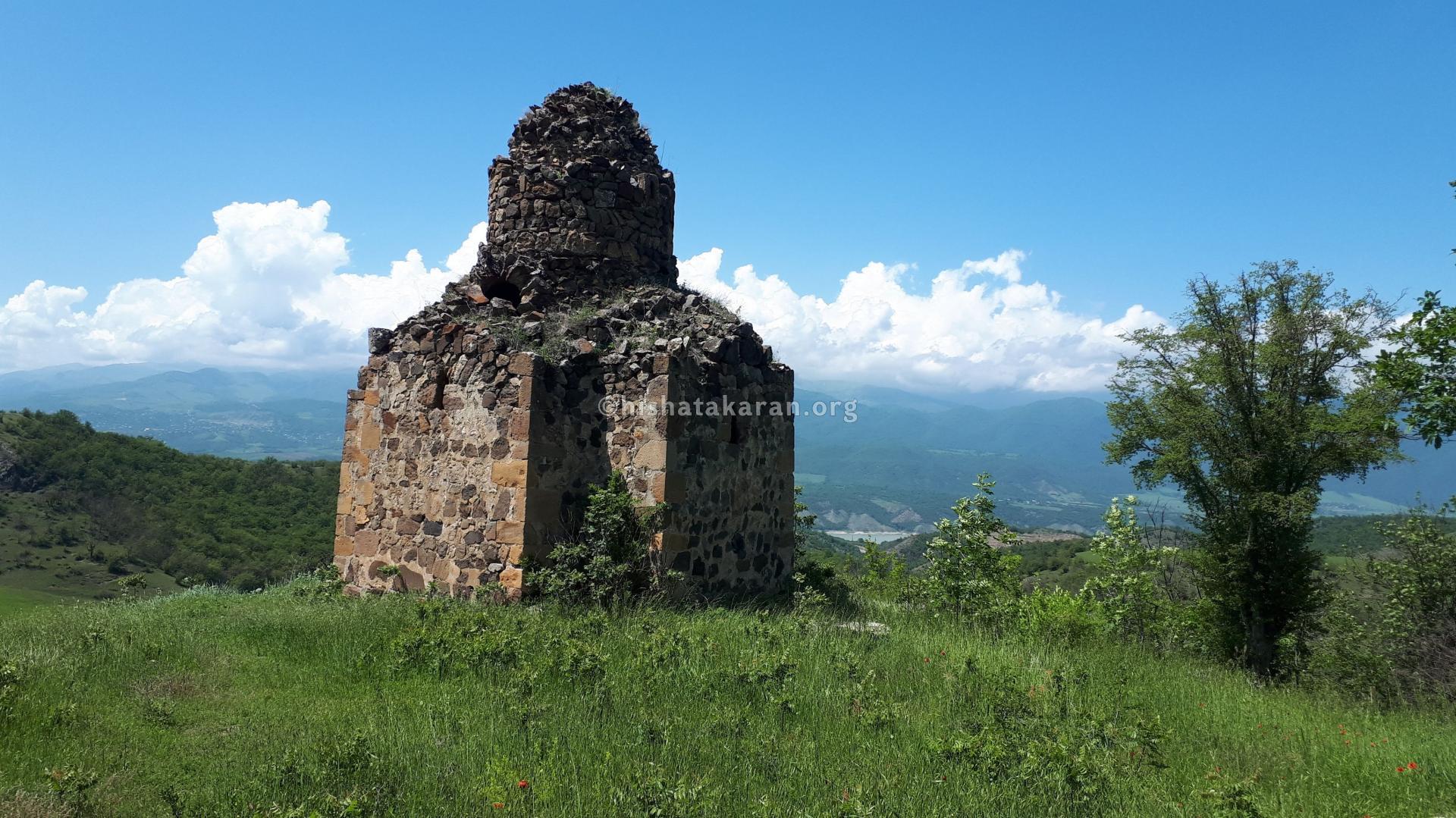
Surb Amenapʻrkichʻ (Saint Saviour) Church of Poghosagomer
Poghosagomer, Surb Amenaprkich [Amenapʻrkichʻ] (Holy All-Saviour) Church
Monument
Monument type
Church Given name
Surb Amenapʻrkichʻ (Saint Saviour) Other names
Mentioned as Surb Astvatsatsin (Saint Mary Mother of God) in the building inscription initial, sequential and current
Built at the end of the 12th century. No subsequent information is available. Original ownership and affiliation
Armenian Apostolic Church, Catholicosate of Aghvank
The name of conservation unit
Church Individually referenced sections (parts) of conservation unit
Church, graveyard, khachkars, tombstones A topographic report
Region (province), community
Located in Mets Aṛankʻ (later, Nerkʻin Khachʻen) region of Artsakh province in historical Greater Armenia, until September 24, 2023, in Poghosagomer, Martakert region in the Republic of Artsakh. Address
The Republic of Artsakh, Martakert region, Poghosagomer. Seized by Azerbaijan in September 2023. Topography
Kochoghot, Poghosagomer, Ghazarahogher on the right bank of Trtu (Tʻartʻaṛ) river, in-between Drmbon villages on the north-facing slopes of Okhtnaghbyur mountain range․
Distance and location from community
Located about 900 km north-west from Poghosagomer village Site elevation above sea level
891m high above sea level Hydrography
Located 3,5 km south-east from the closest point of Trtu (Tʻartʻaṛ) river Description
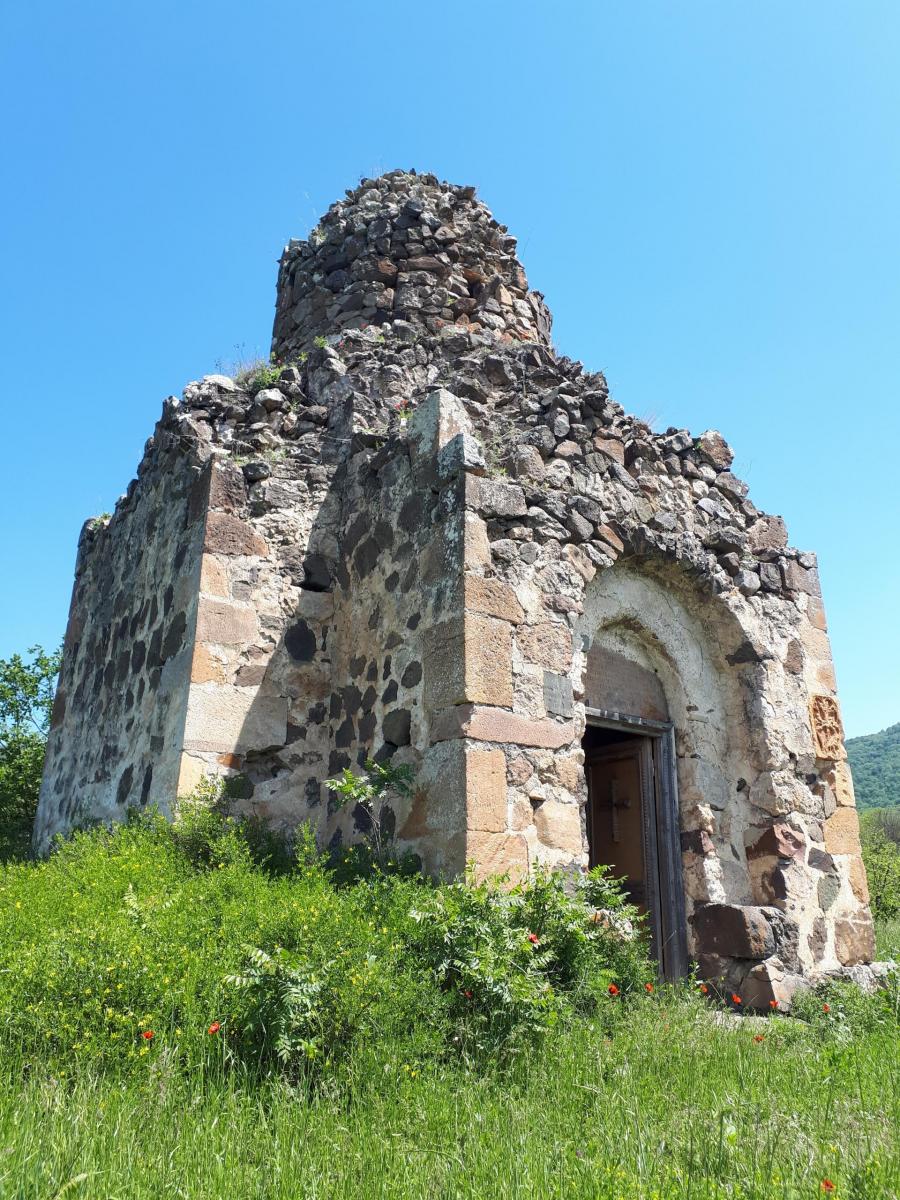
The building inscription of the Saint Saviour Church is partially damaged, and the foundation or construction date is not preserved. Based on the examination of architecture and compositional features, the study of khachkars preserved in the area, the style of ornaments and letter types as well as the period of historical figures mentioned in the inscription, the church can be dated to the end of the 12th century. The building is in a fair state of preservation, except for the dome crown. It is located at about 900 km north-west from Poghosagomer village in Martakert region.
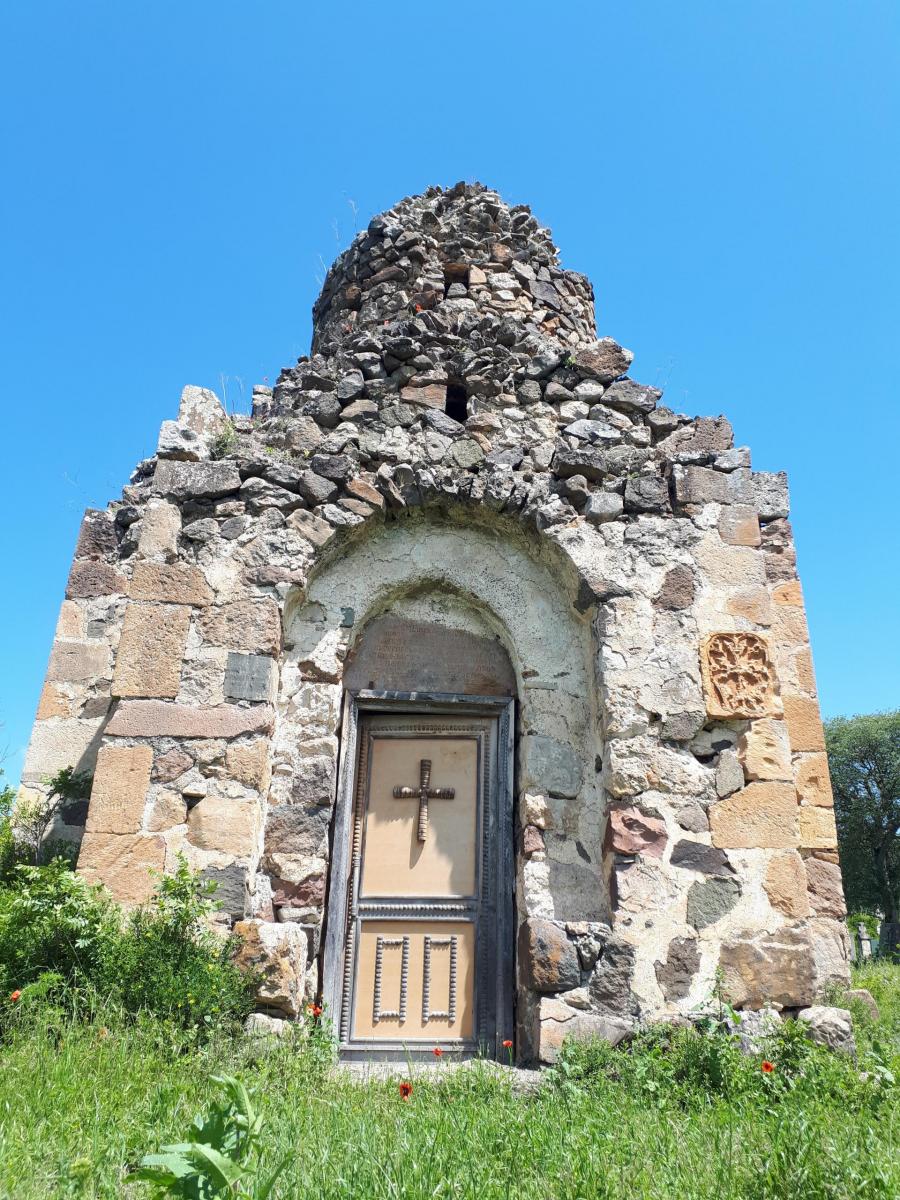
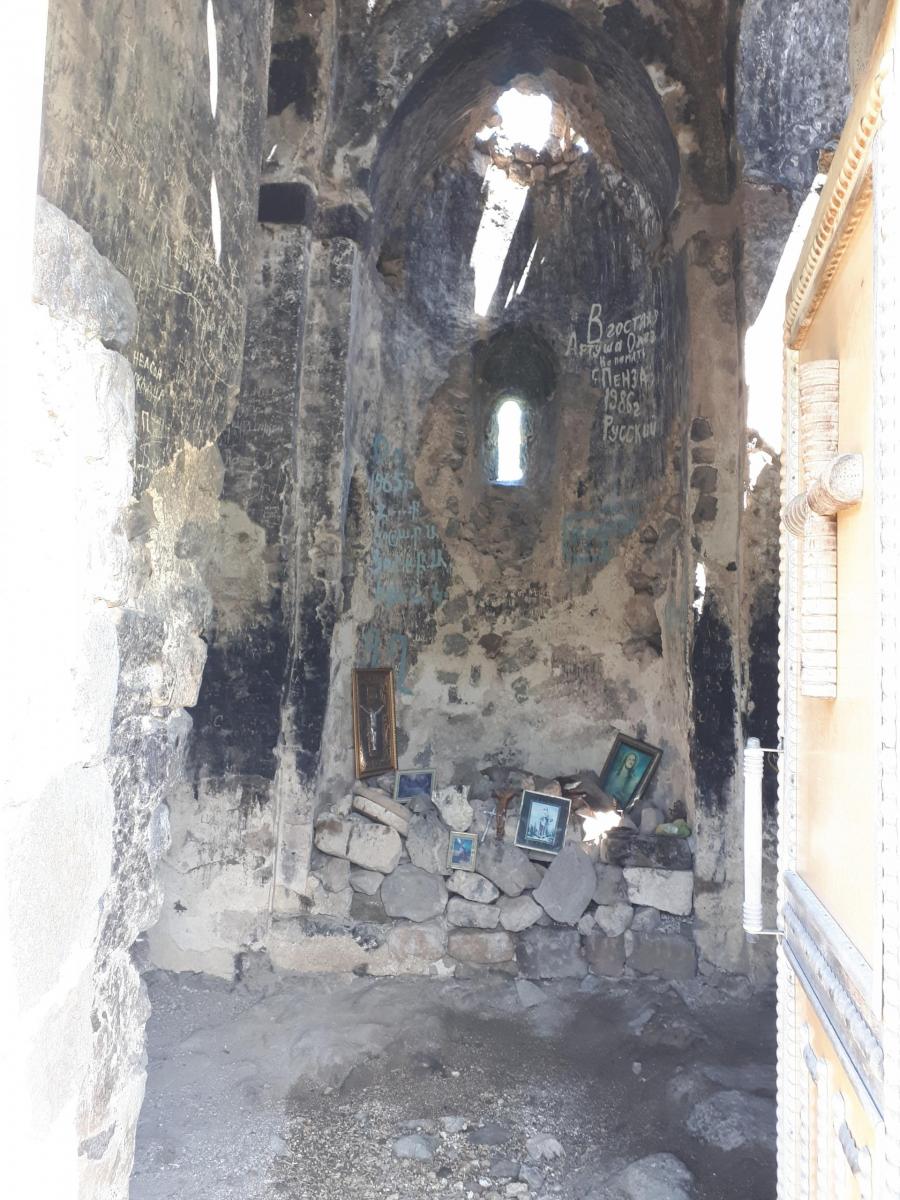
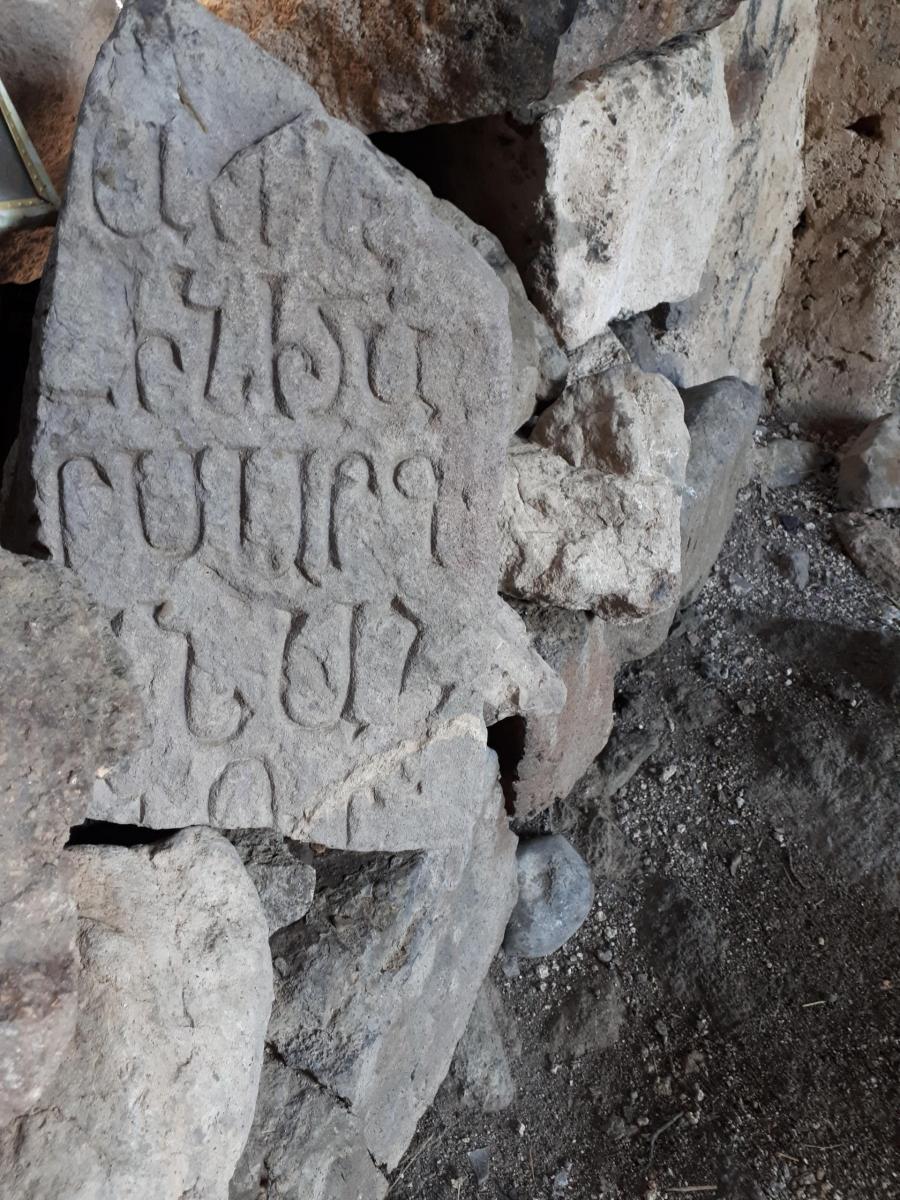
The church is a small building (6x5 m) with a cross-domed plan and externally emphasised cruciform. The eastern arm of the cross, where the altar is located, is semicircular, the others are rectangular. The entrance is from the western side. The church has eight windows. One of them is on the central section of the apse and the other three are on rectangular arms of the cross. The other four windows are on the circular drum of the dome. According to the eight-line inscription engraved on the entrance lintel, the church was built by Harbatsayr"s four sons – Hovhannes, Serob, Sargis and Grigor. The inscription text is the following:
"During the pontificate of Lord Hakobos and rule of Vakhtang, the son of Hasan, I, Hovhannes, and Serob and Sargis and Grigor, the sons of Harbatsayr, we built [the church] Mother of God in our fatherland, in memory of our souls. We beg to remember us and our parents in your prayers1" (See the original inscription text in the Armenian version of this article).
Vakhtang, the son of Hasan, mentioned in the inscription was the prince of Nerkʻin Khachʻen district in Artskah province and died in 1214. This fact allows us to conclude that the construction of the church took place between the end of the 12th century until 1214.
There are small ex-voto crosses and inscriptions inside and on the walls of the church.
The graveyard is spread on the eastern side of the church. The village of Poghosagomer was established at a later period, and the inhabitants did new burials in the Saint Saviour Church graveyard, as a result, the old and new graveyards were merged.
Historical record
Cultural characteristics, period, century (centuries)
12th - 13th centuries Documents for dating: Justification of the date based on epigraphy.
According to the building inscription and the examination of architecture and compositional features Descriptive-Characterization Report
Architectural overview: architectural composition
The church has a cross-domed plan with one semicircular altar. Decorative and monumental features: composition, colours
The dressing of the church is sober. There is a votive khachkar, characteristic to the 12th - 13th centuries, embedded in the wall on the south side of western facade. Building material (type, colour)
Gray and reddish sandstone, lime mortar Building openings: entrances (number, orientation)
The church has one entrance that opens from the central section of western front. Building openings: windows (number, orientation)
The church has eight windows. There is one window on the eastern, northern, southern and western walls of the church. The other four widows are on the circular drum. Roof (material, type)
The crown of the dome and the stones of the barrel vault are not preserved. Methods of construction (processing of construction material, masonry, size, type, cladding)
The church is built with raw and semi-processed stones and lime mortar. The cornerstones of external walls are set in ashlar. Inside the church, walls are plastered. Type
cross-domed Dimensions: length
6 m Dimensions: width
5 m Dimensions: height
In the current preserved state, about 6 m The condition of the monument before the forced displacement of Armenians
Emergency Value
Important for studying mediaeval Armenian architecture, the history and art of Khachen district in mediaeval Armenia. ----------------------------
1Barkhudaryan, S․, Divan hay vimagrutʻyan (Registry of Armenian inscriptions), volume 5, Artsakh, HSSH GA Publication, Yerevan, 1982, page 91. Measurements
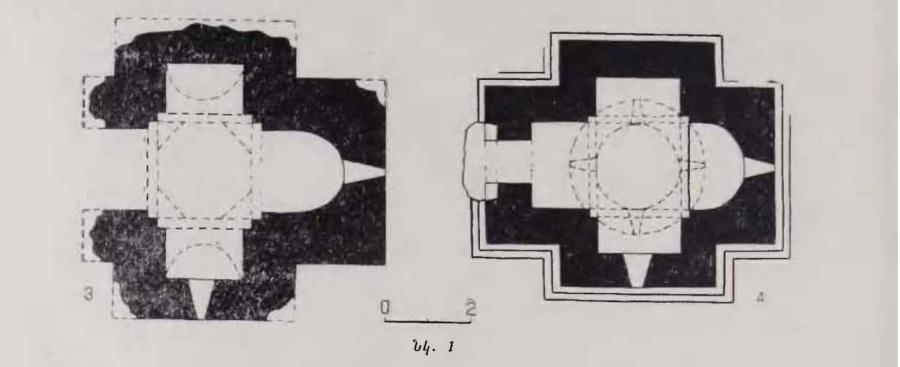
Done by S. Karapetyan, V. Zaryan, A. Kerobyan
The comparison of Khunisavankʻ and Saint Saviour church measurements, Karapetyan Samvel, "Khachʻadzev gmbetʻavor erku ekeghetsʻiner Artsʻakh nahangum (Two cross-dome churches in Artsakh province)" Patma-banasirakan handes, N°2-3, 1983, pp. 203-205.
Photos

...
Main bibliography
1. Barkhudareantsʻ M., 1895, - Barkhudareantsʻ Makar, Artsʻakh, Bagu, 1895.
4. Mkrtchyan Sh․, 1985 - Mkrtchyan Shahen, Leṛnayin Gharabaghi patmachartarapetakan hushardzannerě (Historical and architectural monuments of Mountainous Gharabagh), Yerevan, 1985, pp. 59-60.
G․B․